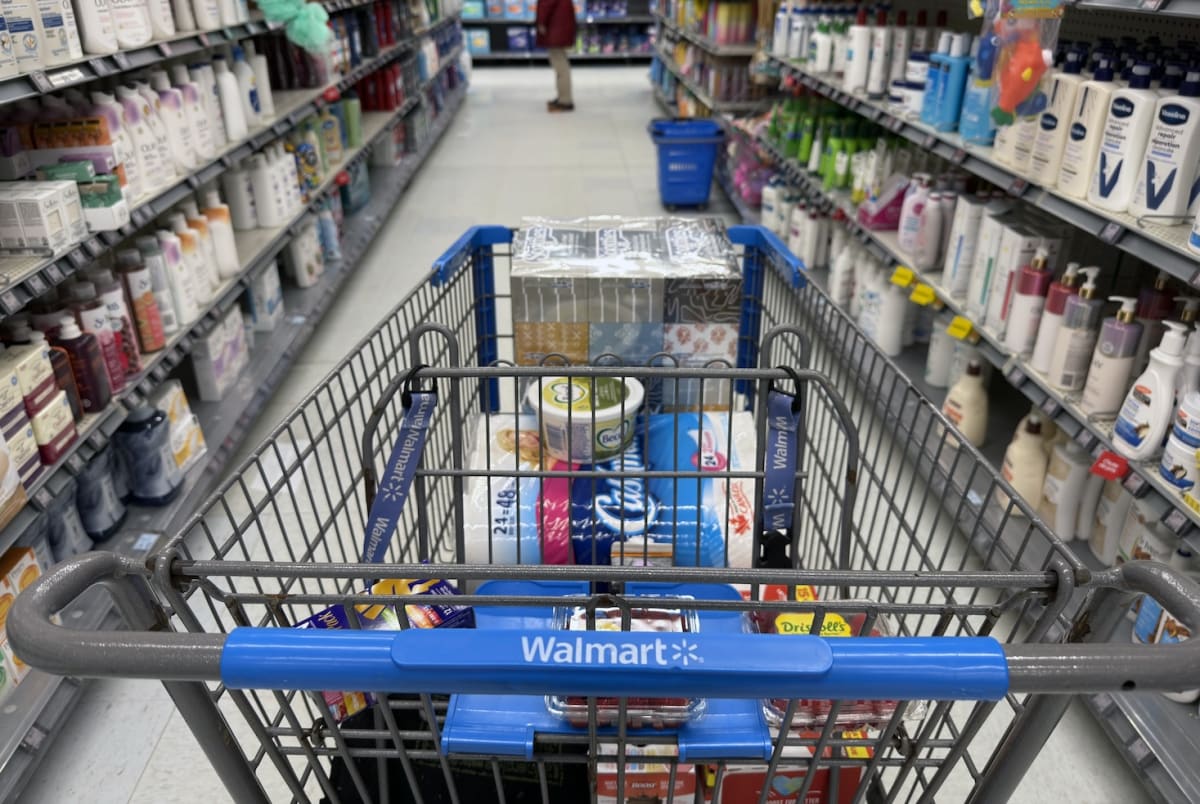
Walmart Cuts Emissions 24.6% in Decade-Long Progress
The world's largest retailer slashed operational emissions by nearly a quarter since 2016, with innovative refrigeration tech and AI driving major wins. Despite missing some 2025 targets, Walmart's climate work shows how big companies can make real environmental progress. #
Walmart just proved that giant corporations can shrink their carbon footprint while still growing their business.
The retail giant cut emissions from its stores and operations by 24.6 percent over the past decade, reaching 14.4 million metric tons of CO2 equivalent in its latest fiscal year. That's a 7.5 percent drop from just the year before.
The secret weapon? Smarter refrigerators and air conditioning systems using low-impact refrigerants, combined with AI tools that predict maintenance needs before problems happen. Some upgraded stores have seen emissions drop by 80 percent from refrigeration alone.
"We've always said progress is not going to be linear," Kathleen McLaughlin, Walmart's chief sustainability officer, told reporters. The company employs more than 600 technicians trained specifically to handle these climate-friendly cooling systems.
Walmart also passed the halfway mark on its promise to add 10 gigawatts of clean energy projects by 2030. The company recently set a new science-based target to cut emissions another 28 percent by 2031.
Its supplier program, Project Gigaton, has helped partner companies avoid or reduce 1.4 billion metric tons of emissions since launch. More than 4,300 suppliers participated, representing nearly 80 percent of Walmart's U.S. sales.
The Ripple Effect
When the world's largest retailer pushes for change, the impact spreads far beyond its own walls. Walmart's supplier initiative has transformed how thousands of companies manage energy, reduce waste, and protect natural resources.
The program encouraged suppliers to protect 50 million acres of land and 1 million square miles of ocean through better farming, fishing, and forest practices. Both goals were surpassed. Nearly all South American beef suppliers now have verified anti-deforestation policies, and 100 percent of private-label tea comes from certified sustainable sources.
Energy efficiency projects and better waste management drove most of the supplier gains, with retrofits and waste reduction accounting for 65 percent of total impact.
Walmart did miss some 2025 goals, including operational waste diversion and packaging targets. The company reached 84 percent waste diversion instead of its 90 percent target and struggled with virgin plastic reduction due to food safety requirements and material availability challenges.
The retailer acknowledged future progress will remain "lumpy" because global energy policies vary widely and low-carbon technologies for delivery trucks remain expensive and limited in some markets.
Still, cutting emissions intensity by more than half while running the world's largest retail operation shows the path forward for other major companies wrestling with climate commitments.
#
More Images



Based on reporting by Google News - Emissions Reduction
This story was written by BrightWire based on verified news reports.
Spread the positivity!
Share this good news with someone who needs it


%2Ffile%2Fattachments%2Forphans%2FBMDBSAresults2_828301.jpg)