Watch the Moon Pass Through Pleiades Star Cluster Live
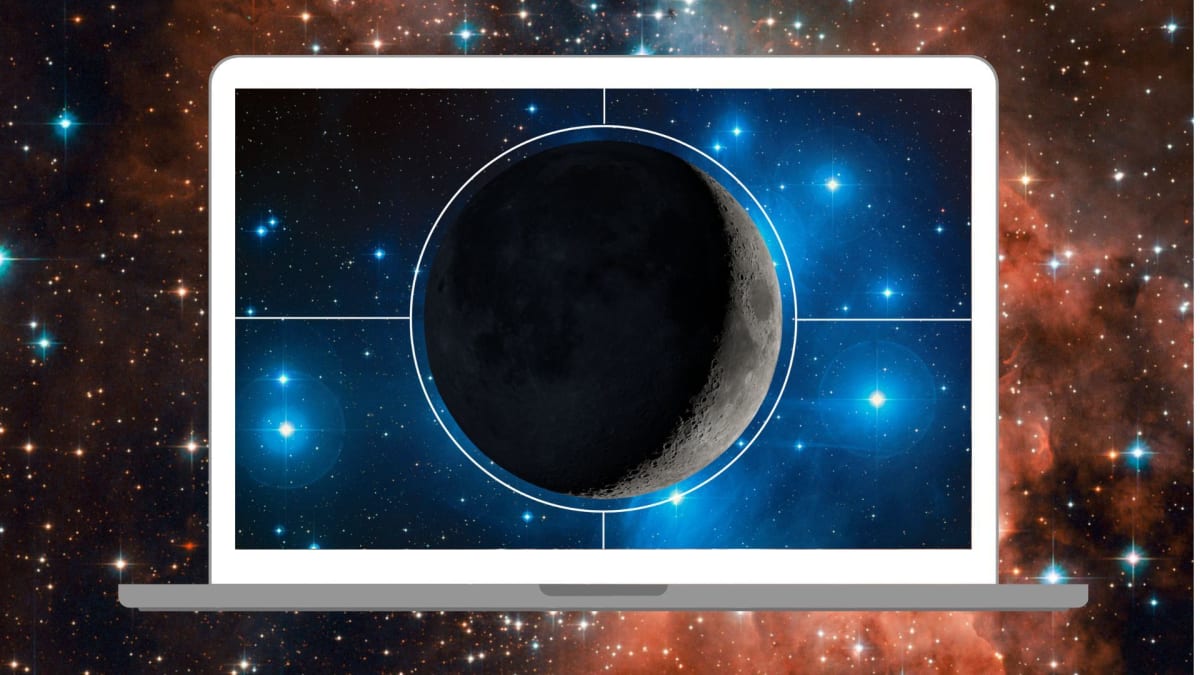
The crescent moon will glide through the stunning Pleiades star cluster on April 19, and you can watch the rare celestial event unfold live online. Italian skywatchers get the best view as sunset reveals this beautiful cosmic dance.
On April 19, stargazers worldwide will witness something special: the thin crescent moon passing directly in front of the Pleiades, a dazzling cluster of over 1,000 stars sparkling 445 light-years away.
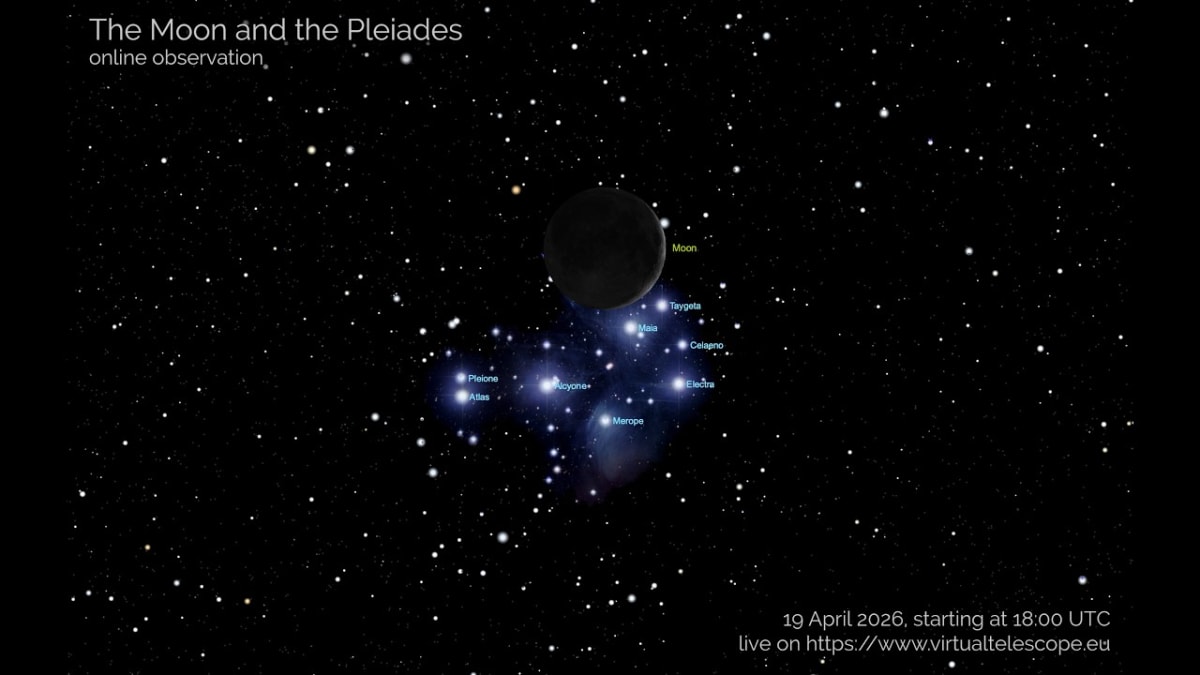
The Virtual Telescope Project will livestream the entire event starting at 2 p.m. EDT (1800 GMT) from Italy, where timing couldn't be better. As sunset fades, viewers will watch the delicate 7% crescent moon slip through the blue-white stars that have captivated humanity for thousands of years.
"It will be a memorable sight involving our satellite, showing as a sharp crescent with its elegant 'earthshine' and one of the most iconic deep-sky gems," says Gianluca Masi, founder of the Virtual Telescope Project and professional astronomer.
The timing makes this occultation extra beautiful. Just two days after the new moon, the crescent will be thin enough that starlight easily shines through, while earthshine bathes the dark side of the moon in a subtle glow.
Earthshine happens when sunlight bounces off Earth's clouds and illuminates the shadowy lunar surface. This soft light reveals the dark plains where ancient lava once flowed across the moon's face, creating a ghostly view of our celestial companion.
For viewers in the U.S., the actual occultation happens at 12:52 p.m. EDT during daylight hours when the moon sits below the eastern horizon. But the livestream captures the moon's exit from the Pleiades as Italian skies darken, offering everyone a front-row seat to this cosmic alignment.
The Pleiades, also known as the Seven Sisters or Messier 45, shines in the constellation Taurus. Ancient cultures from Greece to Japan wove stories around this stellar family, and modern telescopes reveal its true wonder as a young star cluster wrapped in glowing gas and dust.
Why This Inspires
Events like this remind us that the universe puts on free shows for anyone willing to look up. No special equipment needed beyond curiosity and a clear view, though the livestream brings distant wonders directly to screens worldwide.
The Virtual Telescope Project makes cosmic moments accessible to everyone, turning complicated celestial mechanics into shared human experiences. These fleeting alignments connect us across continents, all watching the same moon pass through the same ancient stars.
Whether you catch the livestream or step outside to see the crescent moon that evening, you're witnessing the same dance that inspired our ancestors to dream about the cosmos.
More Images

Based on reporting by Space.com
This story was written by BrightWire based on verified news reports.
Spread the positivity!
Share this good news with someone who needs it