Webb Telescope Finds Methane in Interstellar Comet
NASA's James Webb Space Telescope discovered methane and unusual carbon dioxide levels in an interstellar comet passing through our solar system. The findings reveal this cosmic visitor formed under completely different conditions than our homegrown comets.
A comet from beyond our solar system just revealed secrets that rewrite what we know about the universe's icy wanderers.
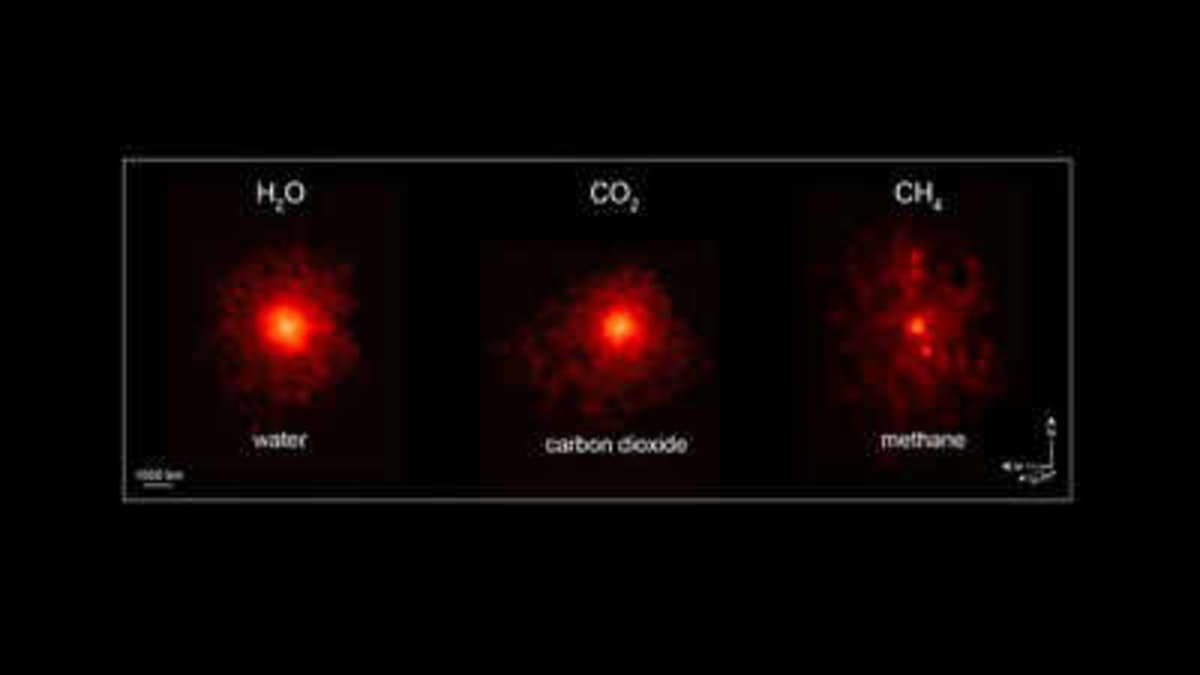
NASA's James Webb Space Telescope caught something remarkable in comet 3I/ATLAS as it swung past the Sun last December. For the first time, scientists detected methane hidden deep inside an interstellar comet, along with carbon dioxide levels that don't match anything we see in local space rocks.
The discovery matters because it proves this traveler was born somewhere completely different. The chemical fingerprint doesn't fit our neighborhood at all.
Scientists tracked the comet twice in late December as it moved away from the Sun and started cooling down. Even as it drifted into colder space, it kept releasing gases in an unexpected pattern that told a surprising story.
The methane detection stands out as particularly exciting. This gas usually disappears quickly when exposed to warmth, evaporating at relatively low temperatures. But here it showed up late, suggesting it was tucked safely beneath the comet's outer crust until solar heat finally reached those deeper layers.
That delayed release hints at something fascinating: this comet has a layered structure, like an onion, rather than being a uniform icy block. Different depths remember heat differently.
Carbon dioxide stole the show too, appearing at levels much higher than typical solar system comets produce. When compared to water output, the imbalance points clearly to colder or chemically distinct birthplace conditions than what shaped objects in our outer solar system.
As 3I/ATLAS traveled farther from the Sun, its activity didn't just stop. Instead, different materials ceased their activity at different thresholds, creating a staggered retreat. Water production dropped sharply first, while methane and carbon dioxide followed their own quieter decline.
The Bright Side
This cosmic chemistry lesson opens a window into distant star systems we can't visit. Every interstellar visitor that passes through carries clues about conditions light-years away, teaching us how planets and comets form in other corners of the galaxy.
The Webb telescope's infrared instrument worked like a chemical detective, breaking down light into fine components to map faint gases drifting around the comet's nucleus. That kind of precision lets scientists track a moving chemical field as it shifts with changing sunlight and distance.
The findings confirm that our cosmic neighborhood isn't the template for everywhere else. Out there, in the vast spaces between stars, ice and rock and gas come together under entirely different rules, creating wanderers with stories written in their chemistry.
Scientists now have direct evidence that comets born in other star systems carry different recipes than ours, a reminder that the universe is far more diverse than we see from our single vantage point.
More Images



Based on reporting by Google: James Webb telescope
This story was written by BrightWire based on verified news reports.
Spread the positivity!
Share this good news with someone who needs it
%2Fhttps%3A%2F%2Ftf-cmsv2-smithsonianmag-media.s3.amazonaws.com%2Ffiler_public%2F58%2F0a%2F580a77b9-7590-43c5-b70d-e3a590810348%2Fsmithmag-rockwell-edit.jpg)