%2Fhttps%3A%2F%2Ftf-cmsv2-smithsonianmag-media.s3.amazonaws.com%2Ffiler_public%2F0c%2F46%2F0c4653f1-f09e-436d-a58c-7b3f76ca65f8%2F20260312ma_343.jpg)
Webb Telescope and Parker Probe Models Now at Smithsonian
Two groundbreaking space exploration artifacts have found their permanent home at the Smithsonian. The engineering models behind humanity's deepest looks into the universe and closest approach to the sun are now inspiring visitors in Virginia.
The tools that helped us touch the sun and see 13 billion years into the past now have a place in history.
The Smithsonian's National Air and Space Museum recently welcomed two remarkable artifacts to its collection: the James Webb Space Telescope's Pathfinder test model and a full-scale replica of the Parker Solar Probe. Both are now on display at the Steven F. Udvar-Hazy Center in Chantilly, Virginia, representing opposite extremes of space exploration.
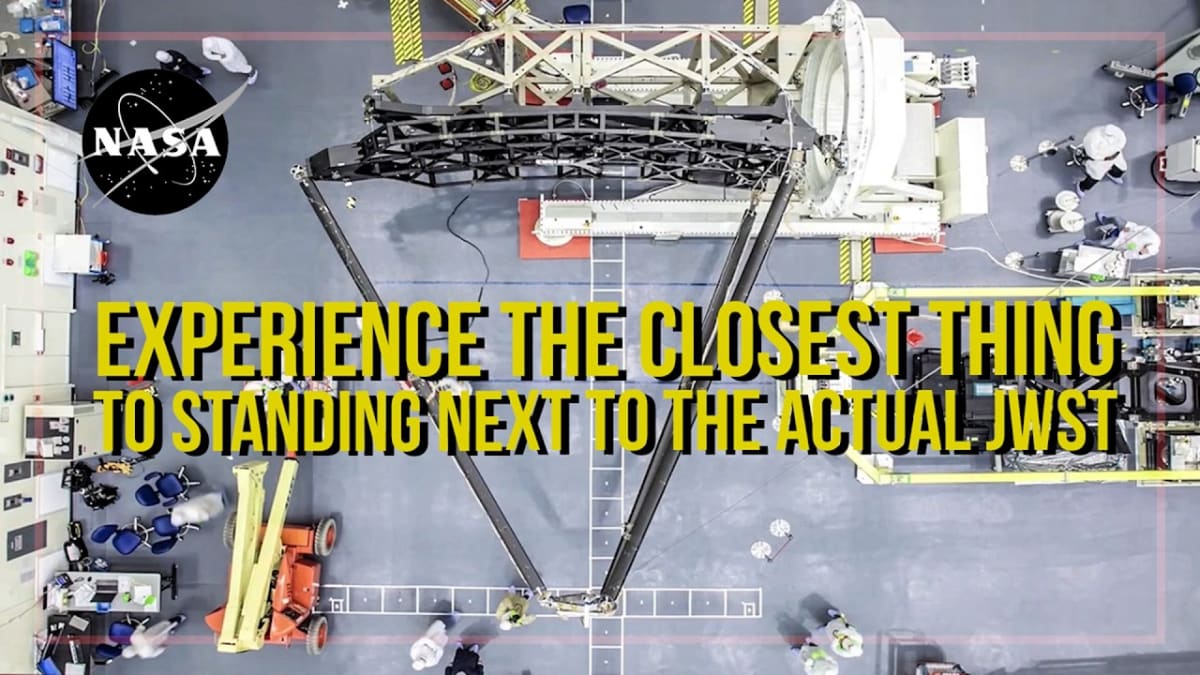
The Pathfinder is a full-scale engineering model that scientists pushed to its limits before the actual Webb telescope launched on Christmas Day 2021. Researchers tested it through extreme temperatures and physical shocks at NASA centers across the country to ensure the real telescope could survive its million-mile journey into space.
Their careful work paid off spectacularly. In summer 2022, Webb sent back the sharpest infrared photo of the early universe ever captured, showing thousands of galaxies in stunning detail. The telescope has since revealed nebulas, Saturn's rings, and even light from a 13-billion-year-old supernova, the oldest star explosion ever recorded.
"We're getting a lot better understanding of the evolution of galaxies," says Samantha Thompson, the museum's space history curator. The telescope's infrared vision lets scientists peer through cosmic dust and clouds to watch stars being born.
The Parker Solar Probe model tells an equally ambitious story. The actual probe launched in 2018 on a mission to fly closer to the sun than any spacecraft in history, racing toward our star at 430,000 miles per hour.
Its massive solar shield protects the spacecraft from the sun's corona, which reaches 2 million degrees Fahrenheit, while keeping instruments at a comfortable 85 degrees. The probe recently completed its 27th close approach, measuring solar wind and unlocking secrets of the sun's outer atmosphere.
Why This Inspires
These artifacts represent more than technological achievement. They're physical proof of what happens when teams of scientists and engineers dare to turn the nearly impossible into reality.
The Pathfinder's honeycomb beryllium mirrors were a first-of-their-kind design. The Parker Probe's heat shield had to solve problems no spacecraft had ever faced. Both required inventing new technology just to make the missions possible.
Thompson loves displaying them side by side because they show the different extremes of space exploration: one looking outward to the universe's oldest light, the other braving our sun's intense heat. Together, they mark touchstones for how far space research has come and how much further it will go.
The museum acquired these pieces now, even though both missions are still active, because the technology itself deserves recognition alongside the discoveries it enables.
More Images
%2Fhttps%3A%2F%2Ftf-cmsv2-smithsonianmag-media.s3.amazonaws.com%2Ffiler_public%2Fa7%2F6b%2Fa76b724f-a4ed-4c25-8e6f-05c13d1e4db6%2Fsaturn_unlabeled.jpeg)
%2Fhttps%3A%2F%2Ftf-cmsv2-smithsonianmag-media.s3.amazonaws.com%2Faccounts%2Fheadshot%2Fmichelle2.png)
Based on reporting by Google: James Webb telescope
This story was written by BrightWire based on verified news reports.
Spread the positivity!
Share this good news with someone who needs it