Webb Telescope Captures Dying Star's 'Cosmic Lion' Portrait
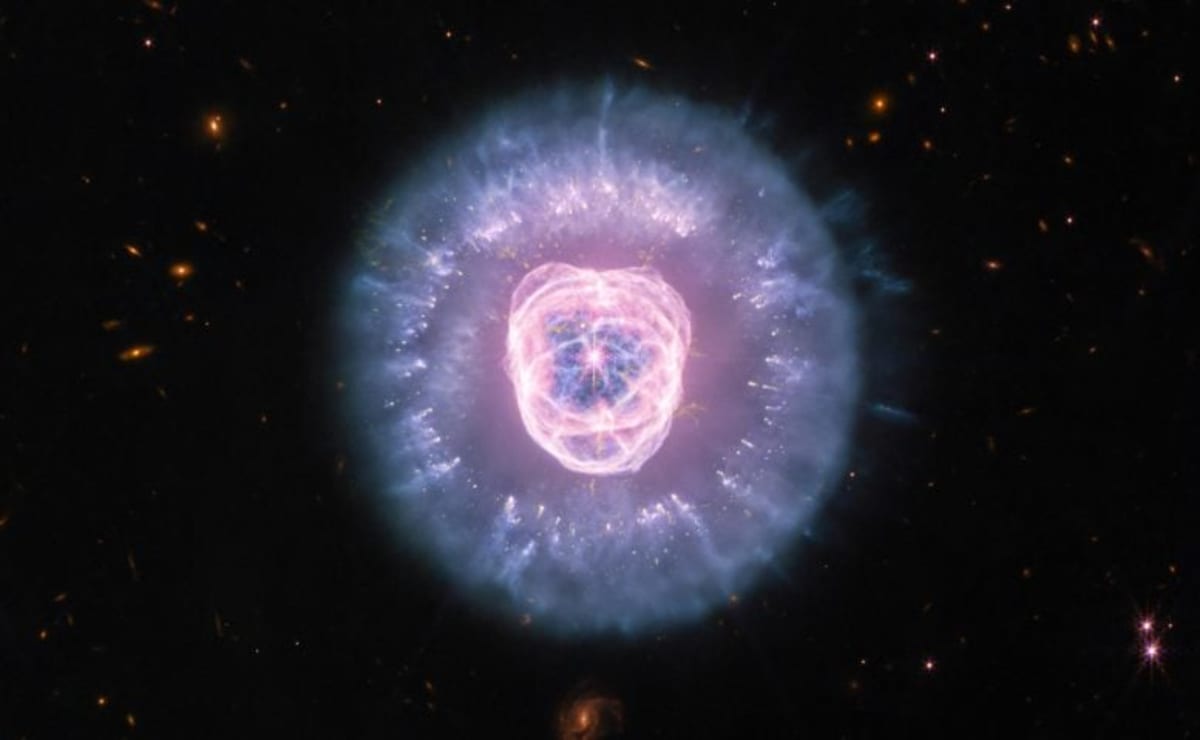
NASA's James Webb Space Telescope has photographed a dying star creating a nebula shaped like a lion's face, revealing stunning details invisible to previous observations. The cosmic spectacle shows what happens when ordinary stars reach the end of their lives.
A dying star 5,000 light-years away is putting on a celestial show, and the James Webb Space Telescope just captured its breathtaking portrait.
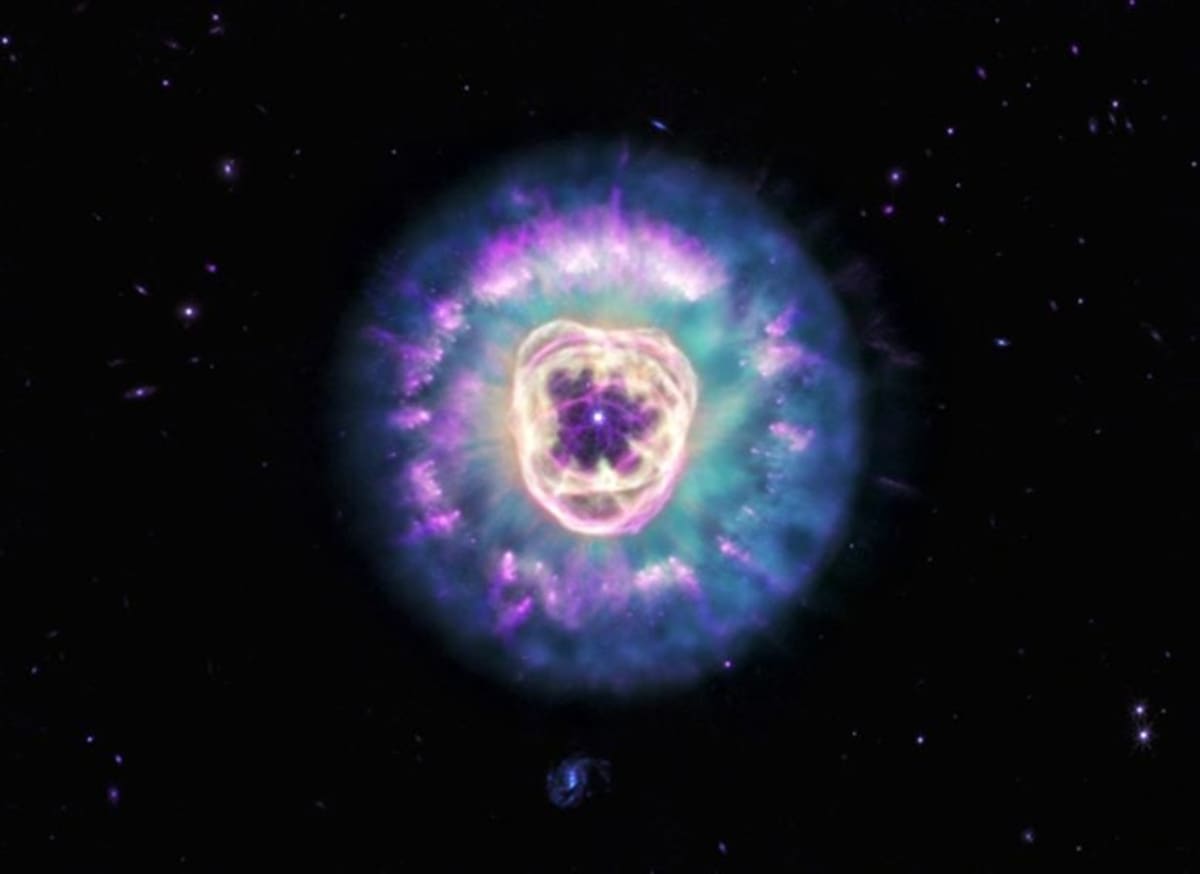
The telescope's new images reveal NGC 2392, nicknamed the Lion Nebula for its striking resemblance to a lion's face complete with a glowing mane. At the center sits a white dwarf star that looks like a tiny button nose, though its appearance is deceiving.
That small stellar remnant is actually a cosmic powerhouse. Its intense radiation is sculpting the gas and dust around it into the intricate structures we see today, creating rings, shells, and comet-like tails that form the lion's distinctive features.
The Hubble Space Telescope first photographed this nebula in 2000, but Webb's infrared vision reveals details Hubble couldn't see. Dense concentrations of dust and hazy regions of ionized gas now appear with remarkable clarity, showing astronomers how the nebula continues to evolve thousands of years after its creation.
This cosmic lion tells the story of how most stars in our universe will end their lives. Unlike massive stars that explode as supernovas, ordinary stars like our sun reach a point where they can no longer sustain nuclear reactions in their cores.
When that happens, the star becomes unstable and starts pulsating, shedding its outer layers into space. Those expelled layers form the expanding shells of gas and dust we call a planetary nebula, and the radiation from the exposed core pushes this material outward.
The lion's glowing face is actually a bubble of ionized gas being cooked by the white dwarf at its center. As this bubble expands, it sweeps outward and destroys dust in its path, though some compact clumps manage to survive and create the mane-like structures.
Why This Inspires
Webb's observations capture a frozen moment in the nebula's long evolution, but the show continues. Gas and dust keep traveling away from the central star, gradually changing the lion's appearance with each passing century.
Astronomers estimate the Lion Nebula will eventually disperse in about 10,000 years, a relatively brief moment on astronomical timescales. Until then, this dying star's final act reminds us that even endings can create something beautiful.
Webb's ability to see what was previously invisible helps scientists understand the complex forces that shape our universe and shows us that cosmic death can be as spectacular as cosmic birth.
More Images
Based on reporting by Google: James Webb telescope
This story was written by BrightWire based on verified news reports.
Spread the positivity!
Share this good news with someone who needs it