NASA Gives 47-Year-Old Voyager 2 An Extra Year of Life
Engineers just pulled off a delicate power juggling act on a spacecraft 13 billion miles away, buying humanity's farthest messenger another year of discovery. The "Big Bang" swap happened across a two-day communication delay with no room for error.
NASA engineers just saved a piece of history traveling through the darkness beyond our solar system.
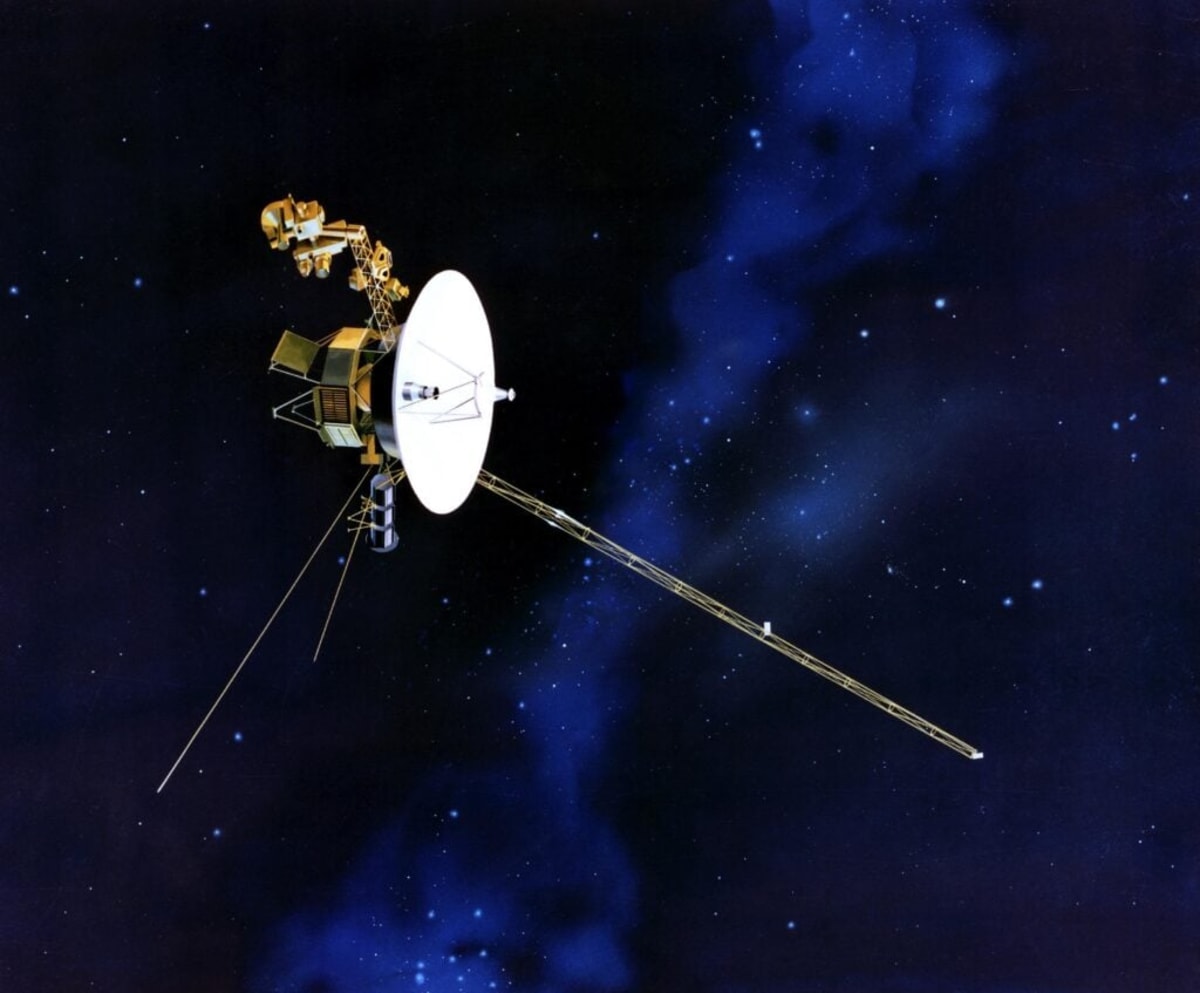
Voyager 2, launched in 1977 and now cruising through interstellar space, was facing a tough decision this year. Its aging power supply meant shutting down one of its last three working science instruments. But in July, mission controllers at NASA's Jet Propulsion Laboratory performed what they called the "Big Bang," a carefully choreographed power system swap that freed up nearly 10 watts and postponed that heartbreaking choice for at least another year.
The challenge sounds simple until you remember the details. Voyager 2 sits more than 13 billion miles from Earth. Every command takes almost two days to reach the spacecraft and return confirmation. There are no do-overs, no repair visits, and no backup spacecraft waiting in the wings.
The probe runs on three radioisotope thermoelectric generators that convert heat from decaying plutonium into electricity. No solar panels, no moving parts, just elegant 1970s engineering that has worked flawlessly for nearly five decades. But nature is patient. The plutonium weakens, the converters age, and Voyager loses about four watts of power every year.
Four watts once seemed trivial when the spacecraft had hundreds to spare. Today, it can determine whether an instrument survives.
Engineers turned off an old digital tape recorder and two heaters while simultaneously powering two different heaters and a propulsion instrument. This wasn't just about saving electricity. Every active device produces waste heat that keeps fuel lines from freezing and thrusters operational. Remove the wrong heat source, and Voyager could lose its ability to point its antenna toward Earth. Game over.
The team spent months planning because there was no margin for mistakes. They conducted separate power and thermal tests in May and June before executing the final sequence in July. The swap had to move from one stable state to another without lingering anywhere unsafe.
Why This Inspires
This story captures something rare in our disposable culture: the profound human commitment to keeping a promise. Voyager 2 was built to explore the outer planets, a mission it completed decades ago. It could have been abandoned, forgotten, consigned to the cosmic junkyard.
Instead, engineers who weren't even born when Voyager launched now devote careers to squeezing every last month from its fading power supply. They're rewriting thermal budgets, testing decades-old systems at temperatures they were never designed for, and executing flawless procedures across billions of miles.
These spacecraft carry golden records with greetings in 55 languages, music from Bach to Chuck Berry, and images of life on Earth. They were messages in bottles to whatever intelligence might someday find them. But they've become something more: testaments to our own species' capacity for patience, ingenuity, and care.
Voyager 2 will eventually go silent, but not today.
More Images



Based on reporting by Google News - Science
This story was written by BrightWire based on verified news reports.
Spread the positivity!
Share this good news with someone who needs it