NASA Funds Flying Spheres to Explore Saturn's Moon Titan
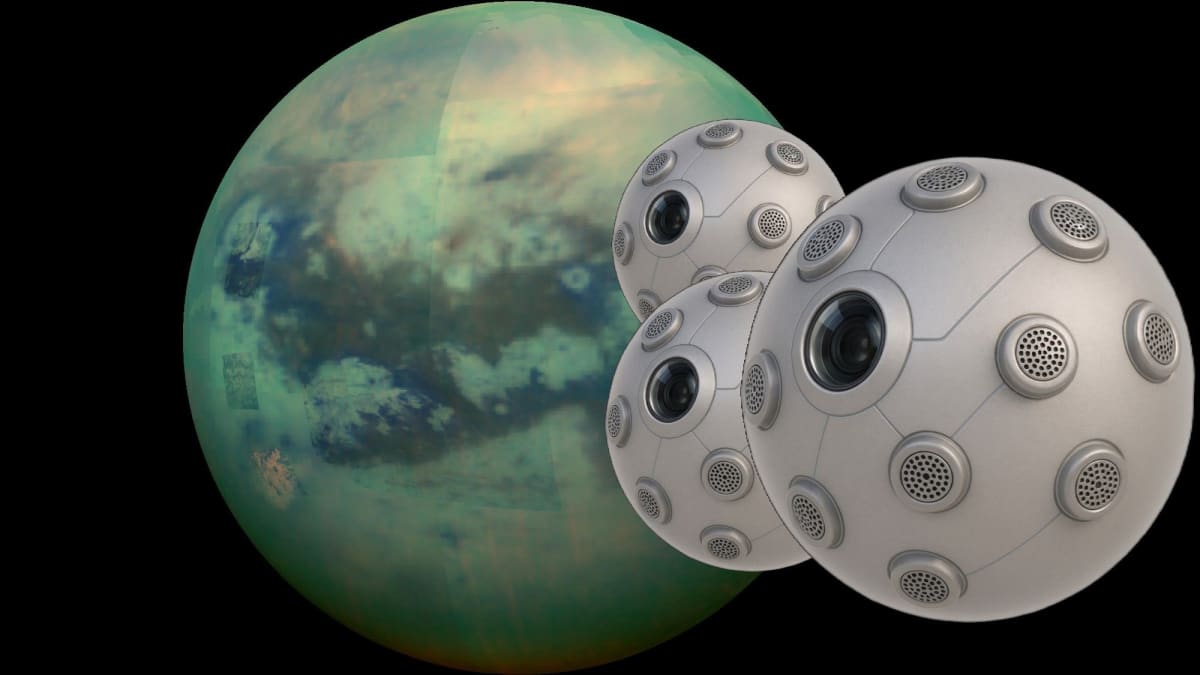
Scientists are developing swarms of small, silent flying robots that could one day explore the mysterious caves of Titan, Saturn's Earth-like moon covered in hydrocarbon seas. The basketball-sized vehicles use electric thrusters and could revolutionize how we explore icy worlds.
Imagine tiny flying spheres buzzing through alien caves on a moon nearly a billion miles from Earth, and you've got a glimpse of NASA's latest funded project.
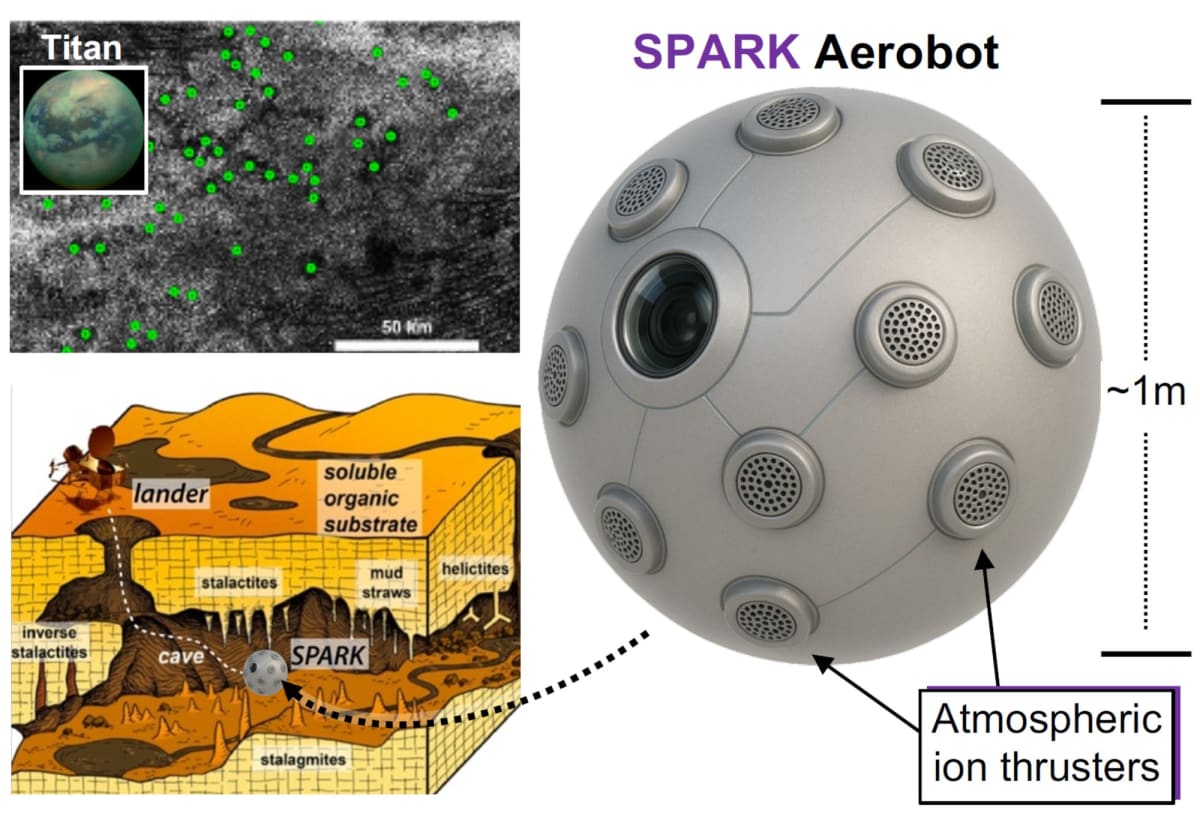
Daniel Drew, a professor at the University of Hawaii, just received a NASA grant to develop SPARK (Solid-state Propulsion for Autonomous Reconnaissance of Karst). These basketball-sized robots would explore the underground caves and sinkholes of Titan, Saturn's largest moon. Titan is one of the most Earth-like worlds we know, complete with rivers, lakes, and seas, except they're filled with methane and ethane instead of water.
Traditional rovers can't navigate Titan's treacherous terrain of hydrocarbon lakes and underground caves. That's where these flying spheres come in. They use ion thrusters that are completely silent, have few moving parts to break down, and can handle the moon's icy conditions that plunge to negative 290 degrees Fahrenheit.
Drew's journey to this moment started almost by accident. While in graduate school, he stumbled upon hobbyists on YouTube who were making triangular frames from balsa wood and aluminum foil that could float using high voltage electricity. He realized this decades-old technology could be the key to exploring other worlds.
Since then, he's created the first centimeter-scale "ionocraft" that successfully took off and carried a payload. His team recently built the first ion-propelled micro-hovercraft. "I'm mostly racing against myself here," Drew said, noting that few researchers work in this specialized field.
The SPARK robots might not make it onto NASA's Dragonfly mission launching to Titan in 2028. But Drew hopes they'll follow in the footsteps of Mars' Ingenuity helicopter, which completed 72 flights when it was only designed for five.
Why This Inspires
What makes this project so exciting isn't just the cool factor of flying robots on an alien moon. It's watching someone turn YouTube hobby videos into cutting-edge space exploration technology. Drew took something simple that enthusiasts were experimenting with in their garages and transformed it into a potential game-changer for planetary science.
The technology has earthly applications too: silent indoor drones, all-electric aircraft, and miniature flying swarms for search and rescue. While ion thrusters aren't efficient enough to replace conventional propulsion on Earth, they might be perfect for the thick, nitrogen-rich atmosphere of Titan.
In nine months, Drew and his NASA collaborators will complete detailed designs and testing for Phase 1. If successful, they'll move to a two-year Phase 2 that could make the technology "more realistic" for an actual mission.
The idea of tiny robots working together to explore underground caves on a distant moon sounds like science fiction. But thanks to researchers willing to chase unusual ideas, it's inching closer to science fact.
More Images

Based on reporting by Space.com
This story was written by BrightWire based on verified news reports.
Spread the positivity!
Share this good news with someone who needs it