Webb Telescope Captures Galaxy Powered by Black Hole
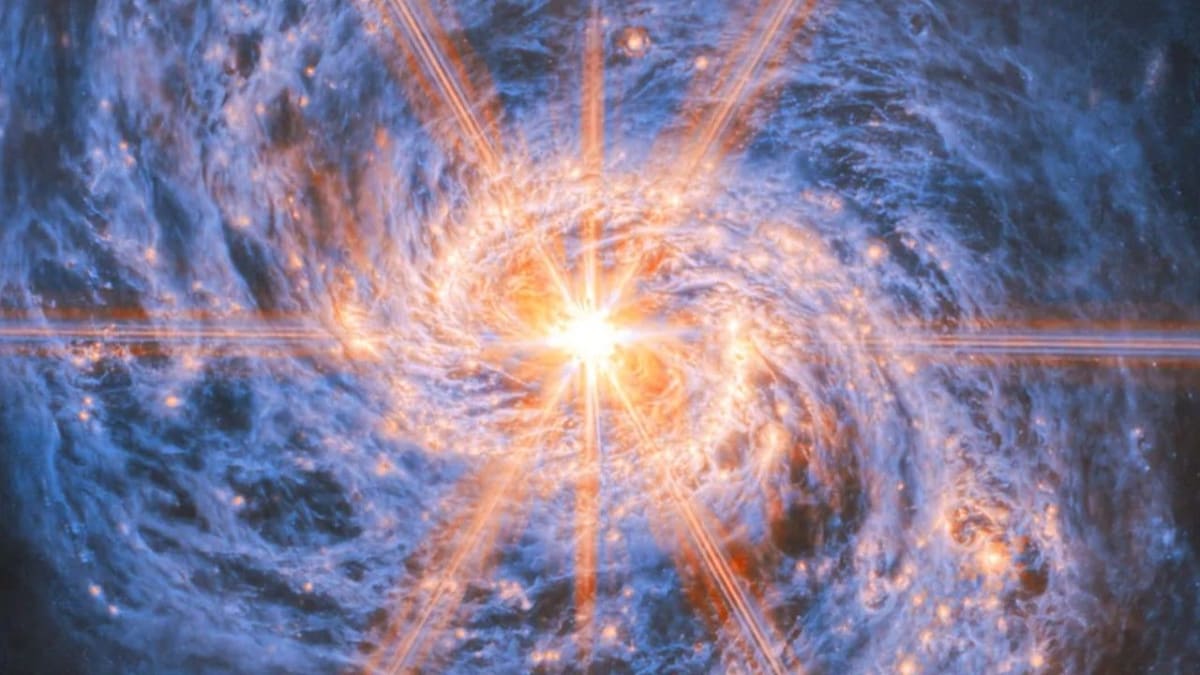
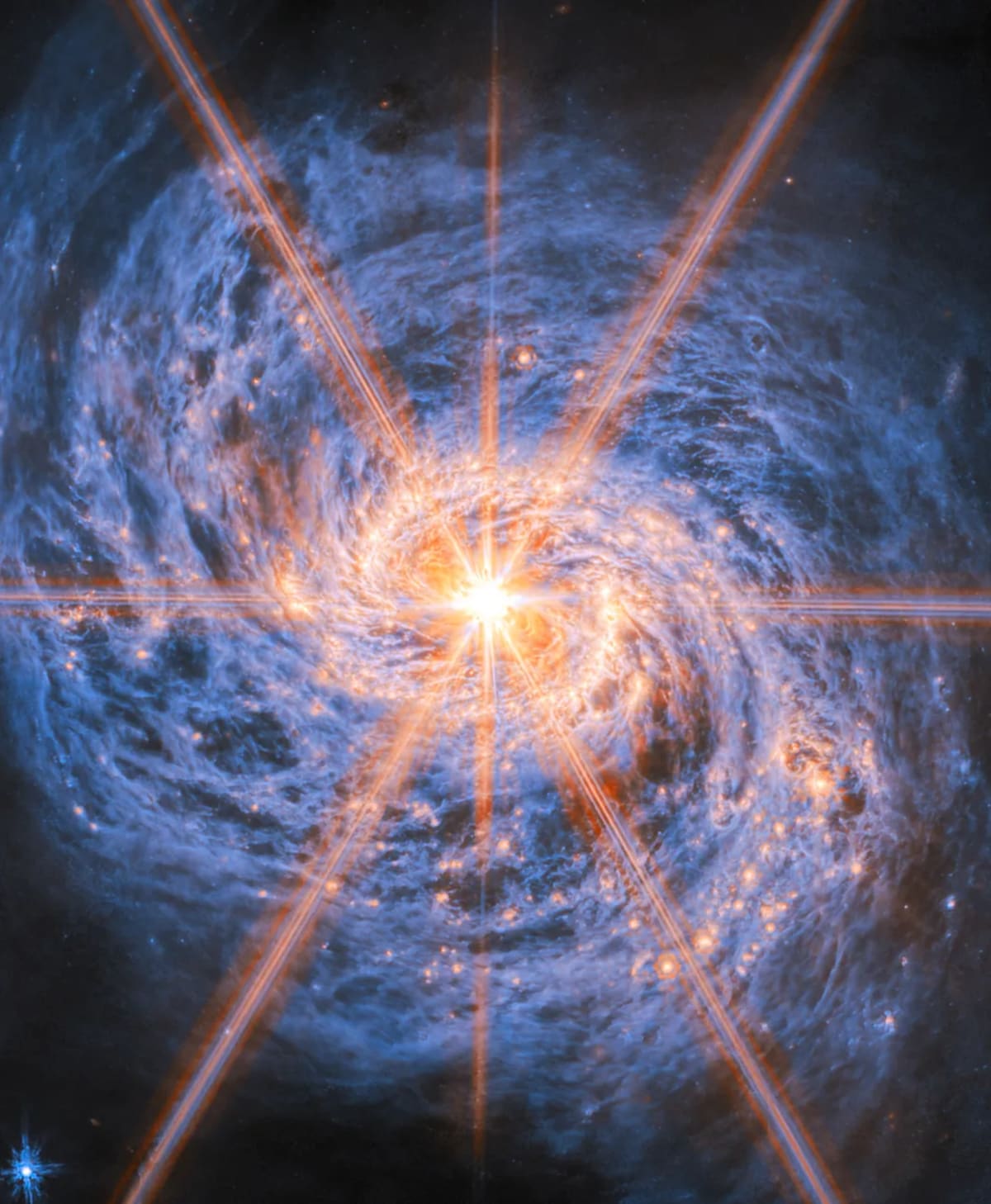
NASA's James Webb Space Telescope just revealed a stunning portrait of galaxy M77, glowing brilliantly thanks to a supermassive black hole at its heart. The image shows beams of light radiating from the galaxy's center 47 million light-years away.
A galaxy 47 million light-years from Earth is putting on a spectacular light show, and scientists have captured it in breathtaking detail.
NASA's James Webb Space Telescope photographed Messier 77, nicknamed the Squid Galaxy, revealing its bright heart surrounded by swirling gas and dust. The galaxy sits in the constellation Cetus and shines brightly enough that backyard astronomers can spot it with a small telescope.
The secret behind this cosmic glow? A supermassive black hole lurks at the galaxy's center, pulling gas inward with its intense gravity. As the gas rushes toward the black hole, it heats up tremendously, releasing radiation that lights up the surrounding region like a celestial beacon.
While black holes might sound scary, this one is actually creating something beautiful. The heated gas produces the ethereal glow visible in Webb's image, showcasing how these powerful cosmic objects shape their galactic neighborhoods.
The dramatic rays of light shooting from the galaxy's center add even more drama to the scene. These beams aren't caused by the black hole itself but rather by the way Webb's telescope captures and processes light.
Why This Inspires
This image reminds us that even the universe's most mysterious objects can create beauty. Scientists believe most galaxies harbor black holes at their centers, quietly sculpting the cosmic landscape around them.
Webb continues delivering on its promise to show us the universe in unprecedented detail. Since launching, the telescope has transformed our view of distant galaxies, star-forming regions, and planets beyond our solar system.
The Squid Galaxy was actually discovered by French astronomer Pierre Méchain, who shared his finding with Charles Messier before it joined the famous Messier catalog. Now, centuries later, we can see it more clearly than those early astronomers ever imagined possible.
This stunning portrait proves that space exploration keeps finding new ways to inspire wonder and expand our understanding of the cosmos.
More Images

Based on reporting by Space.com
This story was written by BrightWire based on verified news reports.
Spread the positivity!
Share this good news with someone who needs it