Webb Telescope Maps Cosmic Web Back to Universe's Infancy
Scientists have created the most detailed map ever of the cosmic web, the vast network of galaxies stretching across the Universe. Using NASA's James Webb Space Telescope, they traced structures back to just 1 billion years after the Big Bang.
The Universe just became a lot clearer, and the view is absolutely stunning.
A team led by astronomers at the University of California Riverside has created the most detailed map of the cosmic web ever made. This vast network of galaxies and filaments stretches across the entire Universe, and for the first time, we can see it as it looked when the cosmos was emerging from its darkest period.
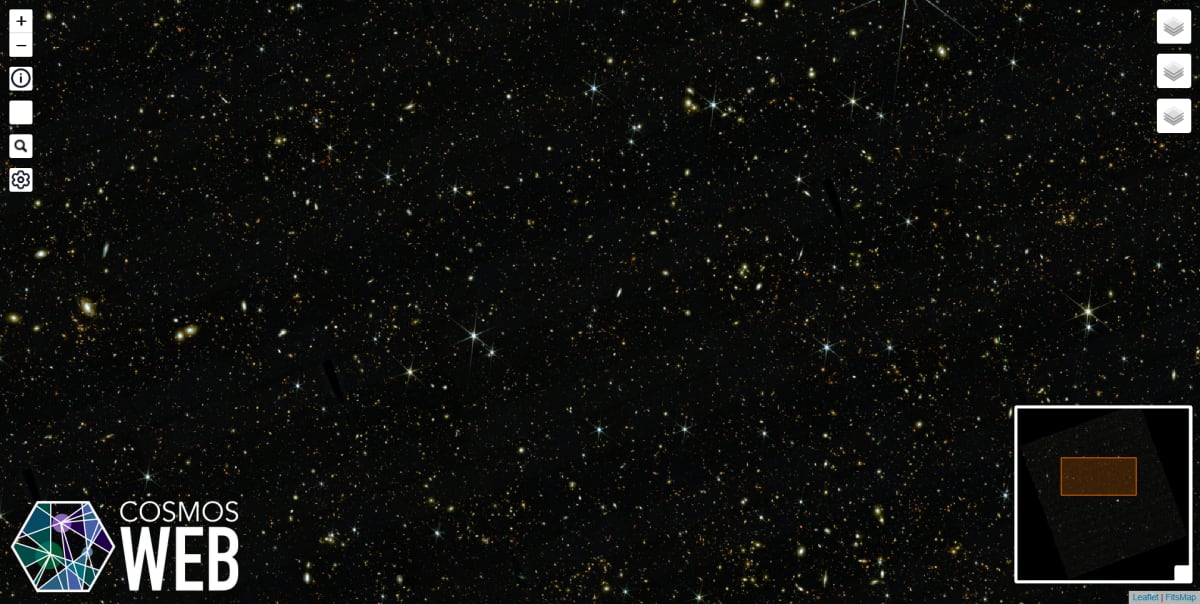
The breakthrough came through COSMOS-Web, the largest observation program in the James Webb Space Telescope's first year. Over 255 hours, the telescope captured 152 wide-field images using its powerful infrared cameras to peer deeper into space than ever before.
What makes this map special is how far back in time it reaches. The new images show the cosmic web as it existed just 1 billion years after the Big Bang, a period previously hidden from view.
Lead researcher Hossein Hatamnia, a PhD student at UC Riverside, explained that Webb's two greatest strengths worked together to achieve this breakthrough. The telescope not only detects many more faint galaxies in the same patch of sky, but it also measures their distances far more precisely.
The improvement over previous maps is dramatic. When placed side by side with Hubble Space Telescope images of the same region, structures that looked like single blobs now resolve into many distinct galaxies and filaments.
"What used to look like a single structure now resolves into many, and details that were smoothed away before are now clearly visible," said Bahram Mobasher, a distinguished professor at UCR who advised the research.
The new map includes a catalog of 164,000 galaxies, each placed in its correct slice of cosmic time. This allows scientists to watch how the Universe evolved from a billion years old to the present day.
Why This Inspires
This achievement represents more than just prettier pictures of space. Understanding how the cosmic web formed and evolved helps answer fundamental questions about where we came from and how our own galaxy came to exist.
The team has released all their data to the public, continuing a 20-year tradition of open science with the COSMOS survey. Anyone can now explore the same images and catalogs that professional astronomers use, making this journey of cosmic discovery available to all.
The research shows what becomes possible when cutting-edge technology meets human curiosity and collaboration. Scientists from institutions across the United States, Chile, Denmark, and beyond worked together to turn 255 hours of telescope time into a window on the infant Universe.
Even more exciting, this is just the beginning. Webb continues to observe the cosmos, and each new image brings us closer to understanding the full story of how the Universe grew from a hot, dense state into the magnificent web of galaxies we see today.
The cosmos is revealing its secrets, one breathtaking image at a time.
Based on reporting by Google News - Science
This story was written by BrightWire based on verified news reports.
Spread the positivity!
Share this good news with someone who needs it