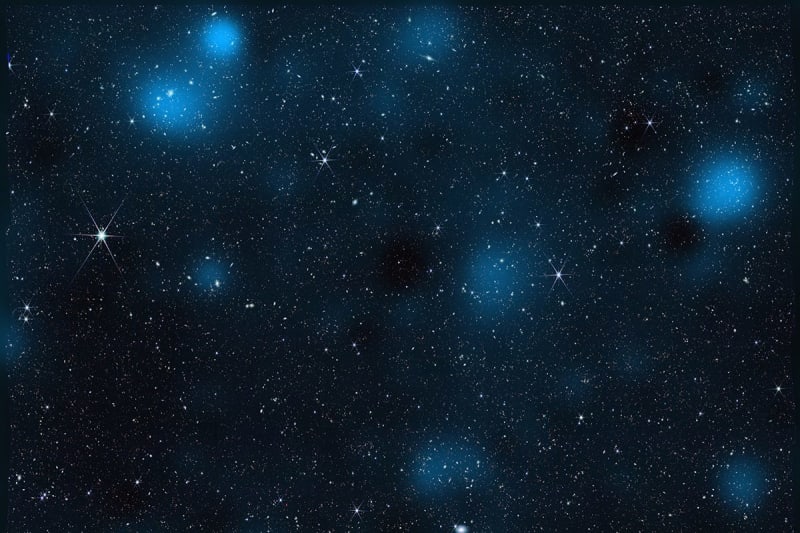
Webb Telescope Maps Universe's Dark Matter in Record Detail
The James Webb Space Telescope just created the most detailed map of dark matter ever made, revealing the invisible framework that holds our universe together. Scientists can now see twice as clearly how this mysterious substance shapes galaxies, stars, and planets across the cosmos.
Scientists just unveiled the sharpest picture ever of the invisible glue holding our universe together.
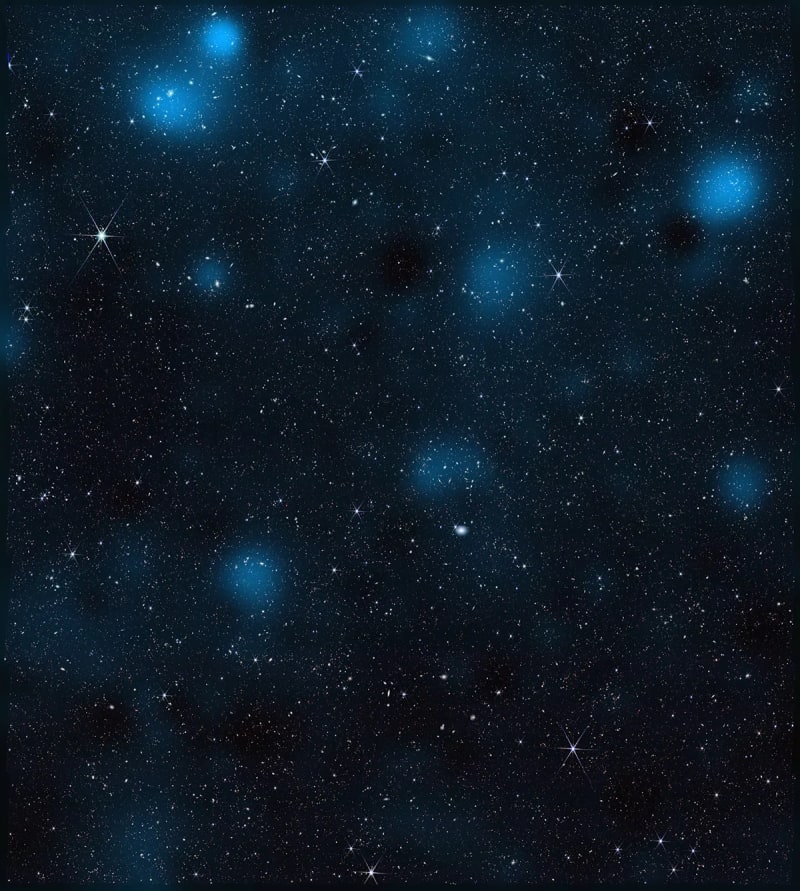
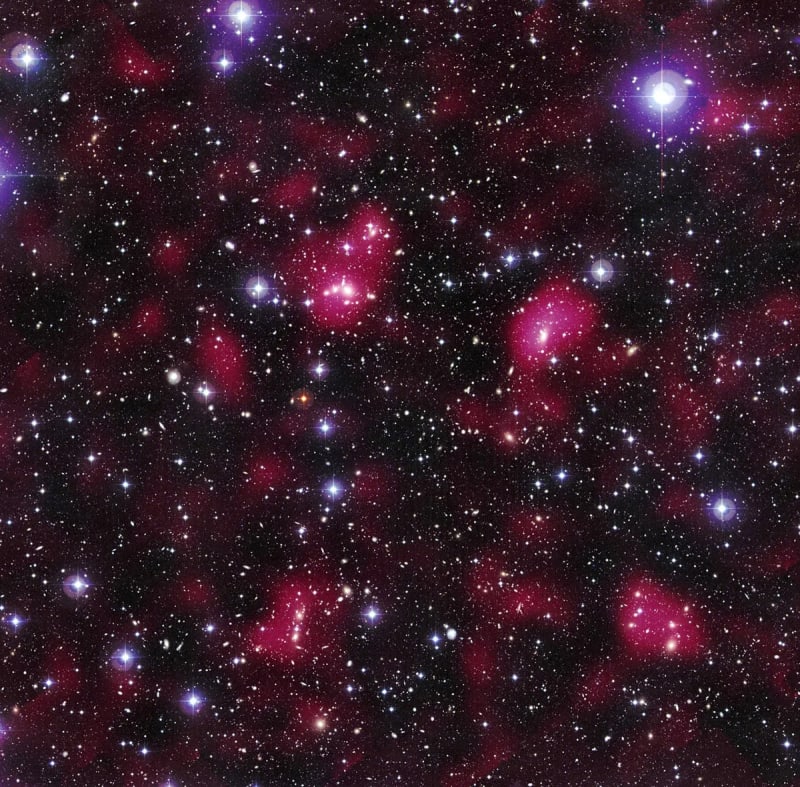
The James Webb Space Telescope has created the largest and most detailed dark matter map to date, giving researchers an unprecedented view of the mysterious substance that makes up 27% of everything in existence. The map is twice as sharp as any previous version, according to NASA.
"Previously, we were looking at a blurry picture of dark matter," says Diana Scognamiglio, lead author from NASA's Jet Propulsion Laboratory. "Now we're seeing the invisible scaffolding of the Universe in stunning detail."
Dark matter earned its name because it can't be seen or directly detected, yet its gravitational pull keeps galaxies from flying apart as they spin through space. Without it, the visible stars and gas in galaxies wouldn't have enough mass to hold themselves together.
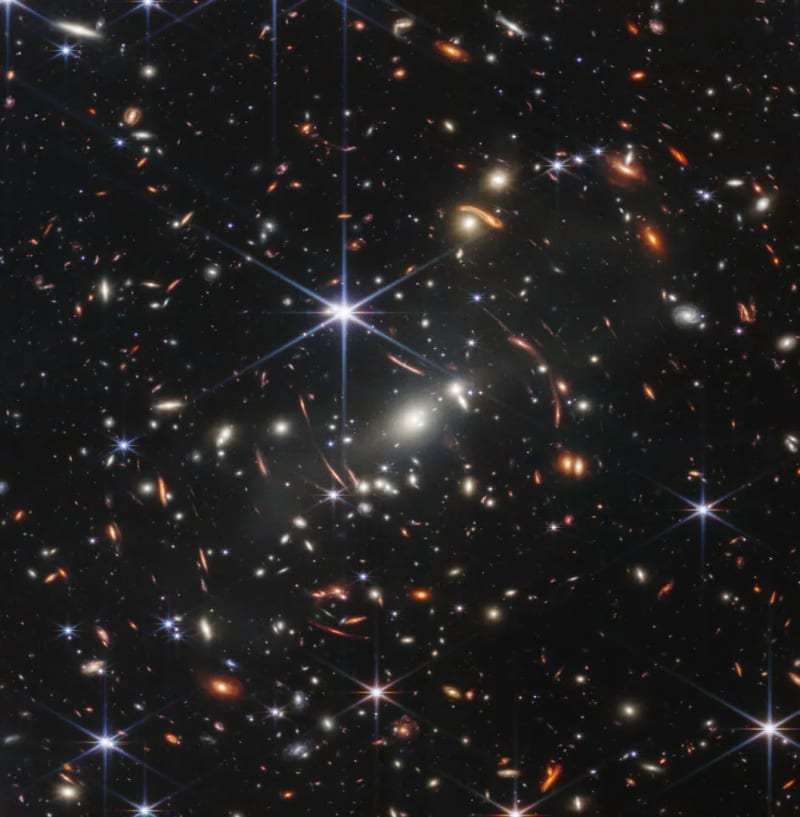
Webb spent over 10 days studying a patch of sky in the constellation Sextans, identifying 800,000 galaxies in an area 2.5 times the size of the full Moon. Many of these galaxies had never been seen before.
The telescope detected dark matter by observing how its mass bends light from distant galaxies, a phenomenon called gravitational lensing that Einstein first predicted. This warping effect reveals where dark matter clusters and how it's distributed across space.
The Ripple Effect
The new map confirms something remarkable: dark matter and regular matter have always existed side by side. Wherever massive galaxy clusters appear, equally massive amounts of dark matter occupy the same space.
"It's not just that they have the same shapes," explains Richard Massey, an astrophysicist at Durham University and study coauthor. "This map shows us that dark matter and regular matter have always been in the same place. They grew up together."
This discovery helps explain how the universe evolved from its early days when matter was sparsely scattered. Dark matter clumped together first, then pulled regular matter toward it, creating the dense regions that eventually formed the galaxies we see today.
The map reveals dark matter forming a cosmic web, with dense regions connected by thinner filaments stretching millions of light years across space. This invisible network has been guiding the formation and distribution of galaxies throughout cosmic history.
Webb's superior resolution captured 10 times more galaxies than ground-based observatories and twice as many as the Hubble Space Telescope's 2007 map of the same region. Scientists can now see new clumps of dark matter that were previously invisible.
Understanding dark matter's role in shaping the universe brings us closer to answering fundamental questions about how everything, including our own galaxy and solar system, came to be.
More Images
Based on reporting by Google: James Webb telescope
This story was written by BrightWire based on verified news reports.
Spread the positivity!
Share this good news with someone who needs it
%2Fhttps%3A%2F%2Ftf-cmsv2-smithsonianmag-media.s3.amazonaws.com%2Ffiler_public%2F3f%2F55%2F3f5579c8-c4a7-43a5-bb54-6498478792fd%2Fhelix1940__fitmaxwzk3mcw2ntbd.jpg)