Webb Telescope May Have Found Universe's First Black Holes
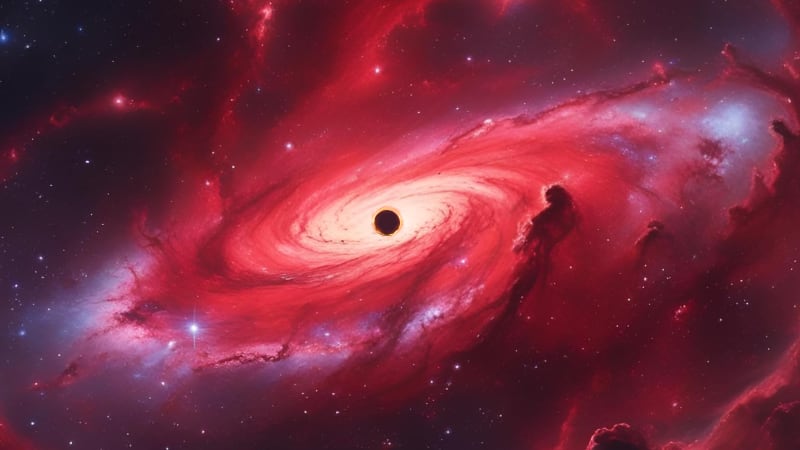
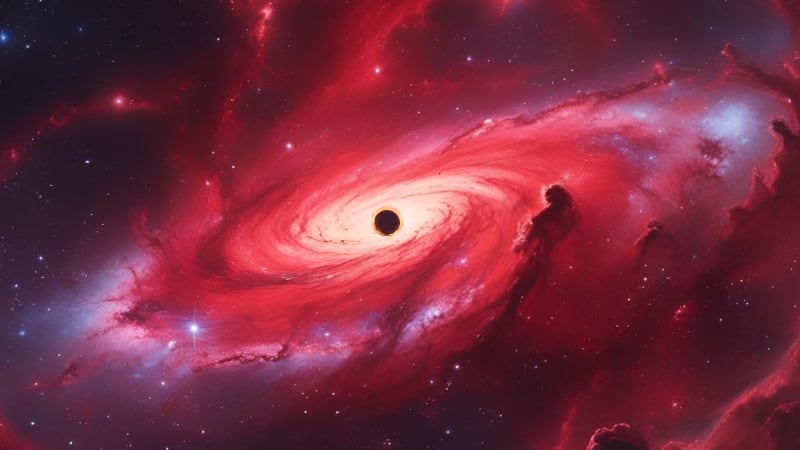
Scientists think mysterious "Little Red Dots" spotted by the James Webb Space Telescope could be cosmic nurseries where the universe's first giant black holes formed. This discovery might solve the puzzle of how supermassive black holes appeared so early in cosmic history.
The James Webb Space Telescope has spotted something incredible: tiny red specks that might be showing us how the universe's biggest black holes were born.
Scientists call them "Little Red Dots," and they're unlike anything we've seen before. These strange objects appeared less than a billion years after the Big Bang, glowing red and packed incredibly tight in space.
Here's why astronomers are excited. We've always wondered how supermassive black holes grew so massive so quickly in the early universe. The old theory said it should take at least a billion years for them to reach their enormous size through mergers, but Webb has found fully formed giants just 500 million years after the universe began.
Elia Cenci and her team at the University of Geneva think they've cracked the case. Their research suggests Little Red Dots are nurseries for "direct collapse black holes," cosmic heavyweights that skip the usual process entirely.
Instead of forming from dying stars, these black holes emerge straight from massive gas clouds. They start out tens of thousands to a million times heavier than our sun, giving them a huge head start in the race to become supermassive.
Think of it like the difference between starting a savings account with $10 versus $10,000. The bigger starting amount makes reaching your goal much faster.
The conditions needed for these direct collapse black holes only existed in the early universe. The gas had to be pure hydrogen and helium, with no heavier elements to cool things down and form regular stars first.
Why This Inspires
This discovery gives us something precious: a window into the universe's infancy. For the first time, we might be watching cosmic giants take their first breath.
"We would have real laboratories to understand the conditions under which giant black holes have formed," Cenci explained. These tiny dots are teaching us how the universe built its largest structures.
The Little Red Dots mysteriously vanish from cosmic history around 1.5 billion years after the Big Bang. That timing makes perfect sense if they're special nurseries that only existed when the universe was young and pristine.
Every galaxy likely has a supermassive black hole at its heart, including our own Milky Way. Understanding where they came from answers one of astronomy's biggest questions: how did the universe's most powerful objects come to be?
Future studies will confirm whether these Little Red Dots truly are the birthplaces of cosmic giants, but the evidence looks promising. We're not just seeing ancient light anymore; we're witnessing creation itself, frozen in time for us to study.
More Images

Based on reporting by Space.com
This story was written by BrightWire based on verified news reports.
Spread the positivity!
Share this good news with someone who needs it