Webb Telescope Reveals Daily Weather on Alien Planet
Scientists have detected a daily cloud cycle on a distant gas giant 700 light years away, clearing decades of atmospheric fog. The breakthrough gives humanity its clearest view yet of what alien worlds are actually made of.
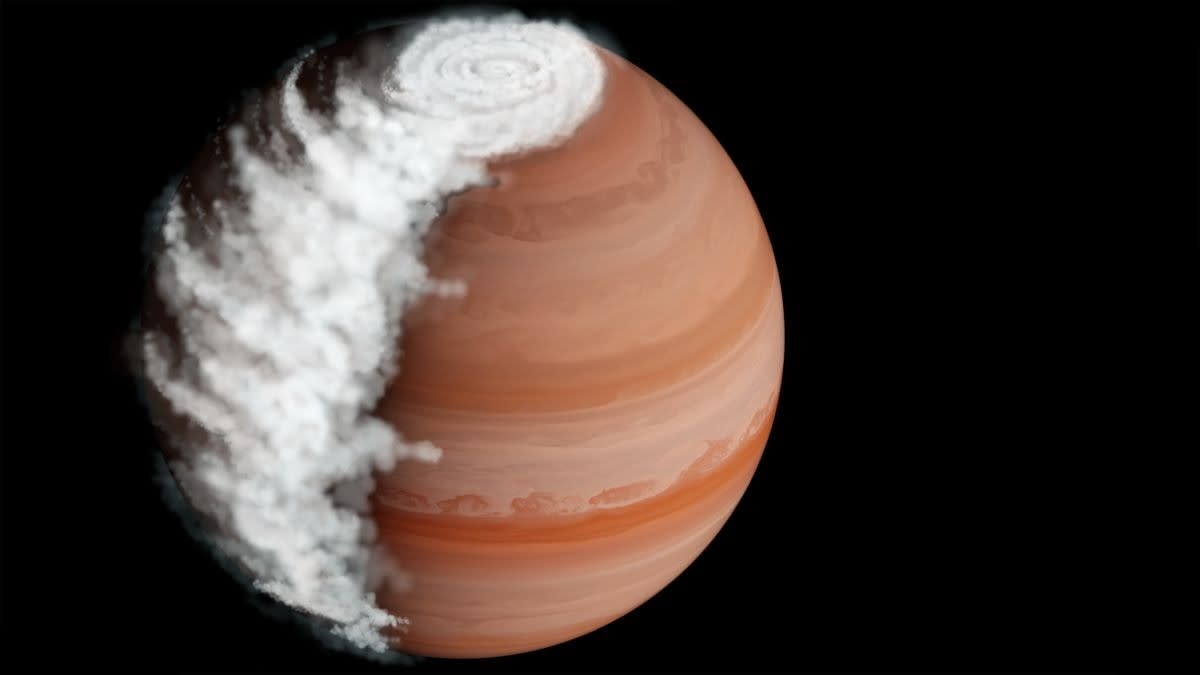
Every morning on a distant planet, clouds roll in. By evening, the sky clears. It sounds like Earth, but it's actually happening 700 light years away on a world we've never visited.
Scientists using the James Webb Space Telescope just detected the first daily weather pattern on an alien planet called WASP-94A b. The discovery, published in the journal Science on May 21, 2026, gives researchers a powerful new tool to understand what planets beyond our solar system are truly made of.
WASP-94A b is what astronomers call a Hot Jupiter. It's a massive gas giant like our own Jupiter, but it orbits so close to its star that temperatures soar past 1,000 degrees Celsius on the day side. For decades, thick clouds have blocked scientists from getting a clear reading of these planets' atmospheres, like trying to see through a foggy window.
The Johns Hopkins University team did something brilliantly simple. Instead of averaging data from the whole planet, they took separate readings from the morning side and evening side as WASP-94A b passed in front of its star. The difference was dramatic.
Mornings were thick with clouds made of magnesium silicate, a common rocky mineral. Evenings were completely clear. Scientists think powerful winds either drag the clouds deep into the planet's superhot interior where they get buried, or the extreme heat simply vaporizes them like morning fog burning off on Earth.
The clear evening skies changed everything. When scientists could peer through cloud-free atmosphere, they got an accurate chemical reading for the first time. Older Hubble telescope data, which averaged in all those clouds, suggested WASP-94A b had hundreds of times more oxygen and carbon than Jupiter. The new Webb data revealed the real number is just five times more, which finally matches what planet formation theory predicts.
Why This Inspires
This isn't just about one distant planet. The team found the same cloud cycle on two other Hot Jupiters, WASP-39 b and WASP-17 b, suggesting this phenomenon happens across many alien worlds. After decades of blurry atmospheric readings, scientists now have a reliable method to understand what exoplanets are truly made of.
The implications reach beyond science. Each breakthrough in understanding distant worlds helps answer humanity's oldest question: what else is out there? Every cleared sky on an alien planet brings us closer to understanding our place in the universe and whether worlds like ours exist beyond our solar system.
We're no longer just guessing at what alien atmospheres contain. We're reading their weather reports.
More Images


Based on reporting by Google: James Webb telescope
This story was written by BrightWire based on verified news reports.
Spread the positivity!
Share this good news with someone who needs it