Webb Telescope Reveals Uranus' Mysterious Aurora Dance
NASA's James Webb Space Telescope just captured the most detailed 3D view ever of Uranus' upper atmosphere, revealing how its bizarre tilted magnetic field creates sweeping auroras unlike anywhere else in our solar system. The findings could help us understand distant planets beyond our own cosmic neighborhood.
Scientists just got their most detailed look yet inside Uranus, and what they found is reshaping our understanding of ice giants.
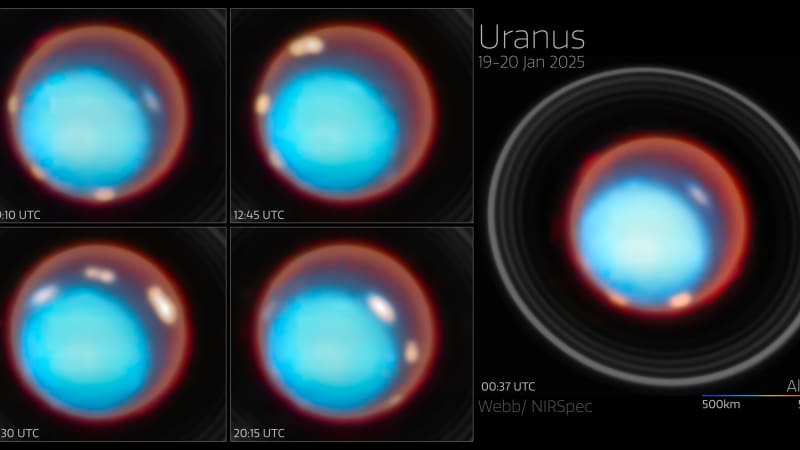
NASA's James Webb Space Telescope spent nearly a full day observing the seventh planet from the Sun, capturing unprecedented details of its upper atmosphere in three dimensions. The breakthrough reveals how energy flows through the planet's layers and how its uniquely lopsided magnetic field creates auroras that behave like nowhere else in our solar system.
Uranus has only been visited once, when NASA's Voyager 2 spacecraft flew by in 1986. Back then, it appeared as a simple light-blue ball floating in the darkness over a billion miles from Earth.
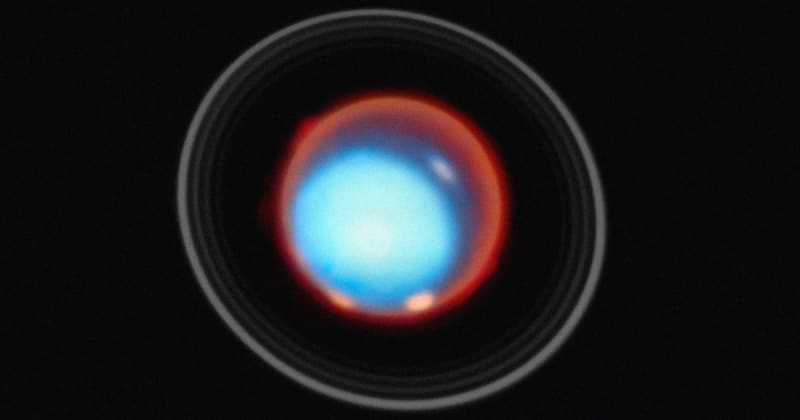
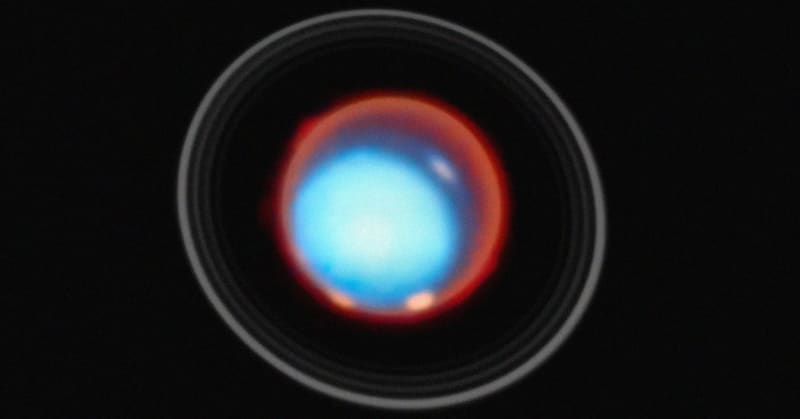
Now Webb's powerful instruments are showing us what Voyager couldn't see. The telescope tracked how the planet's ionosphere, a thin layer ionized by solar radiation, interacts with its magnetic field to create glowing patches of orange and red light.
"This is the first time we've been able to see Uranus's upper atmosphere in three dimensions," said Paola Tiranti, a PhD student at Northumbria University who led the research published in Geophysical Research Letters. Webb's sensitivity allowed scientists to trace energy moving upward through the atmosphere and watch the influence of that tilted magnetic field in real time.
What makes Uranus so special? The planet is tipped almost completely on its side, with a tilt of 97.77 degrees. It's the only planet whose equator sits nearly perpendicular to its orbit around the Sun.
Its magnetic field is equally unusual, tilted and offset from the planet's rotation axis. This creates a magnetosphere unlike any other in our solar system.
The result is auroras that sweep across the entire surface in complex patterns. While Earth's northern and southern lights stay near the poles, Uranian auroras dance as glowing patches that extend far beyond what even Webb can see.
These observations are more than just pretty pictures. They're crucial for understanding the planet's internal magnetic field, something scientists can't measure any other way without sending a spacecraft directly there.
The Bright Side
Webb's findings confirm that Uranus' upper atmosphere is still cooling, a trend first noticed in the early 1990s. By revealing the planet's vertical structure in such detail, the telescope is helping scientists understand the energy balance of ice giants.
That knowledge becomes even more valuable as we discover giant planets orbiting distant stars. Understanding how Uranus works gives us a blueprint for studying worlds we'll never be able to visit.
"Webb is helping us understand the energy balance of the ice giants," Tiranti explained. "This is a crucial step towards characterizing giant planets beyond our Solar System."
While tight budgets have put future missions to Uranus in question, Webb proves we can still make groundbreaking discoveries from home.
More Images
Based on reporting by Futurism
This story was written by BrightWire based on verified news reports.
Spread the positivity!
Share this good news with someone who needs it