Webb Telescope Spots 3,000 Baby Stars in Cosmic Nursery
The James Webb Space Telescope captured a stunning portrait of Westerlund 2, a young star cluster hosting 3,000 brilliant stars and mysterious "failed stars" called brown dwarfs. This cosmic nursery, located 20,000 light-years away, reveals how stars are born in a continuous cycle of creation.
A sparkling cluster of 3,000 newborn stars is lighting up the cosmos, and we just got our clearest view yet of this celestial nursery.
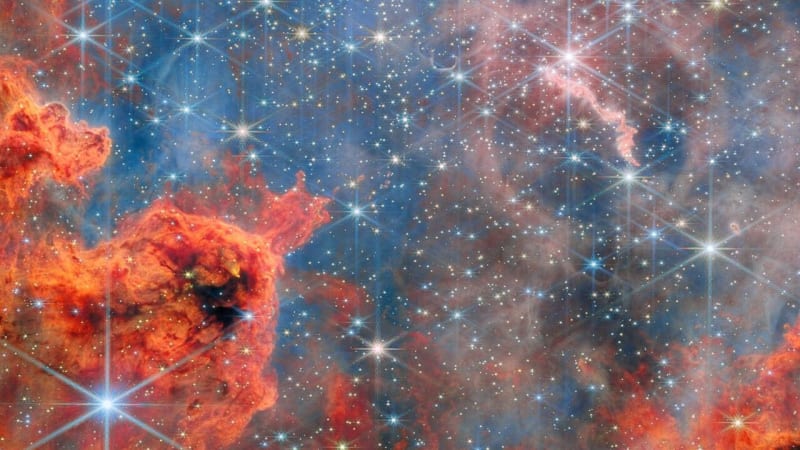
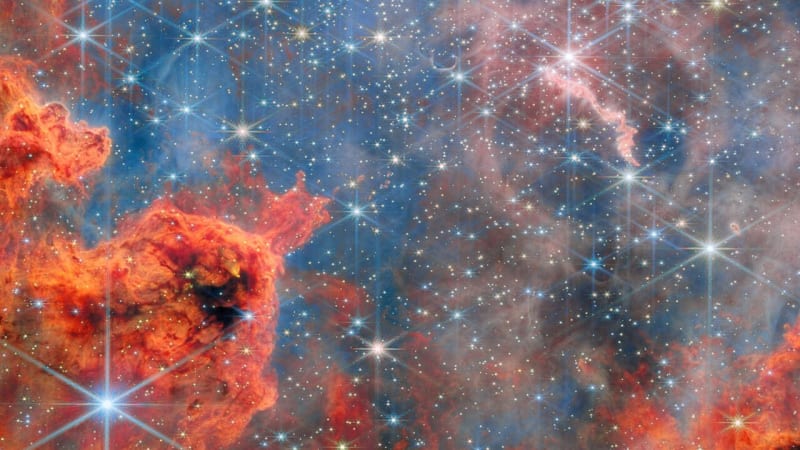
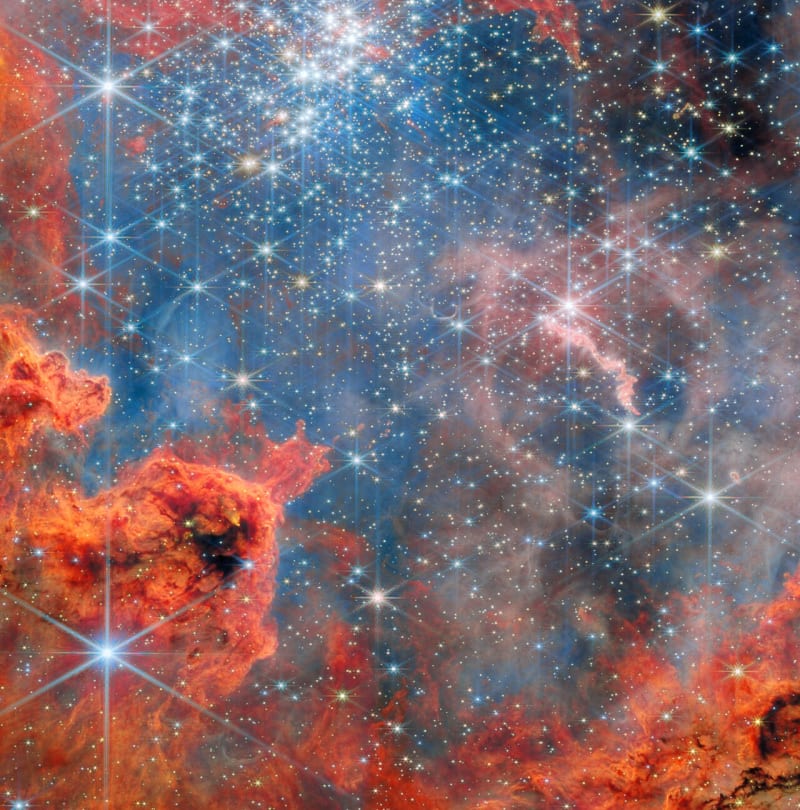
The James Webb Space Telescope captured a breathtaking new image of Westerlund 2, a compact star cluster nestled within swirling clouds of orange and red gas. At just 2 million years old, this stellar neighborhood contains some of the hottest and brightest stars in our entire Milky Way galaxy.
The cluster sits 20,000 light-years from Earth in the constellation Carina, measuring between 6 and 13 light-years across. Despite its youth, Westerlund 2 is already a powerhouse of stellar activity, with massive stars blasting intense radiation that sculpts the surrounding gas into dramatic walls and pillars.
Webb's infrared vision revealed something the Hubble Space Telescope couldn't see a decade ago: a population of brown dwarfs hiding among the bright stars. These "failed stars" have masses only 10 times that of Jupiter, straddling the line between planets and stars but never quite heavy enough to ignite nuclear fusion in their cores.
The image shows tiny stars still embedded in thick clouds where they formed, surrounded by wisps of pink and blue material drifting through space. Larger stars closer to us display eight-pronged patterns, a beautiful artifact of how their light interacts with Webb's instruments.
The Ripple Effect
This discovery does more than showcase cosmic beauty. By identifying brown dwarfs and baby stars at different life stages, astronomers can now piece together how stars form and evolve in these crowded nurseries.
The observations also reveal how massive stars trigger new generations of stellar birth. Their intense radiation heats surrounding gas, which then collapses to form fresh stars in a continuous cycle of creation.
Scientists are particularly excited about studying planet-forming disks around these massive stars. Understanding how worlds take shape in such energetic environments could reshape what we know about planetary systems throughout the universe.
Every sparkle in this image represents a sun potentially nurturing its own family of planets, each a possible home for future cosmic discoveries.
More Images


Based on reporting by Live Science
This story was written by BrightWire based on verified news reports.
Spread the positivity!
Share this good news with someone who needs it