Webb Telescope Spots Star Before It Exploded as Supernova
For the first time, NASA's Webb Telescope identified a star before it exploded, solving a decades-old mystery about missing supergiants. The discovery could explain why the universe's most massive dying stars have been so hard to find.
Scientists just achieved something they've been waiting years for: catching a star in the act of becoming a supernova.
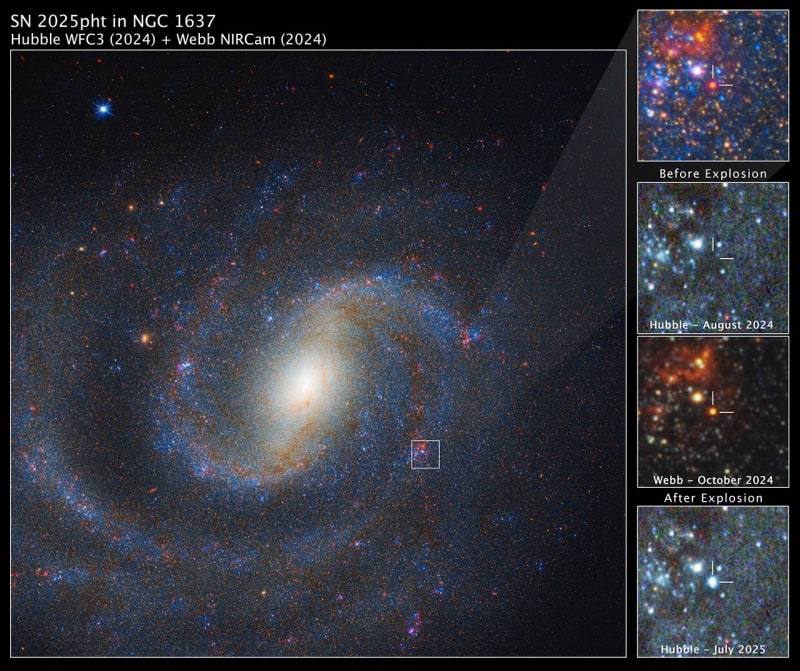
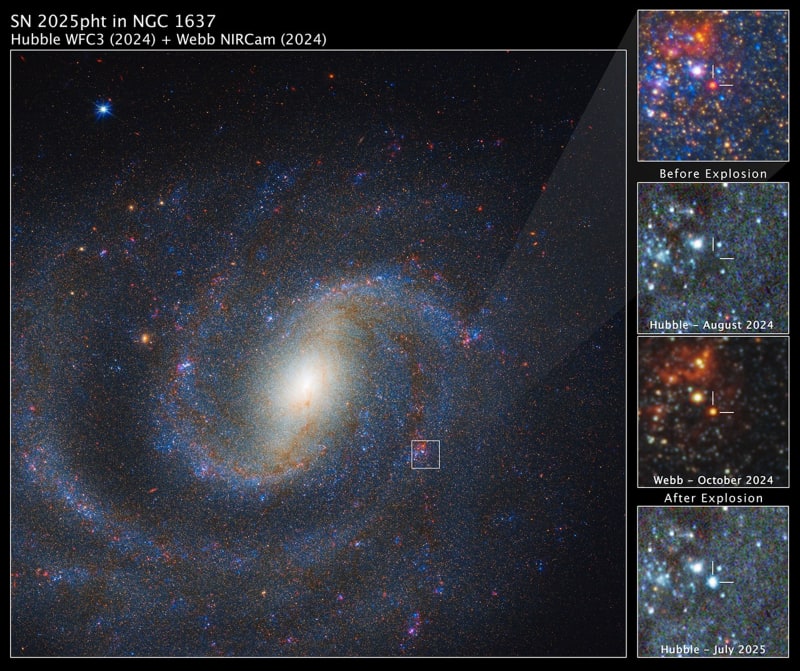
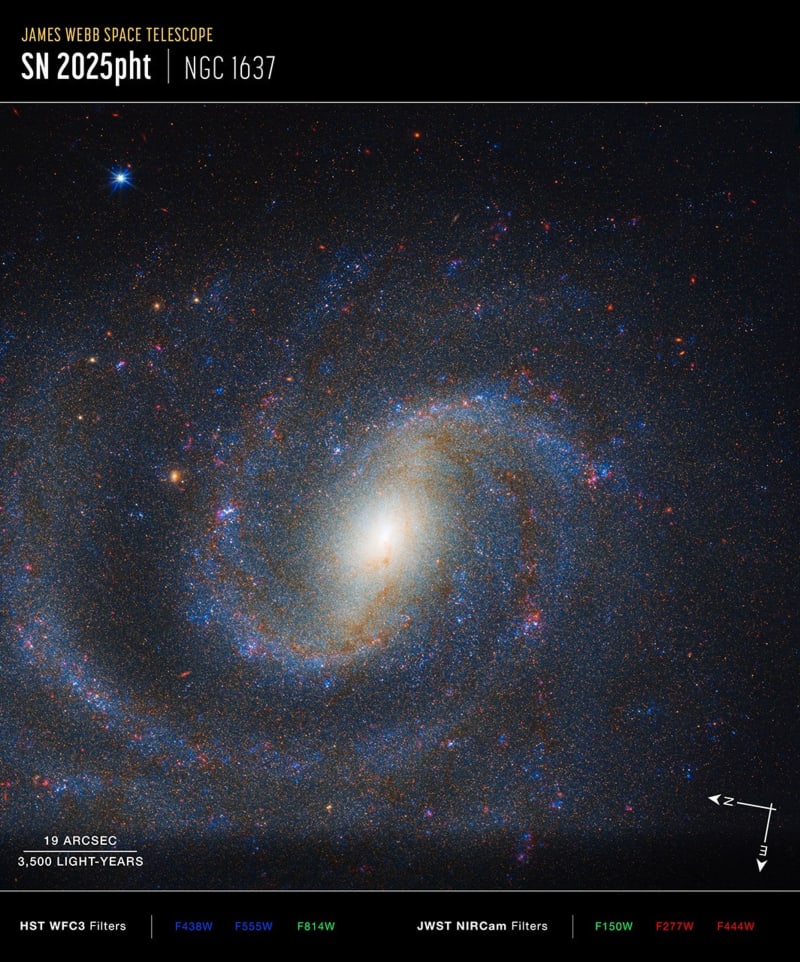
When a star exploded in galaxy NGC 1637 last June, astronomers at Northwestern University did something clever. Instead of just studying the explosion, they searched through old images taken by NASA's James Webb Space Telescope to find exactly which star had blown up.
They found it. A red supergiant star appeared in Webb's 2024 images at the precise location where the supernova now blazes.
This marks the first time Webb has successfully identified a star before its explosive death. The discovery was published in the Astrophysical Journal Letters in February 2026.
What makes this finding special isn't just the before and after pictures. The star turned out to be incredibly dusty, surrounded by thick clouds that made it nearly invisible to other telescopes like Hubble.
"It's the reddest, most dusty red supergiant that we've seen explode as a supernova," said graduate student Aswin Suresh, who co-authored the study.
That extreme dustiness might solve a puzzle that's bothered astronomers for years. The biggest, brightest stars should be easy to spot before they explode, but scientists kept coming up empty when they looked for them in old images.
The leading theory? These massive dying stars are surrounded by so much dust that their light gets blocked almost completely. The Webb observations of supernova 2025pht strongly support this idea.
"Even I didn't expect to see it as extreme as it was," said lead author Charlie Kilpatrick. "It would explain why these more massive supergiants are missing because they tend to be more dusty."
The Bright Side
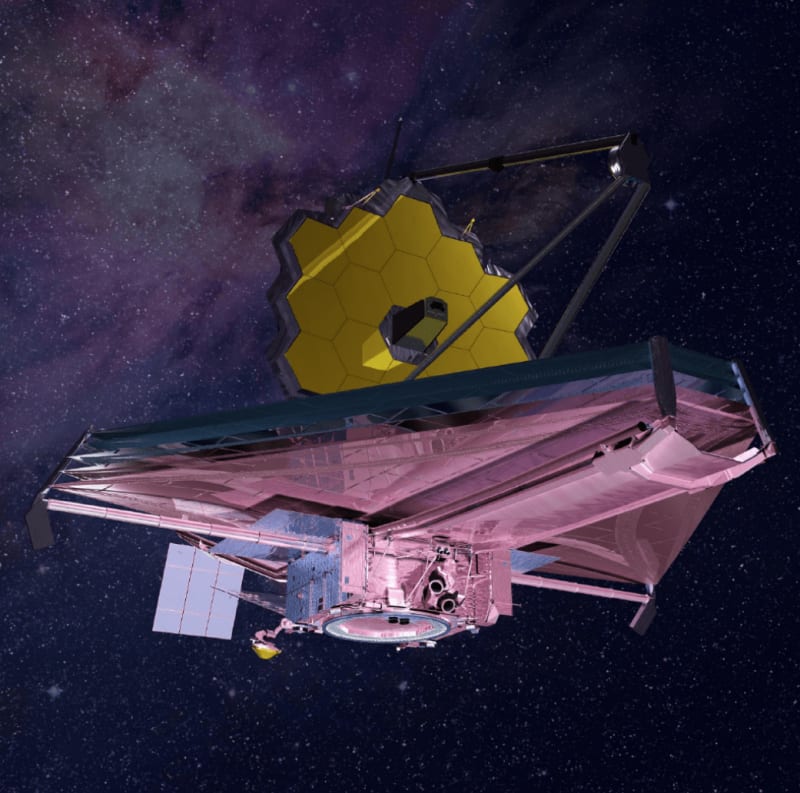
Webb's ability to see in infrared light lets it peer through cosmic dust that blocks visible light. This superpower is opening new windows into stellar death that were simply closed before.
The dust itself held another surprise. Computer models suggest it's rich in carbon, possibly burped out from deep inside the star shortly before it exploded. Scientists think many massive stars experience these dramatic "burps" near the end of their lives, expelling huge quantities of material into space.
The team is now hunting for similar dusty red supergiants that might explode in the future. NASA's upcoming Nancy Grace Roman Space Telescope could help spot these stars and potentially watch them change as they approach their final moments.
The light from this particular explosion traveled 40 million years to reach Earth, meaning the star actually died when dinosaurs still roamed our planet. We're only seeing it now because of the vast distance light must travel across the universe.
With Webb watching the skies, astronomers are finally seeing the full picture of how the universe's most massive stars meet their end.
More Images

Based on reporting by NASA
This story was written by BrightWire based on verified news reports.
Spread the positivity!
Share this good news with someone who needs it