Weight Loss Drug Extends Lifespan 12% in Older Mice
A groundbreaking study shows that semaglutide, the medication in Wegovy and Ozempic, extended the lifespan of older mice by 12 percent while boosting memory and physical health. Scientists believe they may have found a drug that delivers the longevity benefits of calorie restriction without the hunger.
Scientists may have discovered an unexpected fountain of youth hiding in a medication millions already use for weight loss.
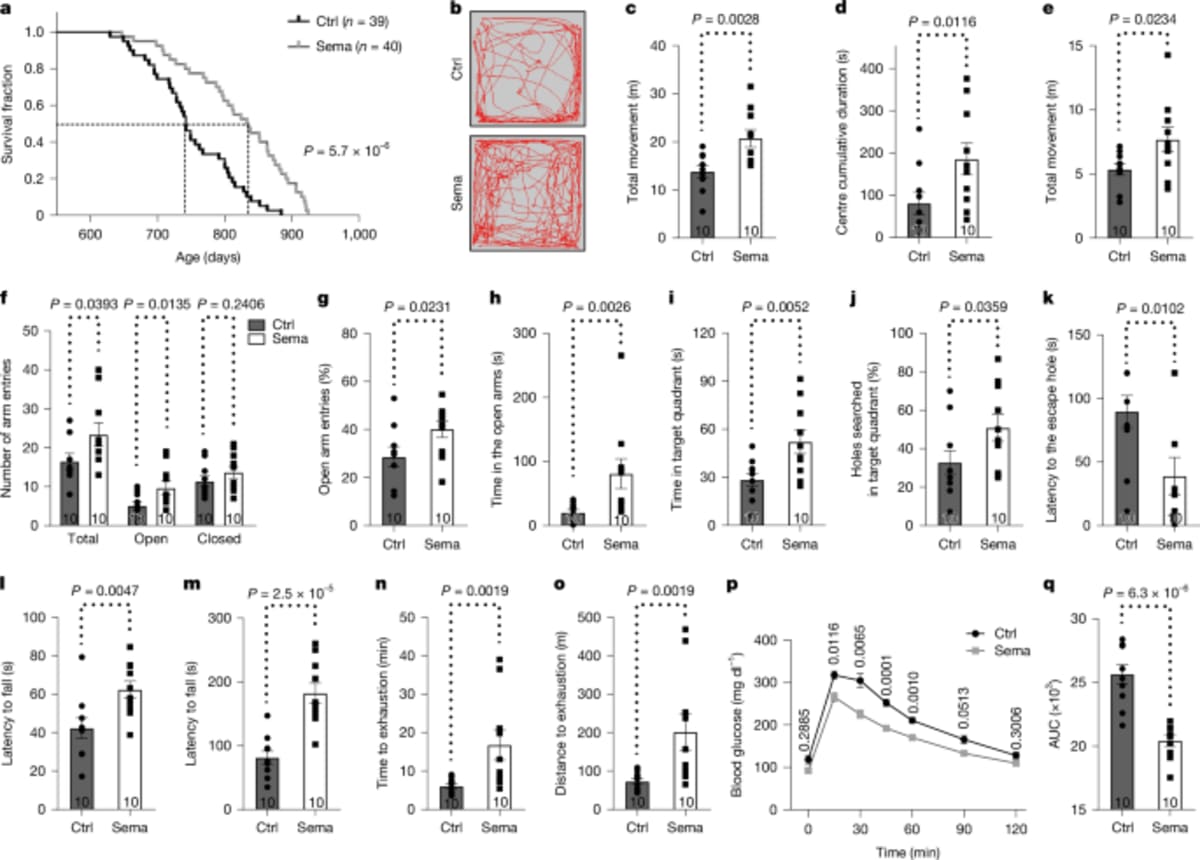
Researchers at the University of California, Berkeley gave semaglutide to female mice starting at age 20 months, roughly equivalent to a woman in her 60s. The results stunned the team: these mice lived 12 percent longer than untreated mice, stretching their median lifespan from 742 days to 834.
But living longer was just the beginning. The treated mice explored more, balanced better on rotating rods, ran farther on treadmills, and solved mazes faster than their peers. Their tissues showed less wear and inflammation, and crucially, their memory stayed sharper.
Longevity researcher Danica Chen, who led the study published in Nature, had a hunch about why one drug seemed to help so many different conditions. For two decades, she'd studied how calorie restriction slows aging and extends life. Maybe semaglutide worked the same magic by reducing food intake through appetite suppression instead of willpower.
To test this theory, Chen's team ran a comparison experiment. One group of older mice received the drug while another group simply ate 24 percent less food, matching what the medicated mice naturally consumed. Both groups showed similar improvements in muscle strength and coordination.
The real surprise came when researchers looked deeper. Gene activity in the livers of drug-treated mice closely matched patterns seen with calorie restriction: quieter inflammation, better blood sugar handling, improved protein maintenance. But the semaglutide mice had something extra. Their memory scores, curiosity levels, and blood sugar control outperformed the dieting group.
"In that sense, it's more than just calorie restriction," Chen says. Why the drug appears to have this edge remains a mystery the team is still investigating.
The Ripple Effect
This discovery could reshape how we think about aging itself. Scientists have long searched for a drug that delivers the longevity benefits of strict dieting without the difficulty of maintaining it for years. The medication already treats diabetes, obesity, heart disease, kidney decline, fatty liver disease, and shows promise for sleep apnea and osteoarthritis.
Chen's ongoing research will compare whether calorie restriction or semaglutide extends lifespan more dramatically. But the current results suggest we might be looking at aging as a treatable condition rather than an inevitable decline. If the drug slows aging itself, it could push back multiple age-related diseases at once.
The study focused on mice, so human trials will need to confirm these benefits translate to people. But millions already take these medications, and researchers are watching closely.
For now, the results offer genuine hope that living longer and healthier lives might become more achievable than we imagined.
More Images




Based on reporting by Scientific American
This story was written by BrightWire based on verified news reports.
Spread the positivity!
Share this good news with someone who needs it