Why Indian Joint Families Build Stronger, Happier Kids
Growing up surrounded by grandparents, cousins, and constant company creates emotional anchors that last a lifetime. Indian joint families are teaching children empathy, belonging, and resilience through everyday moments.
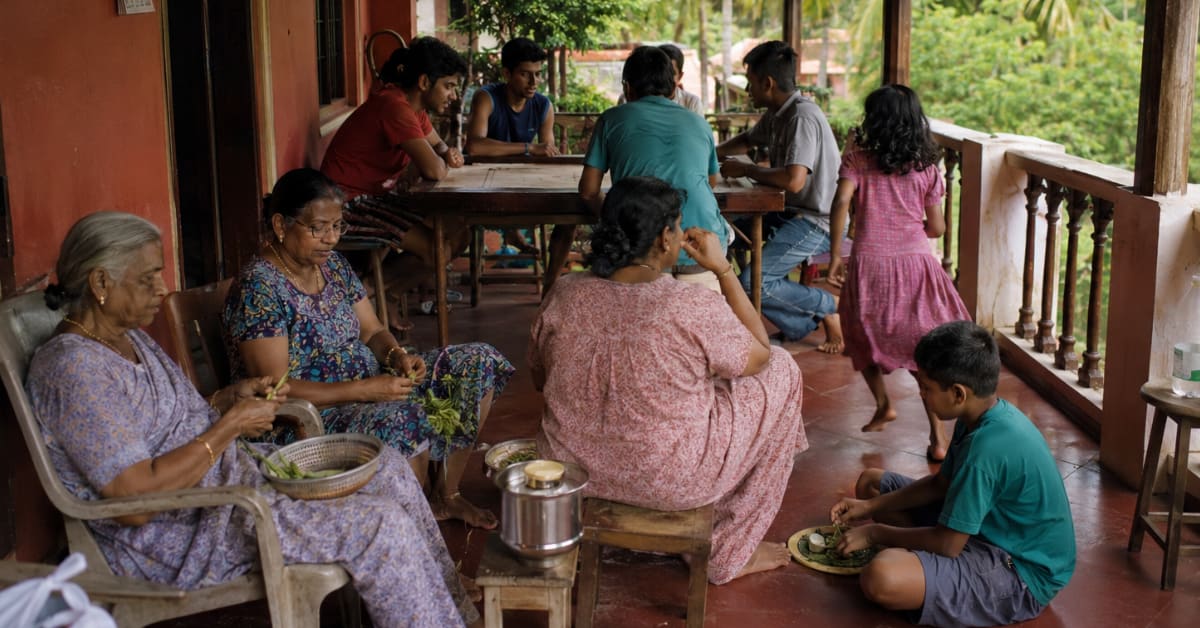
In homes where three generations share one roof, childhood unfolds around crowded dinner tables, grandparents who always know when comfort is needed, and cousins who feel more like siblings.
Long before "community living" became a wellness trend, Indian joint families were quietly raising children with built-in support systems that shape how kids learn love, patience, and belonging.
Meals in these homes are never silent. Someone is asking for more rice, another is sharing a work story, and someone else is reminding the youngest to sit properly. For children in this environment, togetherness becomes instinctive. A bad day at school rarely goes unnoticed because someone is always there to ask questions, offer carefully cut fruit, or simply listen.
The magic often lives in the relationship between grandparents and grandchildren. They become storytellers, caretakers, and comforting companions all at once. Their presence fills childhood with small rituals like oiling hair on Sunday mornings, waiting at the gate after school, and slipping sweets into tiny hands before dinner.
Without formal lessons, grandparents pass down memories, language, and family history through everyday conversation. Children raised around older generations develop early empathy and patience, learning that care is never rushed.
Cousins create the loudest memories. Shared bedrooms during holidays, endless games stretching into late evenings, whispered conversations after lights out. Disagreements happen as often as laughter, but forgiveness arrives quickly. By morning, everyone is back together again.
Responsibility spreads naturally in homes filled with people. Older children help younger ones with homework, someone buys groceries, someone sets plates before dinner. Children participate in family life from an early age, creating a strong awareness that homes function because everybody contributes in small ways.
Sunny's Take
Years later, when people move into nuclear homes and busier lives, what they miss most are not grand celebrations but ordinary moments. The sound of pressure cookers in the morning, grandparents watching television too loudly, cousins sleeping in rows on the floor during summer holidays.
Privacy can feel limited in joint families, and opinions arrive from every direction. Choices that might remain personal in smaller homes often become family discussions. But even these challenges teach valuable lessons about coexistence, adjustment, and remaining connected despite differences.
The feeling of always having people around who belonged to you, and to whom you belonged, creates an emotional foundation that carries children through their entire lives.
More Images
%2Fenglish-betterindia%2Fmedia%2Fmedia_files%2F2026%2F05%2F15%2Fjoint-families-shaping-childhood-2026-05-15-17-54-13.png)
%2Ffilters%3Aformat(webp)%2Fenglish-betterindia%2Fmedia%2Fmedia_files%2F2026%2F05%2F15%2Fjoint-families-shaping-childhood-2026-05-15-18-11-44.png)
%2Ffilters%3Aformat(webp)%2Fenglish-betterindia%2Fmedia%2Fmedia_files%2F2026%2F05%2F15%2Fjoint-families-shaping-childhood-2026-05-15-18-17-40.png)
Based on reporting by The Better India
This story was written by BrightWire based on verified news reports.
Spread the positivity!
Share this good news with someone who needs it