World's Only Floating National Park Saves Dancing Deer
A national park in India literally floats on water, rising and falling with the lake beneath it. The unique ecosystem brought an "extinct" species back from just 14 deer to over 260.
Imagine walking through a forest where the ground beneath your feet gently sways with the water below, and deer appear to dance as they step across floating vegetation.
Welcome to Keibul Lamjao National Park in Manipur, India. It's the only floating national park on Earth.
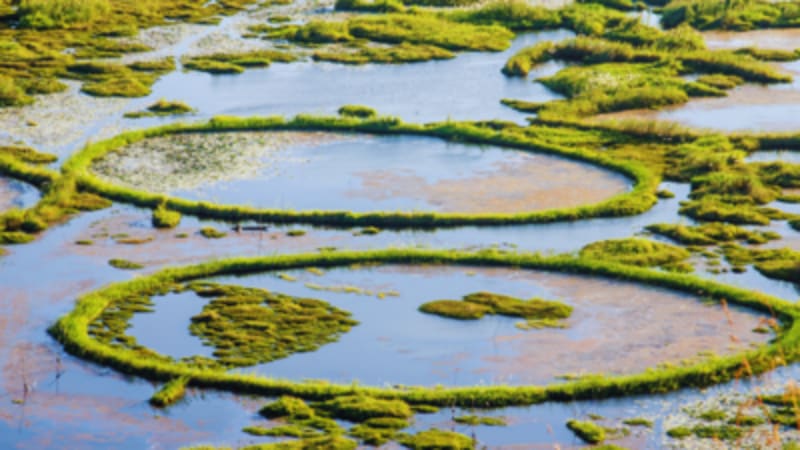
The 40-square-kilometer park sits on Loktak Lake, the largest freshwater lake in Northeast India. What makes it float are massive formations called phumdis, thick layers of decomposed plants, organic matter, and soil that accumulated over centuries.
These floating islands cover two-thirds of the park. They're too deep to be a marsh but too shallow to be a lake, creating an ecosystem found nowhere else in the world.
The park exists because of one species: the Sangai, also known as the brow-antlered deer. This graceful animal holds deep cultural significance in Manipur and serves as the state's official animal.
Scientists first recorded the Sangai in 1839. By 1951, experts declared it extinct. Then in the 1950s, environmentalist E.P. Gee rediscovered a small population surviving in the Keibul Lamjao area.
Conservationists immediately took action. The area became a wildlife sanctuary in 1966 and achieved national park status in 1977, all to protect this rare deer.
The Ripple Effect
The results speak for themselves. In 1975, only 14 Sangai remained. By 1995, that number grew to 155. The most recent 2016 census counted 260 deer, a remarkable turnaround for a species once considered lost forever.
The Sangai earned the nickname "dancing deer" because of its delicate, careful steps across the floating phumdis. The deer's survival depends entirely on these floating meadows remaining thick and stable enough to support them.
The park includes three small hills that provide refuge for larger mammals during monsoon season when water levels rise. UNESCO has recognized the area's importance by adding it to its tentative list for world heritage status.
The ecosystem remains fragile. Natural water cycles in Loktak Lake determine whether the phumdis form and regenerate properly. Any disruption to the lake's hydrology threatens the floating biomass and every species depending on it.
Despite pressures from human habitation that reduced the protected area from 4,000 hectares to 2,160 hectares in the late 1990s, conservation efforts continue strong.
A forest that floats, a deer that was lost and found, and an entire ecosystem surviving on water proves nature can bounce back with dedicated protection.
More Images



Based on reporting by Times of India - Good News
This story was written by BrightWire based on verified news reports.
Spread the positivity!
Share this good news with someone who needs it