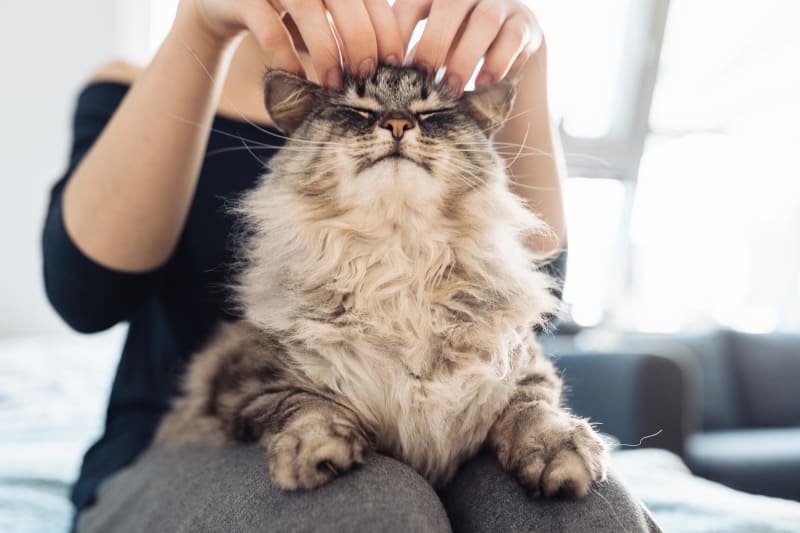
Your Cat's Purr Reveals Its Unique Identity, Study Finds
Scientists discovered that a cat's purr is like a fingerprint, more reliable for identifying individual cats than their meows. The finding reveals how living with humans transformed cat communication in surprising ways.
Every cat owner has wondered what makes their furry friend unique, and scientists just found an answer in an unexpected place: the steady rumble of a purr.
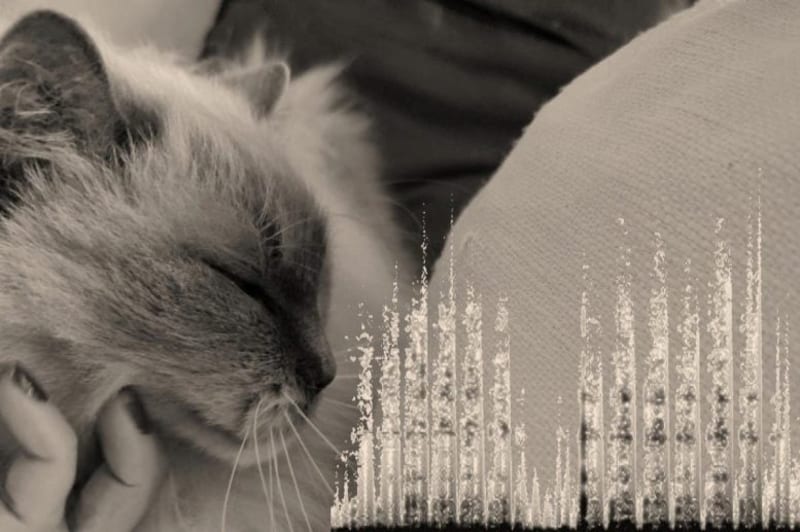
Researchers at the Museum für Naturkunde Berlin and the University of Naples discovered that each cat's purr carries a distinct vocal signature as individual as a human fingerprint. Using technology designed for speech recognition, they analyzed recordings from the Animal Sound Archive and found that purrs reliably identify specific cats, while meows change dramatically depending on the situation.
"People pay most attention to meowing because cats mainly use these vocalizations toward us," explains lead author Danilo Russo. "But once we examined the acoustic structure closely, the even, rhythmic purr turned out to be the better cue for identifying individual cats."
The research team tested how accurately a computer could match sounds to individual cats based solely on acoustic features. Every single cat in the study had its own characteristic purr that remained consistent across different situations.
Purring typically happens during relaxed moments like petting or close contact with familiar people. Mother cats also use it to communicate with newborn kittens. This consistency makes purrs perfect identity markers that help both cats and humans recognize familiar individuals.
Meowing tells a different story entirely. Cats deployed meows with remarkable versatility, changing them to ask for food, seek attention, or express complaints. This adaptability showed up clearly in the data, with individual cats producing vastly different meows depending on what they wanted.
The researchers compared domestic cats with five wild cat species including African wildcats, European wildcats, jungle cats, cheetahs, and cougars. Domestic cat meows showed far greater variability than their wild relatives, suggesting something fundamental changed during domestication.
The Bright Side
Living alongside humans transformed how cats communicate in ways that benefit both species. Humans differ greatly in their routines, expectations, and responses, which likely favored cats that could flexibly adjust their meows to get what they needed.
This vocal flexibility represents a remarkable evolutionary adaptation. Rather than losing communication abilities through domestication, cats developed a sophisticated dual system: reliable purrs for recognition and adaptable meows for negotiation.
The discovery helps explain why your cat seems to have different "voices" for different demands while maintaining that unmistakable purr you'd recognize anywhere. It's not your imagination; your cat really is tailoring its message specifically for you.
This research celebrates the unique bond between cats and humans, built on thousands of years of mutual adaptation and understanding.
More Images
Based on reporting by Google News - Scientists Discover
This story was written by BrightWire based on verified news reports.
Spread the positivity!
Share this good news with someone who needs it