NASA Launches Roman Telescope to Map Universe's Mysteries
After 16 years of development, NASA's Nancy Grace Roman Space Telescope lifted off aboard a SpaceX rocket to explore dark matter, hunt exoplanets, and help solve cosmic mysteries. The bus-sized observatory will map over a billion galaxies in five years, working 1,000 times faster than Hubble.
A massive new telescope just launched to help answer one of humanity's biggest questions: Are we alone in the universe?
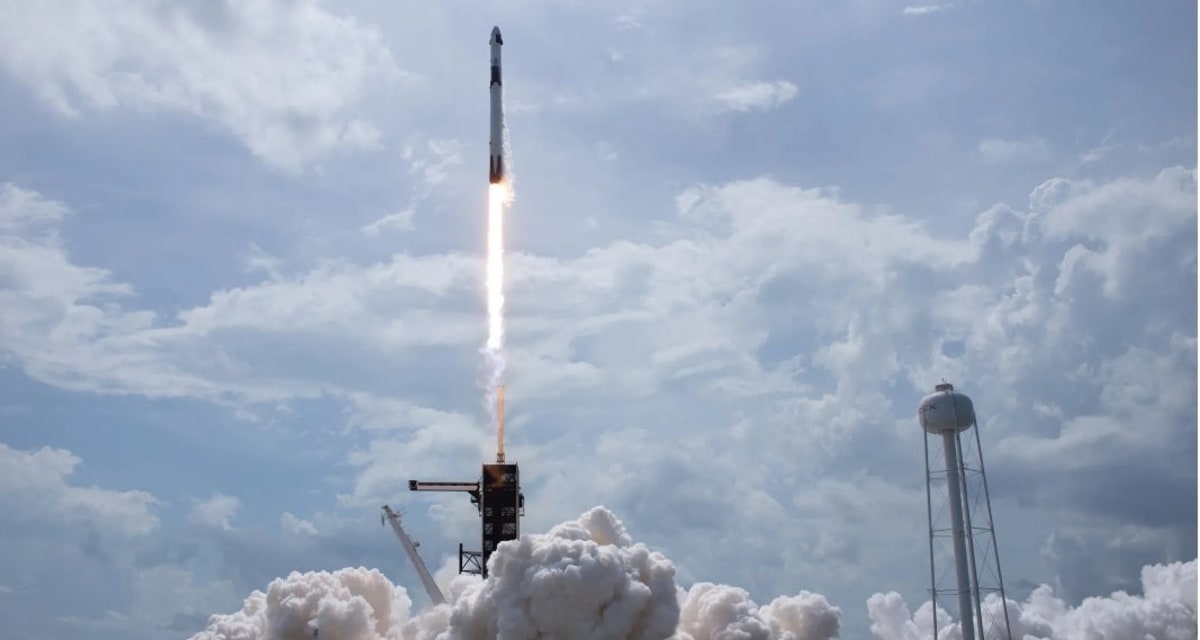
On August 30, NASA's Nancy Grace Roman Space Telescope lifted off from Florida's Kennedy Space Center aboard a SpaceX Falcon Heavy rocket. The 18,000-pound observatory, roughly the size of a tour bus, is headed to a spot one million miles from Earth to begin a five-year mission mapping the cosmos.
"In some ways, I could never believe that this moment would actually happen," said Dominic Benford, the telescope's program scientist at NASA headquarters, moments after the golden morning launch. The telescope honors NASA's first female executive and chief of astronomy, Nancy Grace Roman, who championed space-based observatories in the 1960s and earned the nickname "mother of the Hubble Space Telescope."
Roman comes equipped with a 300-megapixel infrared camera that sees with the same sharpness as Hubble but with a field of view 100 times larger. It can observe the sky about 1,000 times faster than its 36-year-old predecessor.
The telescope will tackle three major surveys over its mission. First, it will map one-eighth of the entire sky, capturing data on more than one billion galaxies to reveal how the universe has expanded and evolved. Second, it will watch for stellar explosions and brightness-changing events in our Milky Way for about six months. Third, it will spend roughly 15 months examining the center of our galaxy, hunting for exoplanets orbiting distant stars.
Scientists are especially excited because recent discoveries suggest our understanding of the universe might need a major update. There are hints that the standard model of cosmology has flaws, particularly regarding dark matter and dark energy.
"We're very likely to demonstrate that our standard model is wrong, and to set ourselves on a path to figuring out how does our universe really work," said Julie McEnery, a senior project scientist on the mission.
Roman will also test an advanced coronagraph, a device that blocks starlight to reveal planets orbiting nearby stars. This technology is 100 to 1,000 times more powerful than any previous space coronagraph and will help pave the way for NASA's future Habitable Worlds Observatory, designed to search for signs of life on distant worlds.
The Ripple Effect
Roman was designed to work hand-in-hand with the Vera C. Rubin Observatory in Chile, which began surveying the night sky in June. While Rubin observes in visible light from the ground, Roman will capture complementary infrared data from space with better resolution. NASA's McEnery calls them "siblings embarking on a life of exploration."
The $4.3 billion mission came in under budget by a few million dollars and launched several months ahead of schedule. Roman was built to last ten years total, meaning it could continue making discoveries well beyond its initial five-year mission.
After a three-month journey to its destination at the second Lagrange point, Roman will begin the work of unraveling the universe's deepest mysteries, one galaxy at a time.
More Images
%2Fhttps%3A%2F%2Ftf-cmsv2-smithsonianmag-media.s3.amazonaws.com%2Faccounts%2Fheadshot%2F21428_origin_thumbnail.png)
Based on reporting by Smithsonian
This story was written by BrightWire based on verified news reports.
Spread the positivity!
Share this good news with someone who needs it