Humanoid Robots Successfully Perform Surgery in Medical First
For the first time ever, humanoid robots have successfully performed complete surgeries, including a gallbladder removal alongside a human surgeon. This breakthrough could bring life-saving operations to remote communities, battlefields, and areas without access to expensive specialized surgical equipment.
📺 Watch the full story above
Two humanoid robots just made medical history by successfully completing surgeries on large mammals, opening a door to healthcare access that could save countless lives.
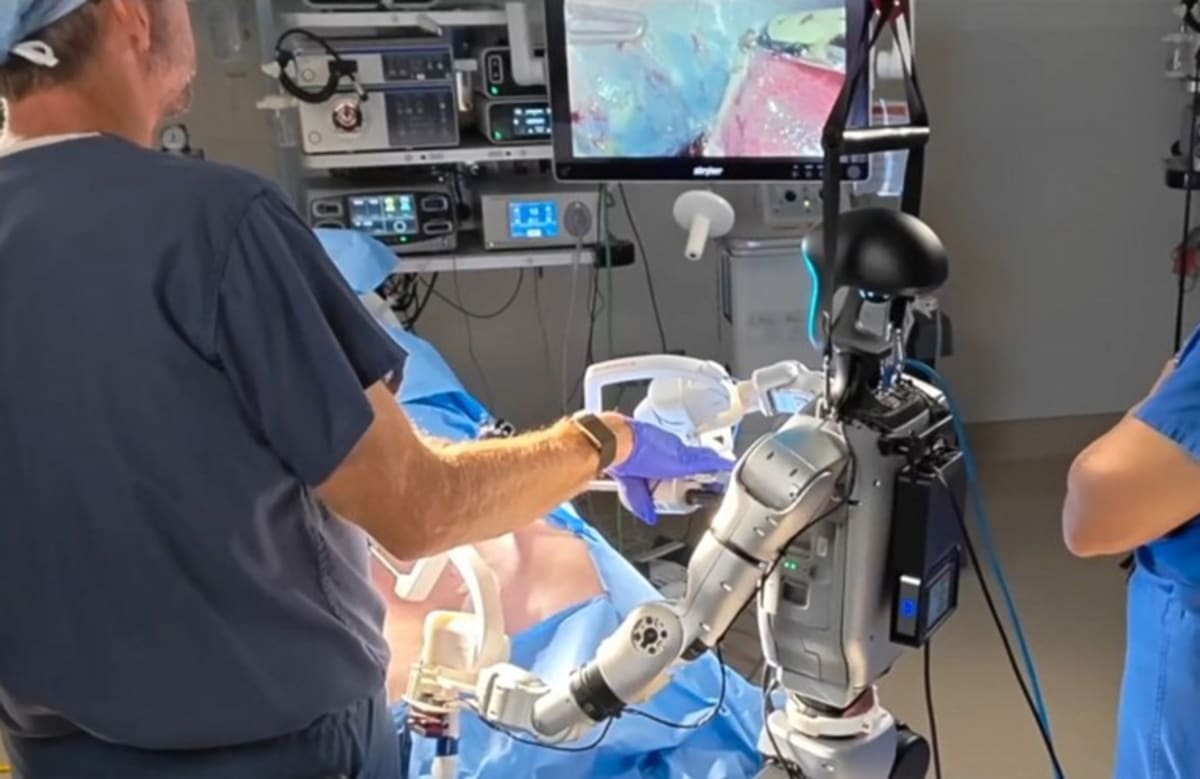
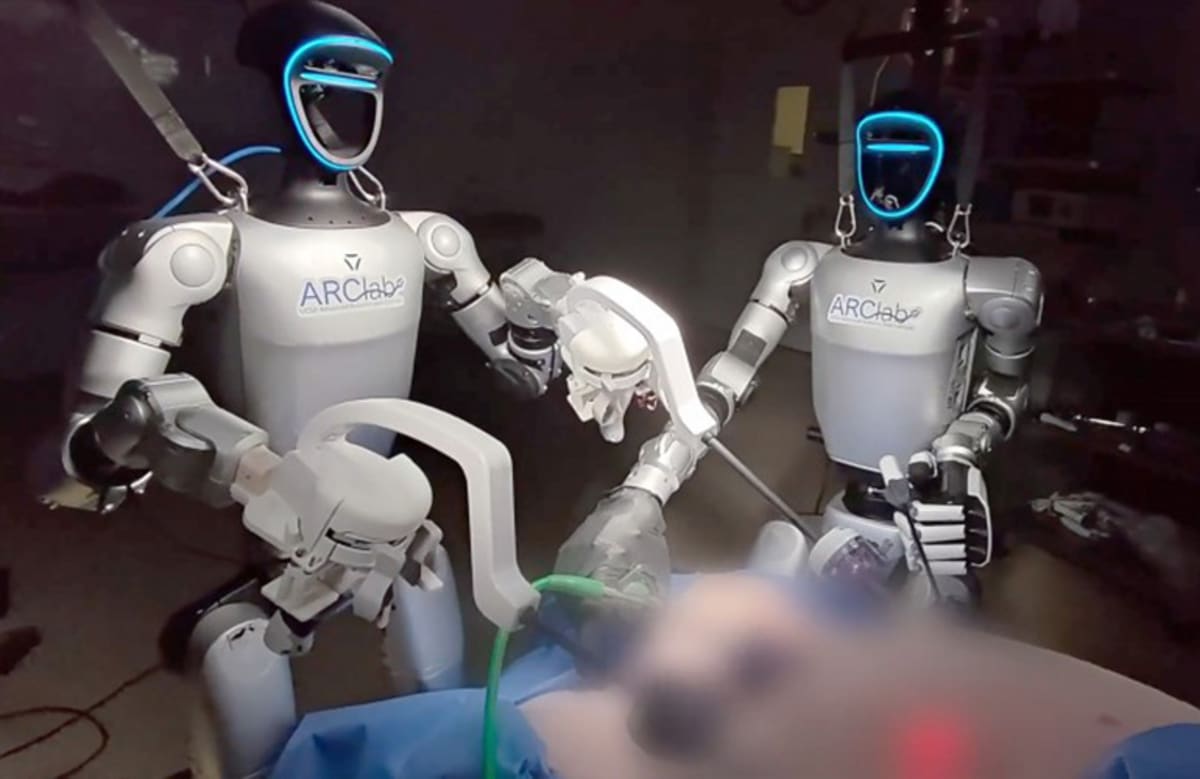
Researchers at UC San Diego achieved something never done before. In a groundbreaking trial, a humanoid robot teamed up with a human surgeon to perform a complete gallbladder removal. In a second procedure, two humanoids worked side by side to complete another successful surgery.
The results appeared this week in the journal Nature, and they represent a major shift in how surgical care could reach patients. Unlike the massive da Vinci robots that cost millions and stay bolted in single operating rooms, these humanoid robots are portable, affordable, and versatile enough to perform many different procedures.
"Remotely operated and autonomous humanoid robots have real potential for amplifying access to critical surgeries to which patients would otherwise not have access," said Michael Yip, who led the research. The implications stretch from rural American towns to war zones to future space missions.
Dr. Shanglei Liu, who remotely controlled one of the robots during surgery, explained the game-changing advantage. "It's a fraction of the cost, and it takes a fraction of the space in an operating room," he said. The precision matched existing surgical robots, but without the prohibitive price tag or massive infrastructure.
The procedure they chose wasn't easy. Gallbladder removal requires steady hands and delicate instruments with wrist-like movements. It's the standard training surgery for general surgeons precisely because it's challenging.
The Ripple Effect
The breakthrough could reshape healthcare access worldwide. Rural hospitals often lack both the specialized equipment and the surgical teams needed for complex procedures. Patients in these areas face hours-long transfers to urban medical centers, sometimes with life-threatening delays.
Humanoid surgical robots could change that equation completely. A single versatile robot could support multiple types of procedures without requiring a custom-built operating room. Communities struggling to staff full surgical teams could access remote specialists who guide the robots from anywhere.
The technology isn't perfect yet. The robots needed several recalibrations during surgery, making procedures much longer than traditional methods. Their smaller stature limited their reach across the operating table. But early specialized surgical robots faced similar challenges. The first robotic surgery took six hours; today it takes 30 minutes.
Beyond surgery itself, these robots could walk around operating rooms, fetch tools, and clean up afterward. They could fill multiple roles that hospitals struggle to staff, from surgical assistant to support crew.
The research team sees autonomous surgical assistants as the next frontier. Many communities simply can't find enough trained surgical staff, leaving patients untreated. Humanoid robots could bridge that gap while human surgeons guide the most critical moments remotely.
What started as a proof of concept has revealed a promising path forward for global healthcare equity.
More Images

Based on reporting by The Robot Report
This story was written by BrightWire based on verified news reports.
Spread the positivity!
Share this good news with someone who needs it