India's First Female Anthropologist Defied Nazis in 1930s
In 1930s Germany, Indian scientist Irawati Karve stood up to her Nazi professor who demanded she prove racial superiority theories. She chose scientific truth over propaganda, revolutionizing anthropology in India despite career penalties.
📺 Watch the full story above
When a young Indian woman walked into a German university laboratory in the 1930s, she had no idea she'd soon be standing up to Nazi ideology with nothing but scientific evidence.
Irawati Karve, born in 1905, became India's first female anthropologist during one of history's darkest chapters. While studying in Nazi-era Germany, she faced an impossible choice: compromise her integrity or risk her academic career.
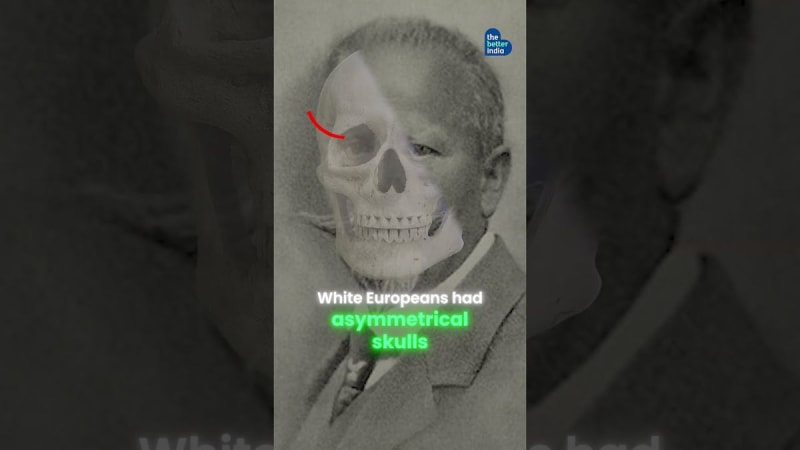
Her professor, working under Nazi influence, pressured her to produce research proving racial superiority theories. Instead of bending to political pressure, Karve let the data speak for itself.
She conducted rigorous scientific research that directly contradicted the propaganda her professor expected. Her findings disproved the racial theories the regime desperately wanted validated.
The consequences were swift. Academic penalties followed, threatening the career she'd worked so hard to build in a field dominated by men.
Rather than compromise, Karve returned to India with her scientific principles intact. She dedicated her life to documenting real lives and fighting the very biases her Nazi-era professor had tried to enforce.
Back home, she revolutionized Indian anthropology by studying kinship patterns, caste systems, and cultural practices with the same scientific rigor she'd defended in Germany. Her groundbreaking work "Kinship Organisation in India" became a cornerstone text, analyzing family structures across the subcontinent.
Karve's research went beyond academic papers. She used anthropology as a tool to challenge social prejudices and document the rich diversity of Indian communities.
Why This Inspires
Karve's story reminds us that standing up for truth never goes out of style. At a time when speaking up could have cost her everything, she chose scientific integrity over career advancement.
Her courage in Nazi Germany wasn't just about one research project. It set the foundation for decades of work that would challenge biases and celebrate human diversity in her home country.
Today, when misinformation spreads faster than facts, Karve's commitment to evidence-based truth feels more relevant than ever. She proved that one person's refusal to compromise can create ripples that last generations.
Her legacy lives on in every Indian woman scientist who follows her path and every researcher who chooses truth over convenience.
More Images
%2Fenglish-betterindia%2Fmedia%2Fyoutube_thumbnails%2Fvi%2Fmp8hCLJfPN0%2Fmaxresdefault.jpg)
%2Fenglish-betterindia%2Fmedia%2Fyoutube_thumbnails%2Fvi%2FPD_Jm5l00Zw%2Fmaxresdefault.jpg)
%2Fenglish-betterindia%2Fmedia%2Fyoutube_thumbnails%2Fvi%2F9_3mpALTh3I%2Fmaxresdefault.jpg)
%2Fenglish-betterindia%2Fmedia%2Fyoutube_thumbnails%2Fvi%2F585O5nABG3I%2Fmaxresdefault.jpg)
Based on reporting by The Better India
This story was written by BrightWire based on verified news reports.
Spread the positivity!
Share this good news with someone who needs it