NASA's Roman Telescope Mirror Passes Final Test for 2026 Launch
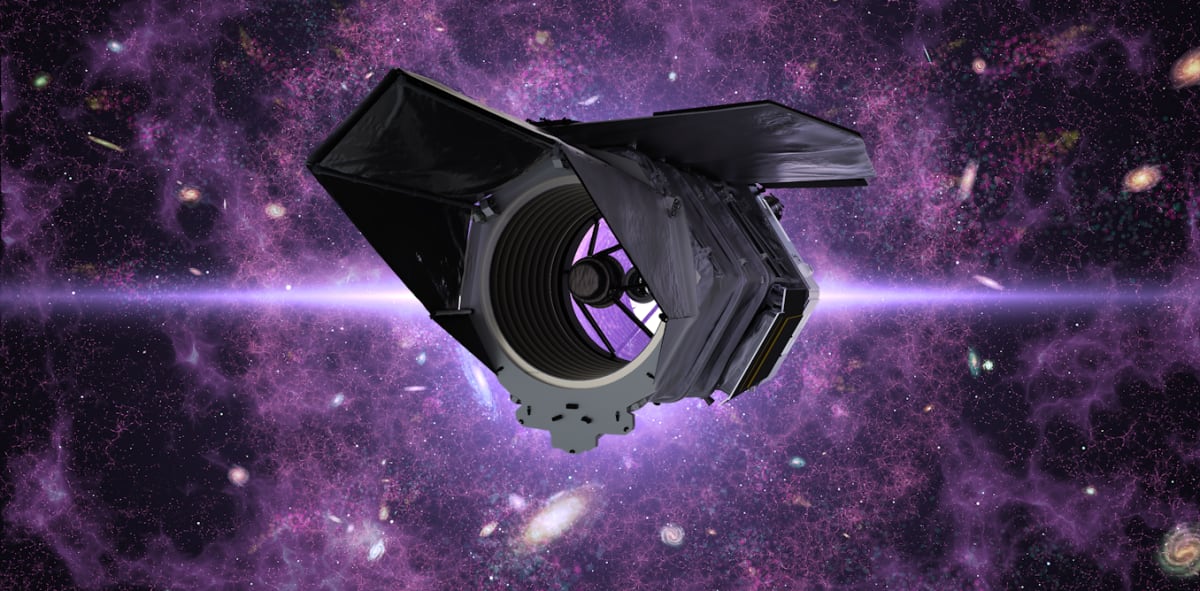
NASA just completed the final inspection of the Nancy Grace Roman Space Telescope's massive infrared mirror, clearing the way for a September 2026 launch. This $4 billion telescope will hunt for exoplanets and unlock mysteries of dark matter from its perch a million miles from Earth.
📺 Watch the full story above
NASA just took a major step toward launching humanity's next great eye in the sky, and it's going to help us discover worlds beyond our own.
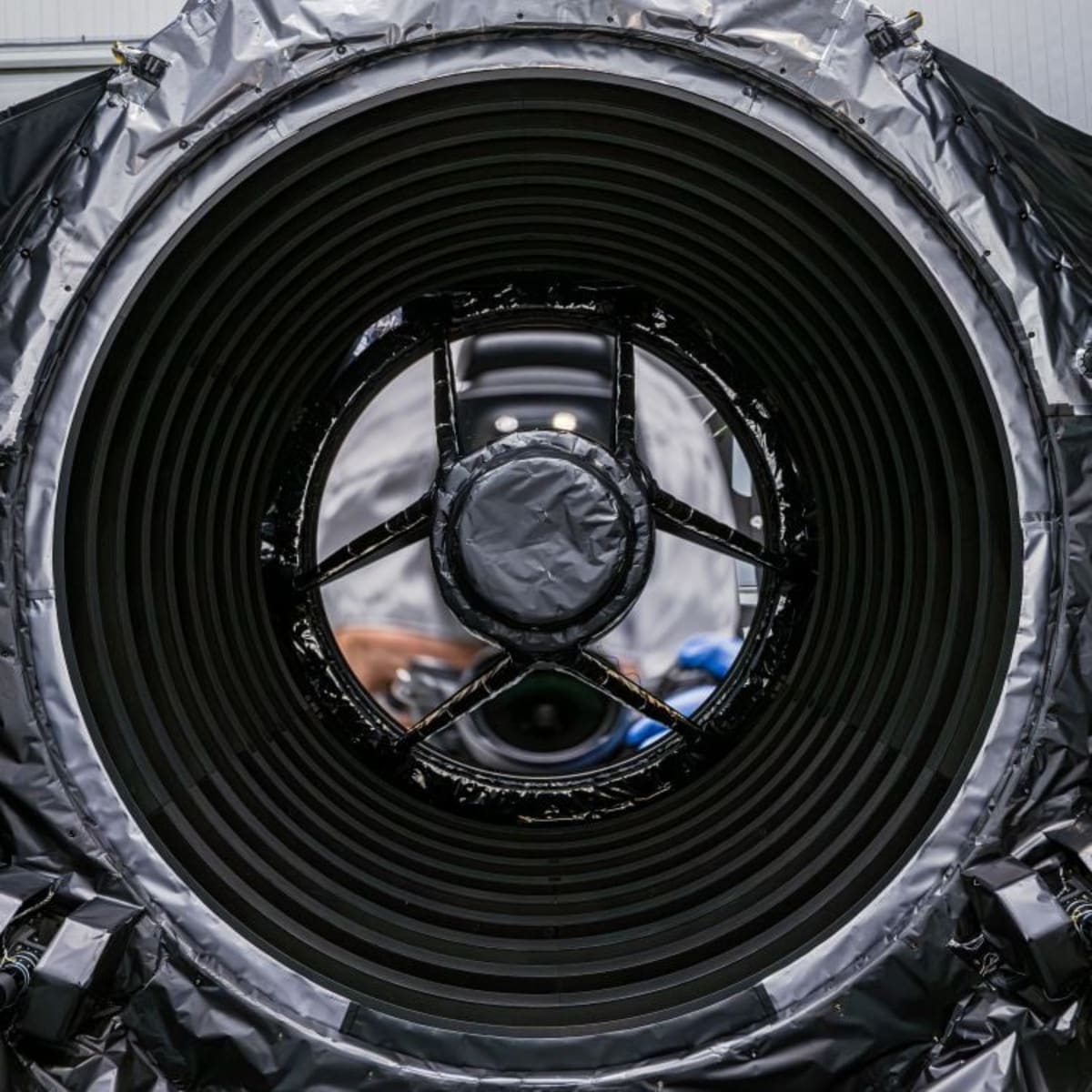
The space agency completed its final inspection of the primary mirror for the Nancy Grace Roman Space Telescope, a stunning 2.4-meter disc coated with silver just 400 nanometers thick. That's hundreds of times thinner than a human hair, yet powerful enough to capture infrared light from the farthest reaches of space.
The telescope honors Dr. Nancy Grace Roman, NASA's first Chief of Astronomy, who passed away in 2018 after pioneering the path for space telescopes. Her legacy will soon orbit at Lagrange point 2, the same gravitationally stable spot where the James Webb Space Telescope currently resides, about a million miles from Earth.
"The Roman engineering team laid eyes on the telescope for the final time before it, in turn, becomes the eyes of humanity, revealing the wonders of the cosmos," said J. Scott Smith, Roman's Optical Telescope Assembly Manager at NASA Goddard Space Flight Center. His words capture the profound moment when years of dedicated work from countless teams finally comes together.
Roman will launch from Kennedy Space Center in September 2026 with an ambitious mission. The telescope will directly image exoplanets, study how galaxies formed and evolved, and investigate the mysterious forces of dark matter and dark energy that shape our universe.
The Ripple Effect
This telescope represents more than technological achievement. At nearly $4 billion, Roman costs less than half what the James Webb Space Telescope required, proving NASA can deliver groundbreaking science more efficiently.
The telescope has overcome numerous financial and logistical challenges during its decade of development since 2014. Each hurdle cleared represents the determination of scientists and engineers who refused to let budget constraints dim humanity's curiosity about the cosmos.
For the next generation of astronomers and astrophysicists, Roman opens doors to careers studying worlds we can barely imagine. Graduate students and postdoctoral researchers will soon download data revealing planets orbiting distant stars, making discoveries that could reshape our understanding of life's place in the universe.
The choice to orbit at Lagrange point 2 means Roman will require minimal fuel to maintain its position, extending its operational lifetime and maximizing the scientific return on investment. These gravitationally stable points act like cosmic parking spots where spacecraft can rest without constantly burning fuel.
With the mirror inspection complete, NASA will now ship Roman to Florida for final preparations before its journey to deep space, where it will spend years peering into the infrared spectrum invisible to human eyes but rich with cosmic secrets.
Based on reporting by Google: James Webb telescope
This story was written by BrightWire based on verified news reports.
Spread the positivity!
Share this good news with someone who needs it