Prague Scientists Create Fluorescent Dye That Lights Up Cells
Scientists in Prague have developed fluorescent labels that only glow when they bind to their intended targets, making it easier and cheaper to watch living cells respond to drugs and treatments. The breakthrough could speed up drug testing and help doctors better understand diseases like cancer.
📺 Watch the full story above
Watching what happens inside living cells just got a whole lot clearer, thanks to a team of scientists who solved a problem that's been frustrating researchers for years.
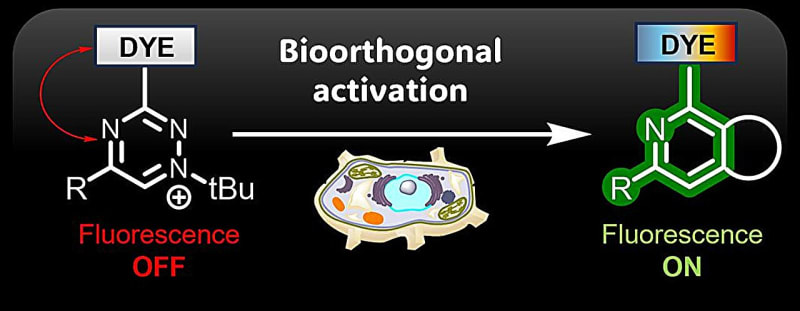
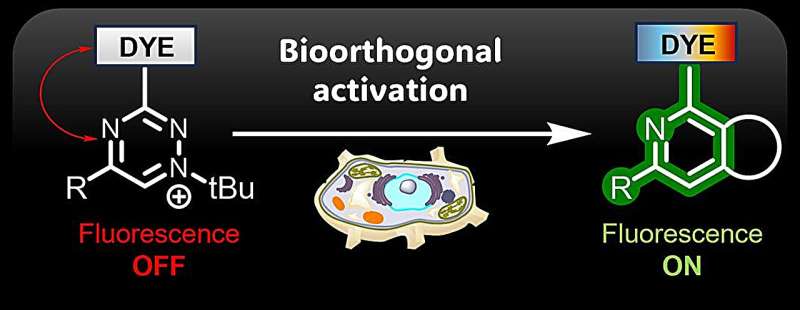
Researchers at IOCB Prague have created a new type of fluorescent label that stays dark until it finds exactly what it's looking for inside a cell. Once it locks onto its target, it lights up like a beacon, giving scientists a crystal-clear view of what's happening without the messy background glow that usually clouds the picture.
The old way of labeling cells was like trying to spot a firefly in a room full of glowing Christmas lights. Fluorescent dyes would stick to everything, not just the target, so scientists had to wash cells repeatedly to remove the excess glow. That process was expensive, time-consuming, and sometimes damaged the very cells they were trying to study.
The new labels, called fluorogenic triazinium probes, stay completely dark until a specific chemical reaction happens at the target site. Dr. Veronika Šlachtová, who helped lead the research, explains that the technology works across the entire visible spectrum from blue to far red. That means scientists can track multiple cellular structures at once using different colors, like watching several actors on stage with different colored spotlights.
The practical applications reach far beyond the lab. Fluorescence microscopy is a workhorse tool in modern medicine and drug development, used to observe how proteins move, how drugs affect cells, and how cellular structures change during disease. This new method could help researchers study carbohydrate structures on cell surfaces that play crucial roles in immune responses, infections, and how cancer spreads through the body.
What makes this breakthrough particularly exciting is how accessible it is. The probes are relatively easy to prepare, which means they could become commercially available for labs around the world. No specialized equipment or complex procedures required.
The Ripple Effect
Better imaging tools mean better science, and better science means faster progress on the treatments people are waiting for. Dr. Milan Vrábel, the study's corresponding author, notes that high-quality fluorescent labeling makes everyday laboratory work easier while producing more reliable data. In the long run, this could accelerate how quickly new drugs move from the testing phase to patients who need them.
The research, published in the Journal of the American Chemical Society, came from collaboration between teams at IOCB Prague and the chemical biology group of Péter Kele in Hungary. Their combined expertise turned a frustrating limitation into an elegant solution.
Sometimes the biggest leaps forward come from making the invisible visible.
More Images
Based on reporting by Phys.org
This story was written by BrightWire based on verified news reports.
Spread the positivity!
Share this good news with someone who needs it