Webb Telescope Reveals How Baby Star Clusters Clear Their Cribs
The James Webb Space Telescope just showed us something beautiful: newborn stars in the Whirlpool Galaxy are pushing away the cosmic clouds that birthed them, like cosmic toddlers taking their first steps. Scientists discovered that massive star clusters clean out their dusty nurseries in just 5 million years.
📺 Watch the full story above
Scientists just watched baby stars grow up, and it's teaching us how galaxies shape their own futures.
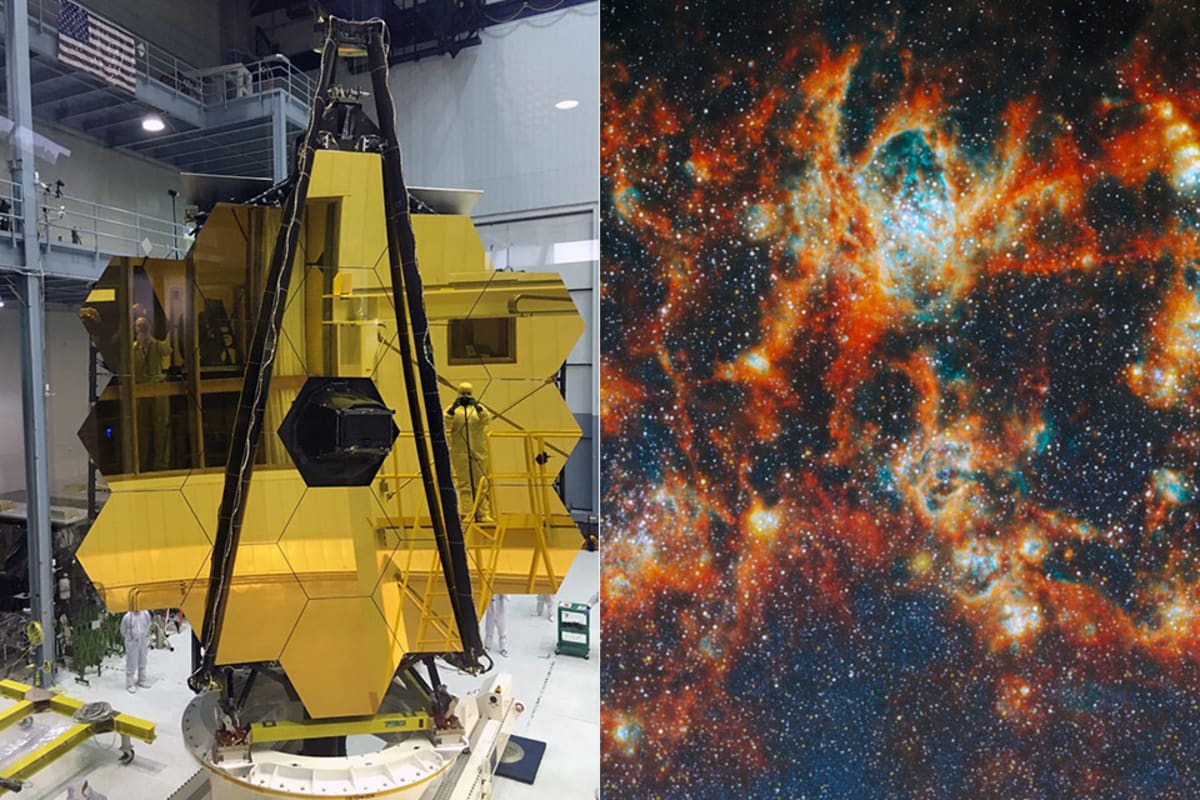
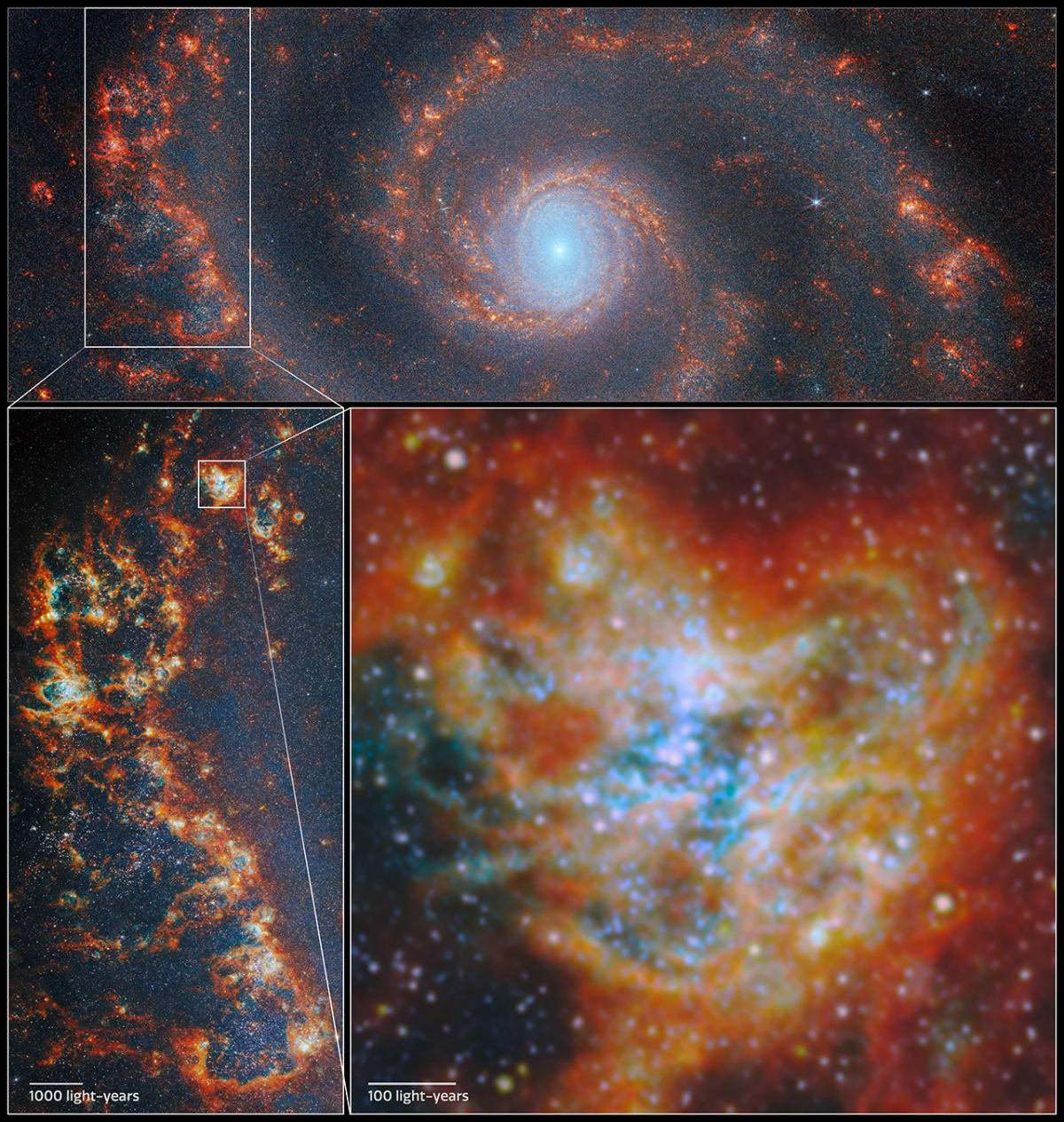
The James Webb Space Telescope captured stunning infrared images of the Whirlpool Galaxy, located 31 million light years away. The images reveal something researchers had never seen before: thousands of newborn star clusters actively clearing out the gas and dust that created them.
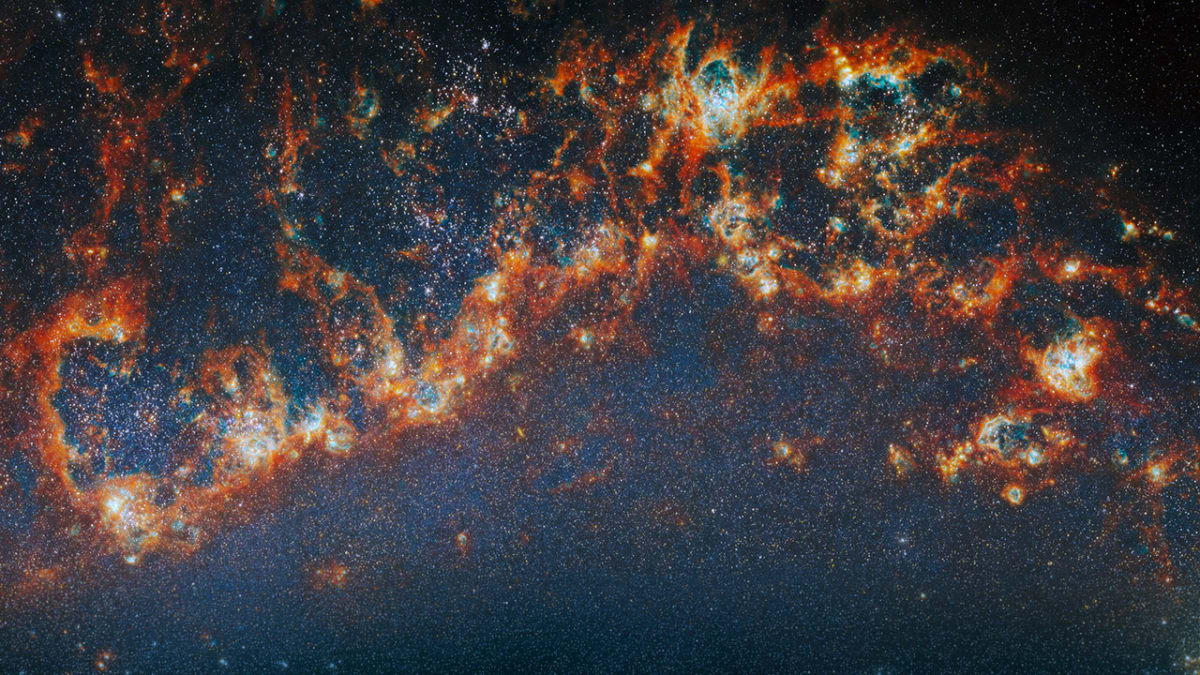
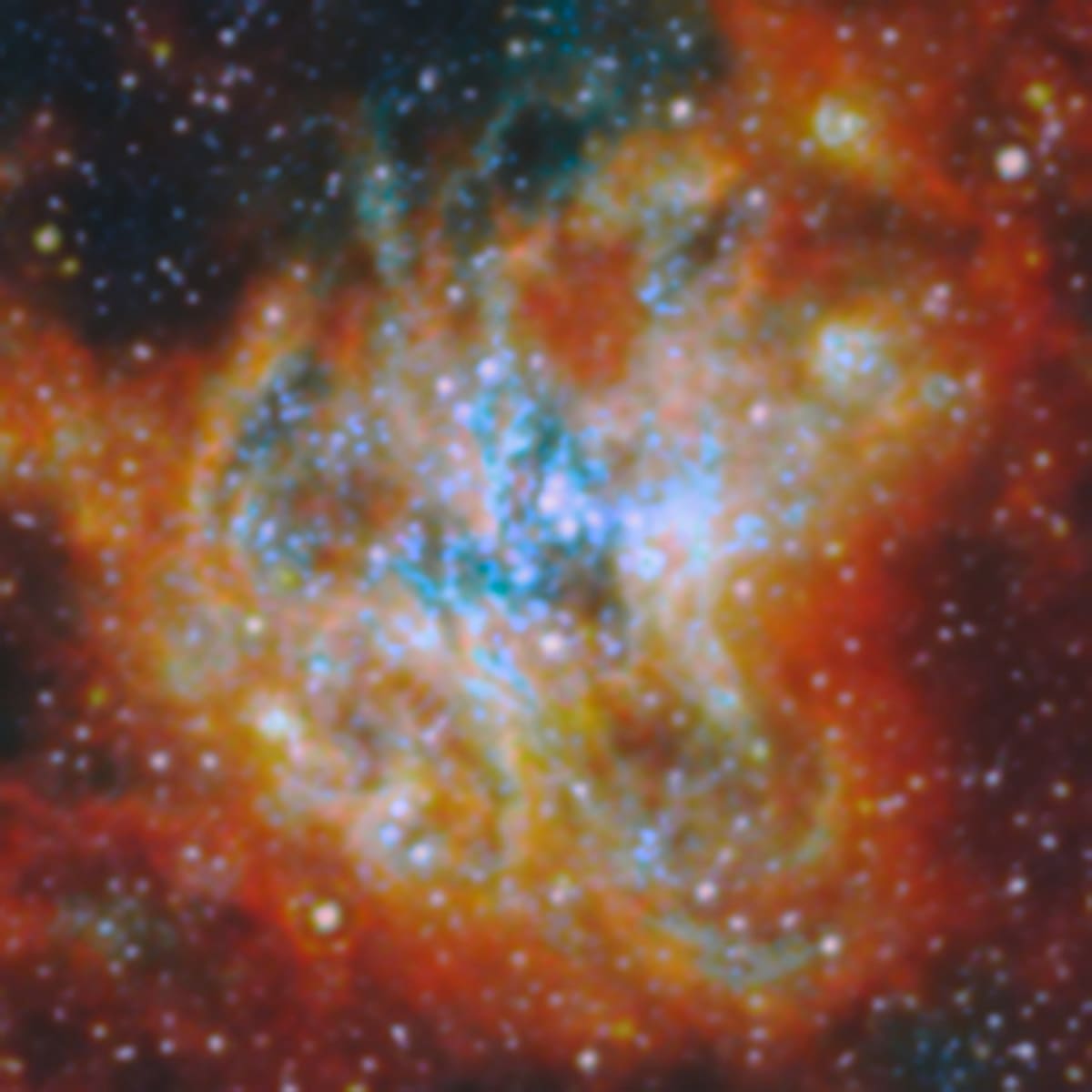
The galaxy's spiral arms glow in warm reds and oranges where thick clouds of dust hold the raw materials for star formation. Bright cyan and white patches mark where young stars have already ignited, pushing their surroundings away with intense energy.
Webb's Near-Infrared Camera can see through the dust that blocks regular telescopes, revealing stars that would otherwise stay hidden. The view spans nearly 800 light years and captures individual stars scattered throughout the cosmic nursery.
Part of the FEAST initiative, researchers cataloged nearly 9,000 star clusters across four nearby galaxies. They used infrared signals to estimate each cluster's mass and age, building a timeline of stellar birth and growth.
The data revealed a fascinating pattern. Big clusters packed with hot, massive stars clear out their birth clouds in about 5 million years. Smaller clusters take longer, needing 7 to 8 million years to push away their surrounding gas.
Why This Inspires
Those massive young stars don't just sit quietly. They blast out tremendous amounts of energy and powerful stellar winds that sweep material away. Eventually, they explode as supernovae, sending gas flying even faster across space.
This process, called stellar feedback, controls how much material remains available for future star formation. It shapes the entire galaxy's environment and determines where the next generation of stars can form.
The discovery helps explain why some galaxies keep creating new stars while others slow down. Understanding this cycle reveals how galaxies like our own Milky Way evolved over billions of years.
Researchers combined Webb's new data with older Hubble images of the same regions, watching clusters at different life stages. Together, the telescopes show us a complete story of stellar childhood, from hidden beginnings to dramatic debuts.
Every cluster Webb observed is still actively forming, giving scientists a front-row seat to one of the universe's most fundamental processes. These cosmic nurseries are writing the future of their galaxy, one newborn star at a time.
More Images
Based on reporting by Google: James Webb telescope
This story was written by BrightWire based on verified news reports.
Spread the positivity!
Share this good news with someone who needs it