20-Meter Dinosaur Found Under Brazilian Construction Site
Construction workers in Brazil uncovered a 20-meter-long dinosaur that reveals an ancient bridge between continents. The 120-million-year-old fossil rewrites our understanding of how giant dinosaurs spread across the world.
Road construction in northeastern Brazil just revealed a giant dinosaur that's rewriting the story of how these ancient creatures moved between continents 120 million years ago.
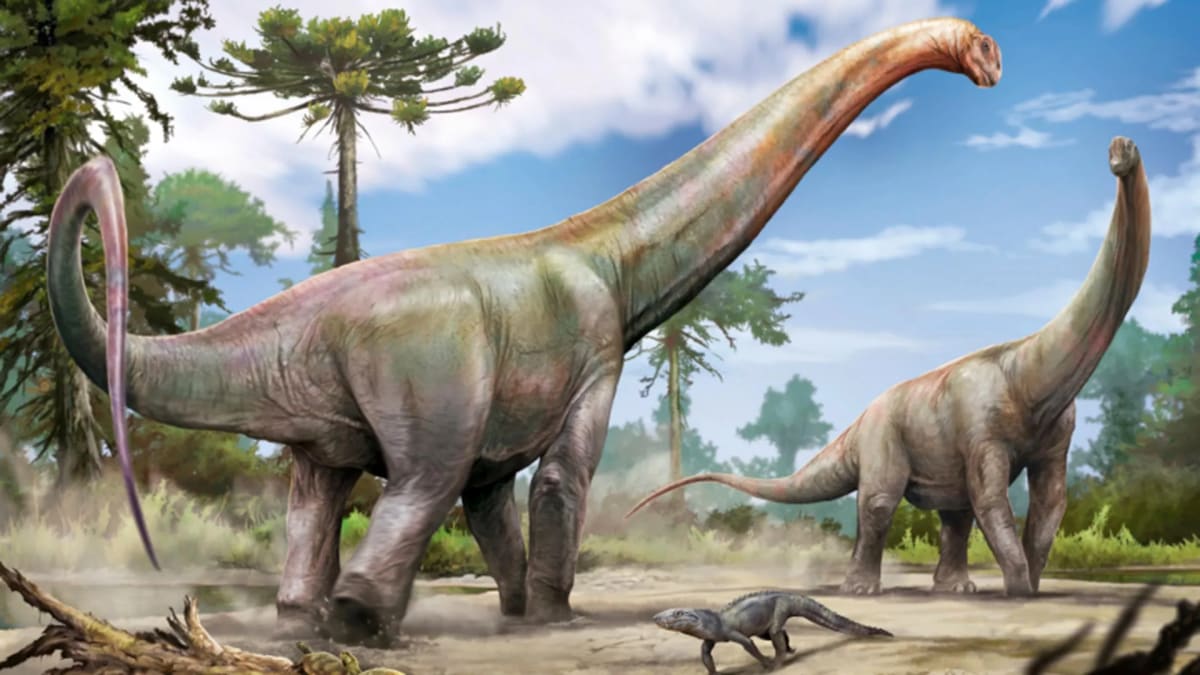
Workers building a rail terminal in Davinópolis, Maranhão discovered the massive fossils buried eight meters deep. The dinosaur, now named Dasosaurus tocantinensis, stretched about 20 meters long, making it the largest dinosaur ever found in the state.
But the real surprise came when scientists analyzed the bones. The dinosaur's closest known relative lived thousands of miles away in what is now Spain, suggesting these giants once walked between Europe, Africa, and South America when the continents were still connected.
"Given its depth of about eight meters, I realized that it was much older," says Professor Elver Luiz Mayer from the Federal University of the São Francisco Valley, who helped identify the find. At first, archaeologists monitoring the construction site thought the bones belonged to prehistoric mammals, but the depth told a different story.
The fossils include tail vertebrae, a 1.5-meter femur, ribs, and foot bones. That makes it unusually complete for a dinosaur of its kind, and scientists believe more bones from the same animal still lie buried at the site.
Researchers propose that Dasosaurus ancestors reached South America by traveling through North Africa between 140 and 120 million years ago, when these landmasses formed part of the supercontinent Gondwana. The discovery offers fresh evidence of ancient land bridges that allowed massive creatures to migrate across what would eventually become separate continents.
The dinosaur's name honors its home. "Daso" means forest in reference to Maranhão's wooded landscape, while "Tocantinensis" points to the nearby Tocantins River where the fossils were found.
The Bright Side
This discovery shows how modern construction projects can become unexpected windows into our planet's past. Brazil's dense tropical vegetation makes traditional fossil hunting difficult, but when highways and terminals expose deep rock layers, paleontologists get rare access to ancient worlds.
The team also studied the microscopic structure of the bones, revealing growth patterns that combine traits from older sauropods with features from their titanosaur relatives. These patterns might help explain how some dinosaurs grew to such enormous sizes.
The fossil now rests at the State Center for Natural History and Archaeology Research in São Luís, where it will help scientists understand how life moved and evolved across ancient Earth.
Sometimes the most remarkable discoveries happen when we're building roads to the future.
Based on reporting by Google: fossil discovery
This story was written by BrightWire based on verified news reports.
Spread the positivity!
Share this good news with someone who needs it