2.6M-Year-Old Jaw Rewrites Human Evolution Story
Scientists discovered a 2.6-million-year-old jaw in Ethiopia that's changing everything we thought we knew about our ancient cousins. The find proves an entire branch of the human family tree was far more adaptable than anyone imagined.
A tiny fragment of ancient bone found 600 miles from where it was supposed to be is rewriting the story of human evolution.
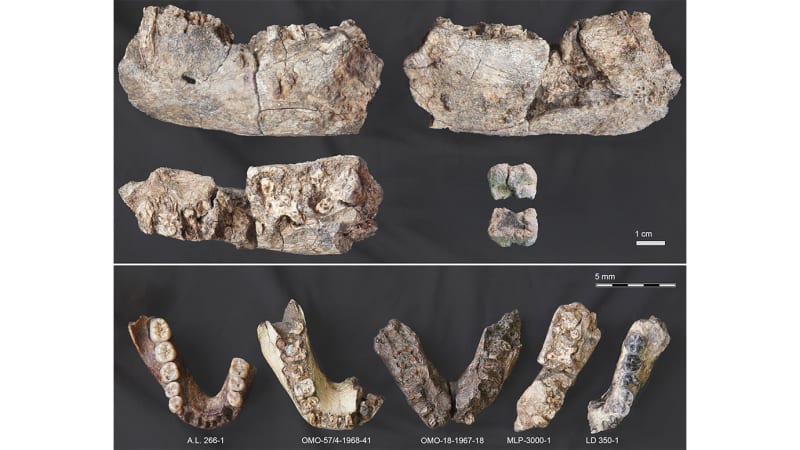
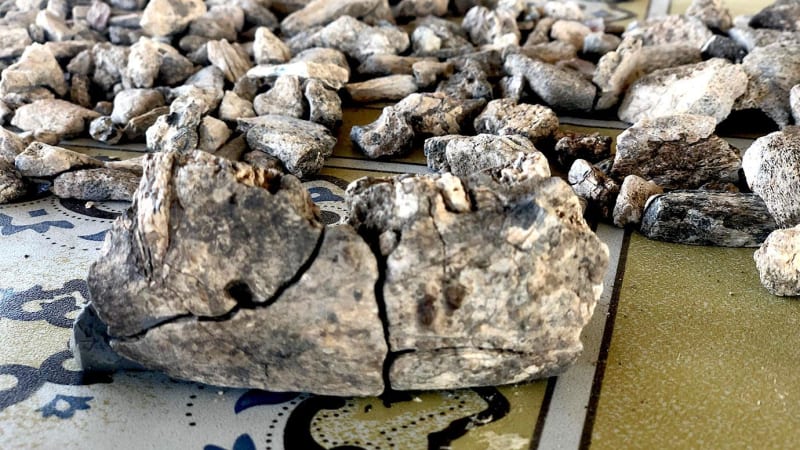
University of Chicago paleoanthropologist Zeresenay Alemseged and his team discovered a partial jaw belonging to Paranthropus, an extinct cousin of modern humans, in Ethiopia's Afar region. At 2.6 million years old, it's one of the oldest specimens of this species ever found—and it shouldn't exist there at all.
For decades, scientists had found hundreds of fossils from other ancient human relatives in northern Ethiopia, but never Paranthropus. The absence was so glaring that experts developed theories to explain it: Maybe this species couldn't survive that far north, or maybe they were outcompeted by our direct ancestors in the Homo genus.
The new discovery proves both theories wrong. Paranthropus wasn't confined to southern regions or struggling to survive—they were thriving across vast distances, just as successfully as our own ancestors.
Paranthropus earned the nickname "nutcracker" genus because of their massive molars, thick tooth enamel, and powerful jaws. Scientists assumed these features meant they had specialized diets that limited where they could live. But the widespread presence now confirmed by this jaw tells a different story.
The team used cutting-edge micro-CT scanning technology to analyze the fossil fragments, piecing together the jaw like a 2.6-million-year-old puzzle. The advanced imaging revealed internal structures that help scientists understand not just where Paranthropus lived, but how they adapted to different environments.
Why This Inspires
This discovery reminds us that our understanding of human origins is still being written. Every fossil that emerges from the earth brings us closer to understanding the full story of who we are and how we got here.
The find also challenges a familiar narrative about survival. We often assume that one species succeeds because another fails, but Paranthropus shows us that multiple human relatives coexisted successfully for millions of years, each finding their own path through changing climates and environments.
"If we are to understand our own evolutionary trajectory as a genus and species, we need to understand the environmental, ecological, and competitive factors that shaped our evolution," Alemseged explained. Understanding our extinct cousins helps us understand ourselves—and how we interact with the world around us.
The research opens new questions about what really separated the hominin groups. Were some using stone tools while others weren't? What gave each species their unique competitive advantages? How did they share landscapes without one dominating the other?
A fragment of ancient jaw is proving that versatility and adaptation, not just competition, drove human evolution forward.
More Images
Based on reporting by Google: fossil discovery
This story was written by BrightWire based on verified news reports.
Spread the positivity!
Share this good news with someone who needs it