32,000-Year-Old Cave Lion Cub Rewrites Evolution Story
Scientists studying a perfectly preserved cave lion cub nicknamed "Sparta" discovered that cave lions were not just bigger versions of modern lions but an entirely separate species that evolved independently for over 1.5 million years. The frozen cub's DNA also revealed surprising evidence that the two species occasionally interbred during ice age cold snaps. ##
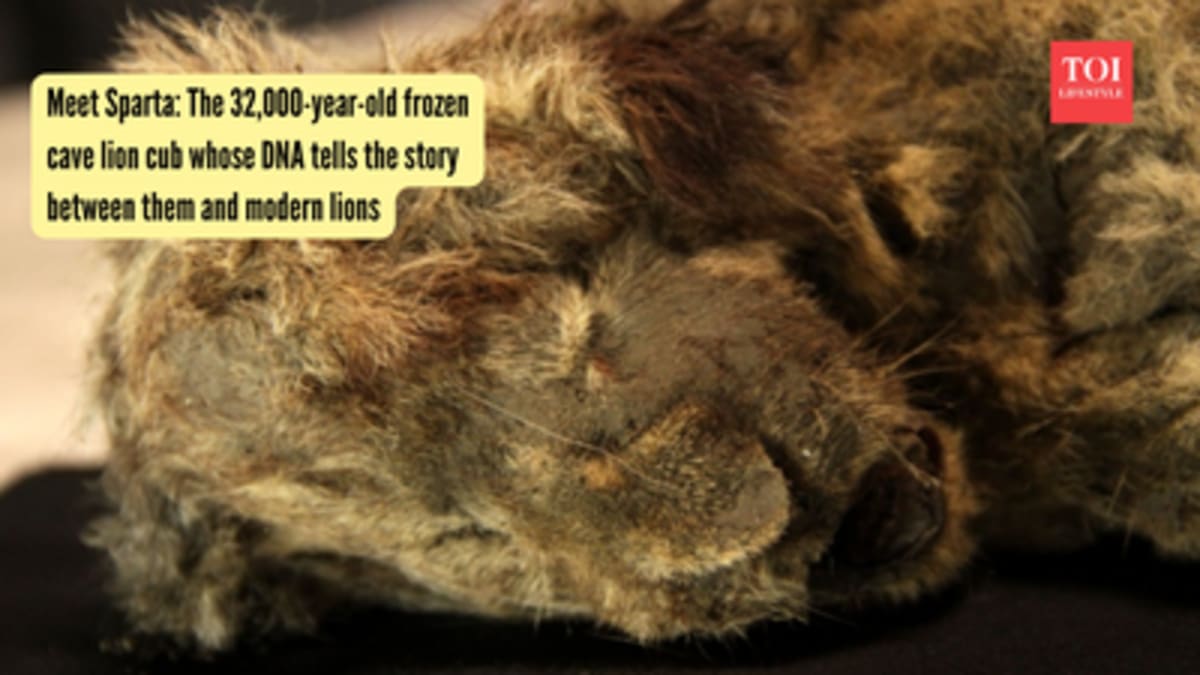
A frozen cub pulled from Siberian permafrost is rewriting what we know about one of history's most fearsome predators. Scientists have discovered that cave lions weren't just ancient cousins of today's lions but an entirely different branch of the family tree.
The remarkably preserved cub, nicknamed "Sparta," was found in 2018 near the Indigirka River in northeastern Siberia. Radiocarbon dating showed she died around 32,000 years ago, yet her soft tissue remained so intact that researchers could extract high-quality DNA.
A team from Stockholm University and the Swedish Museum of Natural History analyzed DNA from 12 cave lions spanning over 100,000 years across Eurasia and North America. They compared these ancient genomes with 20 modern lions from Africa and Asia, expecting to find close relatives.
Instead, they discovered something far more remarkable. The two species split apart more than 1.5 million years ago, evolving completely separately for over a million years.
"Cave lions have often been portrayed as just a larger, more rugged version of modern lions," explained lead author David Stanton from Cardiff University. "What we see in their genomes is something much more remarkable: a lineage that has been evolving independently, accumulating its own unique biological features."
The DNA revealed mutations found only in cave lions, particularly in genes controlling brain function, vision, growth, and circulation. These genetic differences suggest cave lions may have thought differently, seen differently, and behaved differently than their modern counterparts, matching clues from fossils and ancient cave paintings.
But the story has an unexpected twist. Despite being separate species, cave lions and modern lions did occasionally meet and breed, leaving traces in the DNA.
The amount of modern lion DNA in cave lions was small, less than 5%, but it clearly happened multiple times. The timing reveals something fascinating about ice age survival: these interbreeding events peaked during the coldest periods.
When ice sheets expanded to their maximum extent, cave lions likely moved south into Central and Southwest Asia, where their ranges overlapped with modern lions seeking refuge from different climate pressures.
Why This Inspires
This discovery transforms extinction from a simple ending into a more complex story of adaptation, survival, and connection. Sparta and her relatives survived for over a million years as a distinct species, weathering dramatic climate shifts and maintaining their unique identity even while occasionally mixing with other lions.
The fact that scientists can still learn from a creature that died 32,000 years ago reminds us that every species carries irreplaceable information about life's resilience and diversity. Each preserved specimen is a time capsule teaching us about survival, evolution, and the intricate web connecting all life on Earth.
Sparta's story shows us that even in extinction, ancient lives continue teaching us about the remarkable adaptability of life itself.
##
More Images



Based on reporting by Times of India - Good News
This story was written by BrightWire based on verified news reports.
Spread the positivity!
Share this good news with someone who needs it