5 Indian Women Scientists Who Changed Medicine Forever
While history often overlooks their contributions, five pioneering Indian women broke barriers in science labs across the country. Their discoveries in cancer research, chemistry, and physics paved the way for thousands of women scientists working today.
When Kamala Sohonie knocked on the door of the Indian Institute of Science in 1933, Nobel laureate CV Raman turned her away simply because she was a woman. She persisted until he relented, then completed her master's degree with such distinction that the institute opened its doors to all women the very next year.
Kamala went on to become the first Indian woman to earn a PhD in science at Cambridge University. Her groundbreaking work in biochemistry proved that rejection couldn't stop someone determined to change the world.
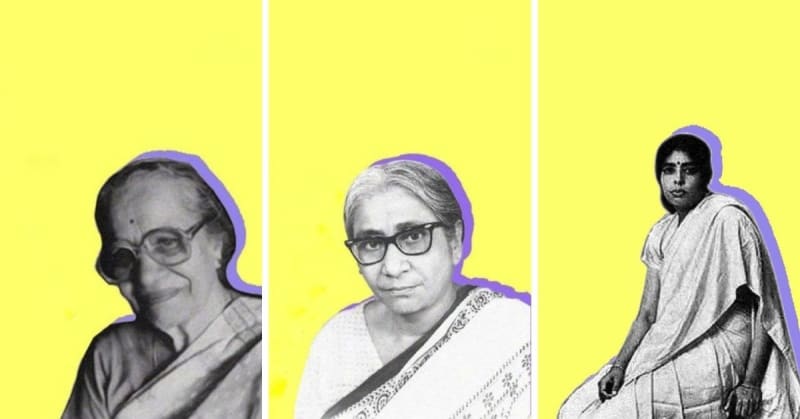
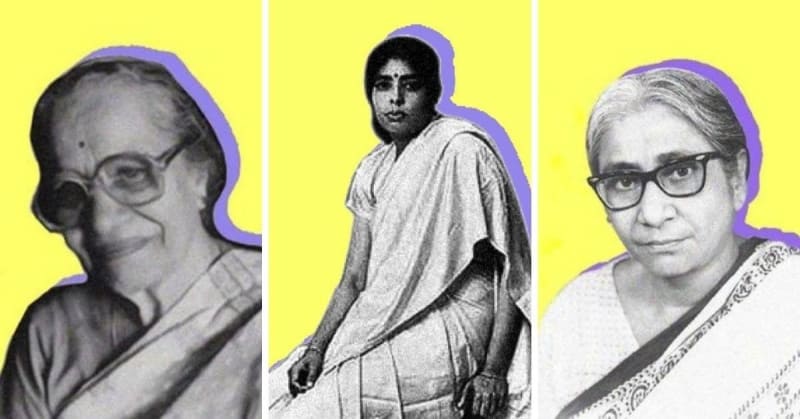
She wasn't alone in blazing these trails. Kamal Ranadive set up India's first tissue culture laboratory and founded the Indian Cancer Research Centre, shaping how the country fights cancer today. Students affectionately called her "Bai" as she mentored them through groundbreaking research.
Ranadive also created the Indian Women Scientists' Association in a bold move to bring more women into science. That organization now supports over 2,000 students and stands as one of India's top scientific associations.
Asima Chatterjee made history as the second woman in India to earn a doctorate in science, then became the first woman professor at any Indian university. Her research on the Madagascar periwinkle plant contributed directly to developing chemotherapy drugs that slow cancer growth. She also discovered that bael tree bark could treat digestive disorders, a remedy still used today.
Bibha Chowdhury became India's first woman researcher when Homi Bhabha handpicked her for the Tata Institute of Fundamental Research. She was the first scientist in the world to discover the pi-meson, a subatomic particle that changed our understanding of physics.
Janaki Ammal earned her PhD in botany from an elite American university, then worked at London's premier horticultural institute before Prime Minister Nehru invited her home. Her studies on sugarcane transformed India's varieties into the sweeter crops farmers grow today. She received the Padma Shri in 1977 and worked in her research lab until her death in 1984.
The Ripple Effect
These five women didn't just make scientific breakthroughs. They shattered stereotypes in laboratories and universities, proving that brilliant minds have no gender. Ranadive received the Padma Bhushan in 1982 and spent her retirement fighting malnutrition in tribal communities. Chatterjee became General President of the Indian Science Congress Association, leading the entire scientific community.
Their persistence opened doors that had been locked for generations. Every woman working in an Indian research lab today walks through entrances these pioneers forced open.
More Images
%2Fenglish-betterindia%2Fmedia%2Fpost_attachments%2Fuploads%2F2022%2F03%2FWomen-in-Sci-2-1646663767.jpg)
%2Fenglish-betterindia%2Fmedia%2Fpost_attachments%2Fuploads%2F2022%2F03%2FKamal-Ranadive-1646716075.jpg)
%2Fenglish-betterindia%2Fmedia%2Fpost_attachments%2Fuploads%2F2022%2F03%2FAsima-Chatterjee-1646716108.jpg)
Based on reporting by The Better India
This story was written by BrightWire based on verified news reports.
Spread the positivity!
Share this good news with someone who needs it