5,000-Year-Old Whale Harpoons Rewrite Hunting History
Ancient whale bone harpoons discovered in Brazilian museum collections prove indigenous people were hunting massive whales 5,000 years ago using just wooden rafts and bone tools. The discovery doubles the known timeline of human whaling and reveals sophisticated ocean knowledge that existed millennia before modern technology.
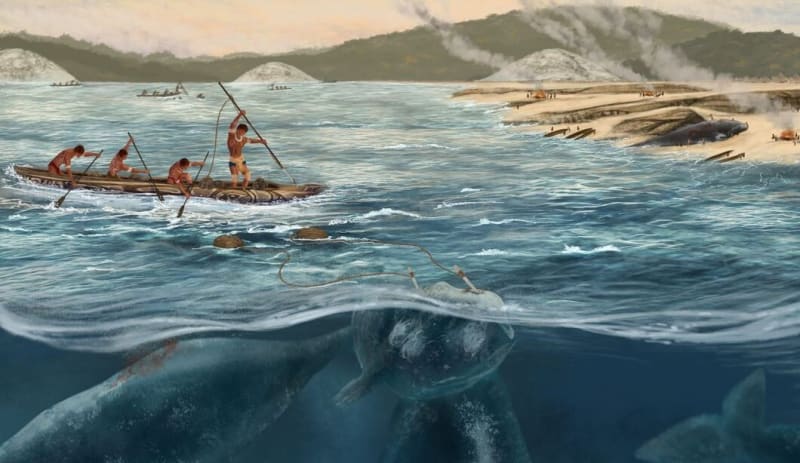
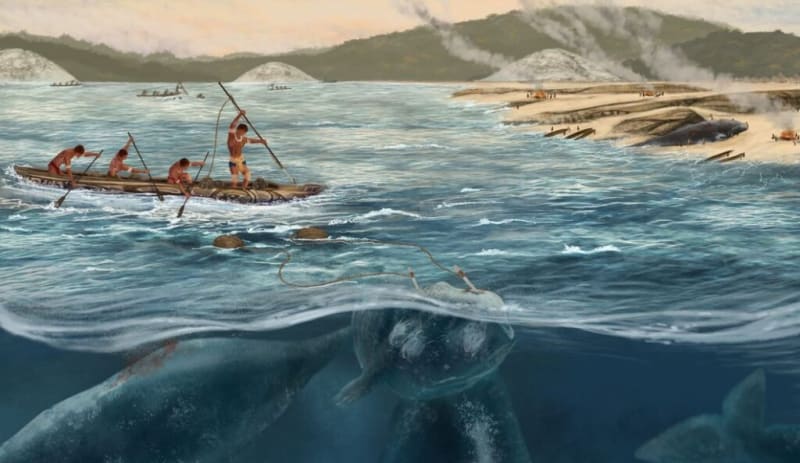
Imagine hunting a 40-ton whale from a wooden raft with nothing but a harpoon carved from bone. That's exactly what indigenous people in southern Brazil were doing 5,000 years ago, according to stunning new research that's rewriting our understanding of ancient ocean cultures.
When Spanish researcher André Carlo Colonese opened dusty museum boxes in southern Brazil, he immediately recognized something remarkable. Inside were whale bone harpoons longer than a human forearm, carved with precision and care by people who lived before sailing ships or metal tools existed.
The artifacts came from ancient shell mounds called "sambaquis" near Babitonga Bay. Between 1940 and 1960, coastal development destroyed hundreds of these mounds, but archaeologists saved about 9,000 artifacts for local museums. For decades, they sat waiting for someone to look closer.
Lead researcher Kristina McGrath and her team used modern analysis techniques to identify the harpoons. They were carved from the bones of southern right whales, humpbacks, sei whales, and even blue whales, the largest animals on Earth.
"These communities had the knowledge, tools, and specialized strategies to hunt large whales thousands of years earlier than we had previously assumed," McGrath said. Previous evidence suggested whale hunting began in North America just 2,500 years ago, making this discovery doubly significant.
Scientists once believed these ancient people only scavenged meat from beached whales. The sophisticated harpoons prove otherwise. These coastal communities actively hunted the ocean's giants despite having technology we'd consider impossibly primitive.
Why This Inspires
This discovery celebrates human ingenuity at its finest. Without modern equipment, these ancient communities developed deep knowledge of whale behavior, ocean patterns, and hunting strategies that worked against animals 100 times their size.
Co-author André Colonese imagines the community celebration that followed a successful hunt. Everyone would feast on meat and blubber while collecting valuable oil for fuel and light. The bones became tools, art, and sacred objects buried alongside honored community members.
The research also offers hope for modern whale conservation. The abundance of humpback remains shows these whales once thrived much further south than their current Brazilian breeding grounds. Recent sightings in southern Brazil may signal whales reclaiming their historical territory after industrial whaling nearly wiped them out.
"Reconstructing whale distributions before the impact of industrial whaling is essential to understanding their recovery dynamics," said co-author Marta Cremer. Understanding where whales historically lived helps conservationists support their comeback.
These ancient hunters respected the ocean's giants enough to turn their bones into sacred objects and bury them with their dead. Perhaps their reverence, combined with modern science, can guide us toward a future where whales thrive once again in their ancestral waters.
More Images



Based on reporting by Good News Network
This story was written by BrightWire based on verified news reports.
Spread the positivity!
Share this good news with someone who needs it
%2Fhttps%3A%2F%2Ftf-cmsv2-smithsonianmag-media.s3.amazonaws.com%2Ffiler_public%2F4e%2F9f%2F4e9f0fe8-aa48-438a-b88f-3a29cd71107e%2Fhttps___wwwfrontiersinorg_files_articles_1758862_xml-images_fmats-13-1758862-g001.jpeg)
%2Fhttps%3A%2F%2Ftf-cmsv2-smithsonianmag-media.s3.amazonaws.com%2Ffiler_public%2F8e%2F83%2F8e837bc6-e2b3-4bb6-bb1c-4f1287b45a6f%2Fcastillo-39-rincon_de_los_signos.jpg)