5.5 Million Bees Found Thriving Beneath NY Cemetery
Scientists discovered a massive colony of 5.5 million native bees living beneath a New York cemetery, a find that could unlock secrets to saving threatened pollinators. The century-old underground community is showing researchers exactly what these crucial species need to survive.
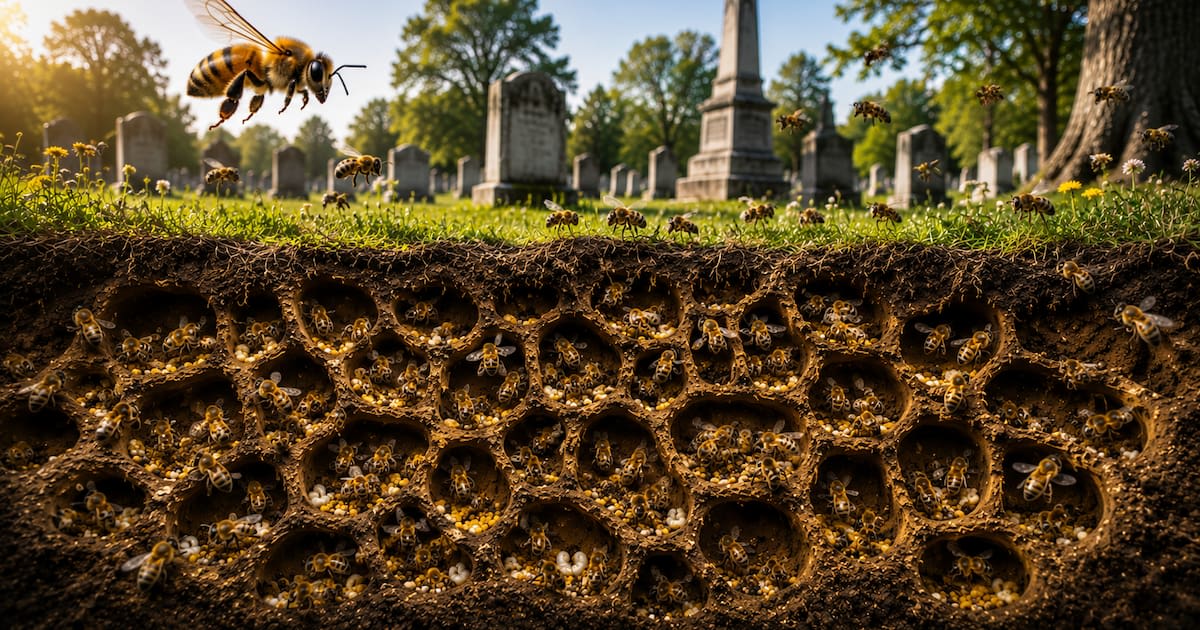
Beneath the quiet grounds of East Lawn Cemetery in Ithaca, New York, scientists from Cornell University just uncovered something extraordinary: 5.5 million mining bees thriving in a sprawling underground city that may be over 100 years old.
The discovery spans 1.5 acres beneath the surface and represents one of the most significant native pollinator finds in recent years. For a species facing habitat loss, pesticides, and climate change, this thriving community offers a rare blueprint for survival.
The common mining bee doesn't build hives or follow queens like honeybees do. Instead, each female digs her own tunnel underground, creating individual nests that together form massive aggregations.
The cemetery site turned out to be an accidental sanctuary. The well-drained soil makes digging easy, while decades of minimal human intervention and low pesticide use created stable conditions across generations.
Historical records show these same bees were documented at East Lawn over a century ago, suggesting this community has persisted through world wars, economic shifts, and dramatic environmental changes. That kind of stability is increasingly rare for ground-nesting species.
The bees emerge each spring and head straight for Cornell's nearby orchards. They're remarkably efficient pollinators, working in cold temperatures when other species stay home and transferring pollen more effectively than many alternatives.
The aggregation equals between 140 and 200 honeybee hives in sheer numbers. That's a staggering concentration of native pollinators in one protected spot.
The Ripple Effect
This discovery reaches far beyond one cemetery in upstate New York. Scientists are now studying exactly how this aggregation remained stable for so long, hoping to replicate those conditions elsewhere.
Ground-nesting bees face mounting threats from urbanization, intensive agriculture, and pavement that eliminates nesting sites. Climate change disrupts the careful timing between bee emergence and flower blooming.
Understanding what made East Lawn Cemetery work could help create similar refuges in parks, golf courses, and other managed landscapes. Simple choices like reducing pesticides, maintaining stable soil, and limiting disruption might make the difference between thriving bee populations and local extinctions.
The research team continues monitoring the site, documenting patterns and conditions that support such remarkable pollinator success. Their findings could inform conservation efforts worldwide as native bee populations decline.
A century-old cemetery just became an unexpected classroom for saving species we can't afford to lose.
More Images

Based on reporting by Google News - Scientists Discover
This story was written by BrightWire based on verified news reports.
Spread the positivity!
Share this good news with someone who needs it