7,000-Year-Old Fish Traps Reveal Ancient Eco-Engineering
Norwegian archaeologists just solved a 100-year-old mystery about how fish appeared in remote mountain lakes cut off by waterfalls. The answer reveals our ancestors were brilliant environmental managers thousands of years before farming even existed.
Imagine being so clever that your solution to a problem still works 7,000 years later, feeding people to this very day.
That's exactly what happened in Norway's mountain lakes. When glaciers melted after the last Ice Age, they left behind pristine lakes high in the mountains. But waterfalls blocked fish from swimming upstream, leaving these waters empty and useless as a food source.
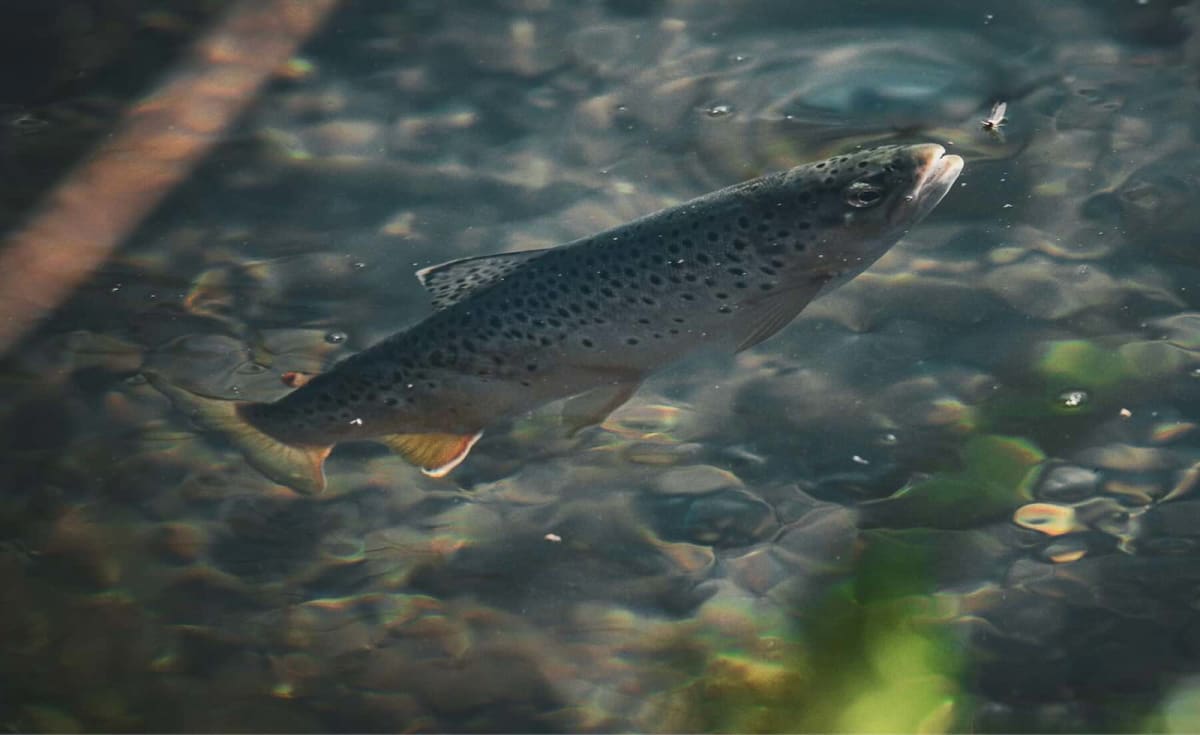
Early humans saw an opportunity. They carried brown trout from lower waters and released them into these barren lakes, creating thriving ecosystems where none existed before.
Scientists have known for over a century that these mountain fish populations came from human intervention. What they couldn't figure out was when it happened or how organized these early people were about managing nature.
University of Oslo researcher Axel Mjærum and his team found the answer at the bottom of Lake Tesse. Ancient fish traps made from wood, perfectly preserved underwater, told the complete story.
Radiocarbon dating revealed the traps were built around 5000 BC during the Mesolithic period. These weren't random experiments but deliberate environmental engineering by hunter-gatherers who understood ecosystems long before the concept existed.
The brown trout they chose was ideal. It grew large, provided high-protein meals, and thrived in cold mountain waters. Once established, the populations sustained themselves for millennia.
Why This Inspires
This discovery flips our understanding of ancient people on its head. We often imagine early humans as reactive survivors, scraping by on whatever nature provided.
Instead, these Mesolithic Scandinavians were proactive problem solvers. They didn't wait for farming to arrive. They identified a gap in their food supply and engineered a solution that reshaped entire ecosystems.
The proof of their genius? Norwegian anglers today still catch brown trout in those same mountain lakes, descendants of fish carried there 7,000 years ago by people who never had the chance to see the lasting impact of their work.
Mjærum calls it "a very clear example of humans' general capacity to reshape entire ecosystems, even before the introduction of farming." It's also a reminder that innovation, environmental stewardship, and long-term thinking aren't modern inventions.
Our ancestors were already thinking seven millennia ahead.
Based on reporting by Google: archaeological discovery
This story was written by BrightWire based on verified news reports.
Spread the positivity!
Share this good news with someone who needs it