AI Finds 800 New Cosmic Wonders in Hubble's 35-Year Archive
A new AI tool scanned 100 million Hubble Space Telescope images in just two and a half days, discovering over 800 never-before-documented cosmic objects hiding in plain sight. The breakthrough shows how artificial intelligence can unlock decades of space data faster than humans ever could.
Scientists just found hundreds of hidden treasures in one of astronomy's most famous photo albums, and they did it in less time than a long weekend.
Researchers David O'Ryan and Pablo Gómez from the European Space Agency created an AI tool called AnomalyMatch that can spot rare cosmic objects in astronomical images. They pointed it at the Hubble Legacy Archive, a collection spanning 35 years of telescope observations, and watched it work magic.
In just two and a half days, the AI scanned nearly 100 million image cutouts. It flagged around 1,400 unusual objects for the researchers to examine more closely.
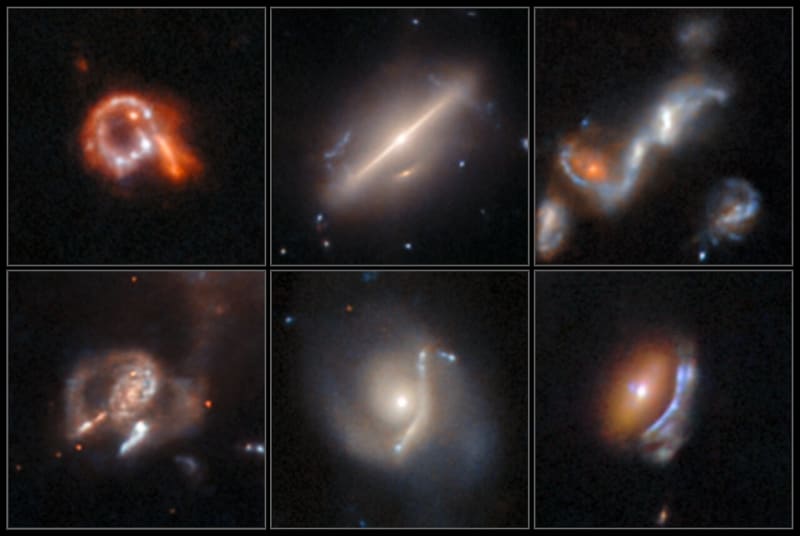
When O'Ryan and Gómez inspected the top candidates, they confirmed more than 1,300 were genuine cosmic anomalies. Even more exciting, over 800 had never been documented in scientific literature before.
The discoveries include galaxies caught in the act of colliding, their shapes warped into unusual forms with long tails of stars and gas streaming behind them. The team also found gravitational lenses, where massive galaxies bend spacetime itself and warp light from distant galaxies into circles and arcs.
Other finds included jellyfish galaxies trailing gaseous tentacles, planet-forming disks that look like cosmic hamburgers when seen edge-on, and galaxies with massive star clumps. Several dozen objects were so strange they defied classification entirely.
The challenge the team tackled is massive. Rare objects like colliding galaxies hold enormous scientific value, but finding them manually is nearly impossible. There's simply too much Hubble data for human experts to examine every image in detail, even with help from citizen science volunteers.
"Archival observations from the Hubble Space Telescope now stretch back 35 years, providing a treasure trove of data in which astrophysical anomalies might be found," says O'Ryan. His neural network learns to recognize patterns the way a human brain does, but at computer speed.
Why This Inspires
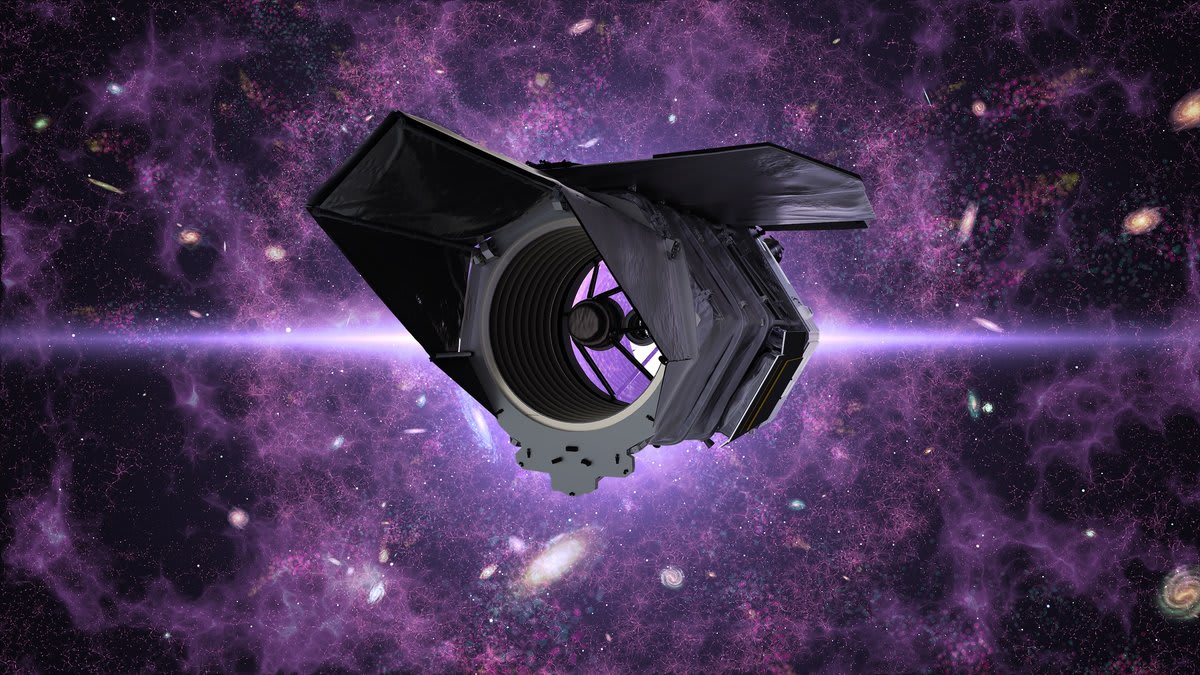
This breakthrough arrives at the perfect moment. Hubble's archive is just one of many growing datasets in astronomy. The Euclid space telescope began surveying billions of galaxies in 2023. The Vera C. Rubin Observatory will soon start collecting over 50 petabytes of images. NASA's Nancy Grace Roman Space Telescope launches no later than May 2027.
Each new telescope means exponentially more data to explore. Tools like AnomalyMatch don't replace human astronomers but instead help them focus their expertise where it matters most. The AI handles the initial search through millions of images, then passes the most promising candidates to scientists for confirmation.
"This is a fantastic use of AI to maximise the scientific output of the Hubble archive," says Gómez. Finding so many new objects in data where most anomalies were thought to have been discovered already proves the concept works.
The discoveries waiting in existing archives could reshape our understanding of the universe, and now we finally have the tools to find them.
Based on reporting by Google News - Science
This story was written by BrightWire based on verified news reports.
Spread the positivity!
Share this good news with someone who needs it