AI Maps Ocean Algae Blooms Expanding Across the Globe
Scientists used artificial intelligence to scan 1.2 million satellite images and discovered floating algae is spreading across Earth's oceans, marking a major shift in marine ecosystems. The breakthrough shows how AI can help us understand and prepare for changes in our oceans.
For the first time ever, researchers have created a complete picture of floating algae across the entire planet, and the technology that made it possible could transform how we monitor ocean health.
Scientists at the University of South Florida and NOAA trained an AI system to analyze 1.2 million satellite images taken between 2003 and 2022. What they found represents a dramatic shift in our oceans.
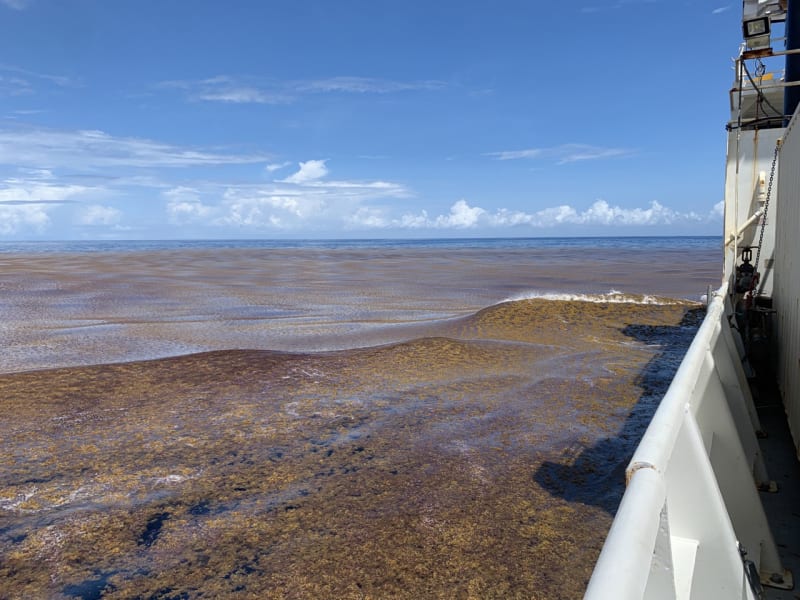
Macroalgae blooms, including types of seaweed, increased by 13.4 percent per year in the tropical Atlantic and western Pacific. These blooms now cover a combined area of 43.8 million square kilometers, roughly the size of Asia.
The change appears to have tipped around 2010. Before 2008, major algae blooms were rare outside the historic Sargasso Sea. Now they're appearing worldwide.
"On a global scale, we appear to be witnessing a regime shift from a macroalgae-poor ocean to a macroalgae-rich ocean," said Chuanmin Hu, professor of oceanography and senior author of the study published in Nature Communications.
The discovery matters because these algae play dual roles in ocean health. In open water, floating seaweed creates vital nurseries where fish and marine life thrive. But when massive blooms wash ashore, decaying algae can harm coastal ecosystems, tourism, and human health.
The researchers credit changes in ocean temperature, currents, and nutrients for the expansion. Both climate change and nutrient runoff from human activities likely contribute, though the specific causes vary by region.
The Bright Side
This study represents more than just tracking algae. It demonstrates how artificial intelligence can process enormous amounts of environmental data that would take humans decades to analyze manually.
The AI model learned to spot tiny features signaling algae presence across millions of ocean images. Even with high-performance computing, the analysis took several months, but it delivered insights impossible to achieve before.
Lin Qi, the study's first author and NOAA oceanographer, says the team will continue expanding their work. They're already looking at additional satellite data to better understand why these blooms are growing.
Understanding these patterns helps coastal communities prepare for algae arrivals and enables scientists to track how our oceans are changing. The same AI techniques could eventually monitor other ocean health indicators, from coral reefs to fish populations.
The technology gives us eyes on the entire ocean, turning satellites into powerful tools for protecting marine life and the billions of people who depend on healthy seas.
Based on reporting by Google: scientists discover
This story was written by BrightWire based on verified news reports.
Spread the positivity!
Share this good news with someone who needs it