Amateur Fossil Find Sparked B.C.'s Paleontology Movement
When Mike Trask found strange bones along a river in 1988, he unknowingly discovered the first elasmosaur west of the Rockies. His find inspired hundreds of amateur fossil hunters and created British Columbia's first paleontology society.
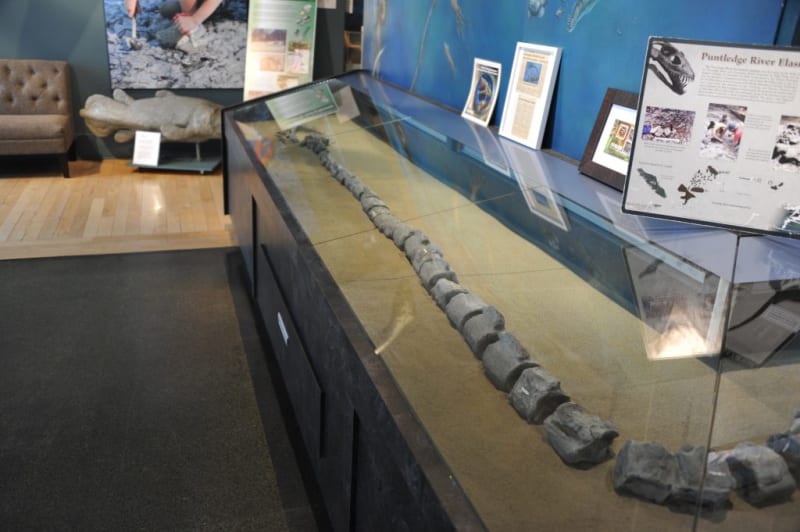
A string of grey rocks on a living room floor changed the course of paleontology in British Columbia forever.
In late 1988, Mike Trask and his 13-year-old daughter Heather were fossil hunting along the Puntledge River in Comox Valley when they spotted unusual vertebrae embedded in the riverbed. Trask, an amateur collector since childhood, suspected he'd found something special.
When Royal BC Museum botanist Richard Hebda examined the bones, he was skeptical at first. His last "dinosaur rib" report had turned out to be dirtbike tracks in a dry creek bed.
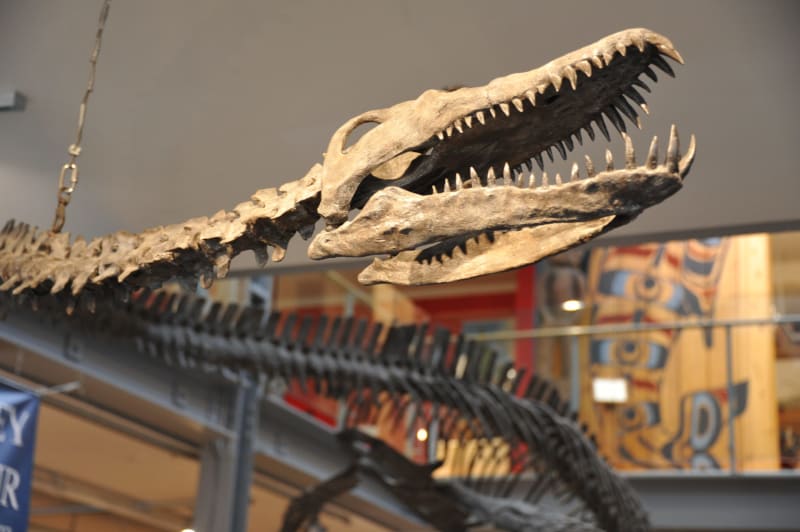
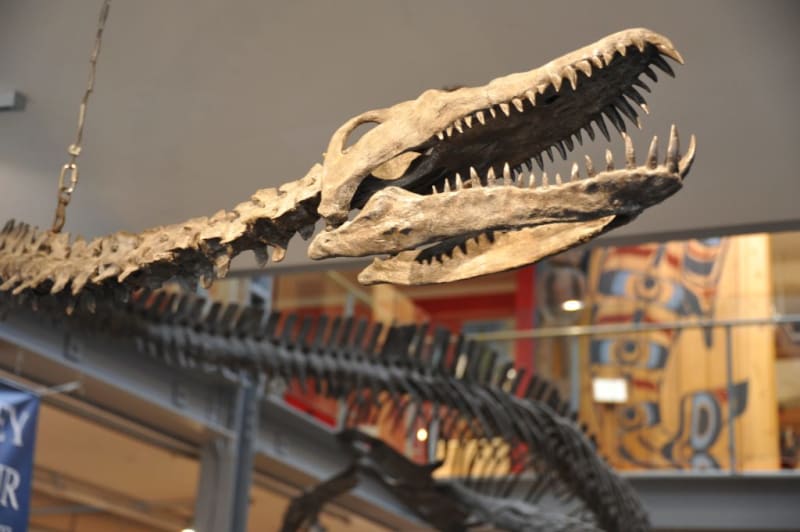
But expert Betsy Nicholls from the Royal Tyrell Museum quickly identified the vertebrae as belonging to an elasmosaur, a marine reptile with a neck as long as its body that swam in ancient oceans 85 million years ago. No one had ever found a specimen like this west of the Canadian Rockies.
Trask knew more bones might still be buried at the site. In 1991, the Courtenay Museum placed a newspaper ad seeking 20 volunteers for an excavation.
More than 50 people showed up on the first day, despite relentless rain and near-freezing temperatures. Over three months of weekends, volunteers excavated 100 cubic metres of earth and found a nearly complete skeleton.
The Ripple Effect
The overwhelming volunteer response sparked something bigger than anyone expected. Trask began teaching paleontology courses at North Island College, and students made their own discoveries during field trips to the same river.
The group of 30 to 50 enthusiasts didn't want to stop meeting after class ended. They formalized their gatherings in 1992, creating the Vancouver Island Paleontological Society, the first of its kind in the province.
The society quickly grew to 160 members. To serve people across the province, similar groups formed in Victoria, Vancouver, and Qualicum Beach.
The separate societies needed a way to share discoveries and information. That need led to the creation of the British Columbia Paleontological Alliance, an umbrella organization connecting amateur enthusiasts with professional paleontologists at museums and research institutions.
Dan Bowen, a founding member and current vice chair of the alliance, credits Trask's discovery with opening doors for hundreds of amateur paleontologists across the province. What started as a father-daughter fossil hunt became a thriving community of discovery that continues today.
One curious find along a riverbed didn't just reveal an ancient creature—it unearthed a passion that brought an entire community together.
More Images
Based on reporting by Google: fossil discovery
This story was written by BrightWire based on verified news reports.
Spread the positivity!
Share this good news with someone who needs it