Scientists Find 100-Million-Year-Old Bug With Crab Claws
Trapped in amber for 100 million years, a bizarre insect with crab-like pincers is rewriting what scientists thought possible in the insect world. This tiny predator represents only the fourth time such claws evolved independently in insects.
Deep inside ancient amber from Myanmar, scientists just discovered an insect so unusual it breaks all the rules: a prehistoric bug with crab claws where its front legs should be.
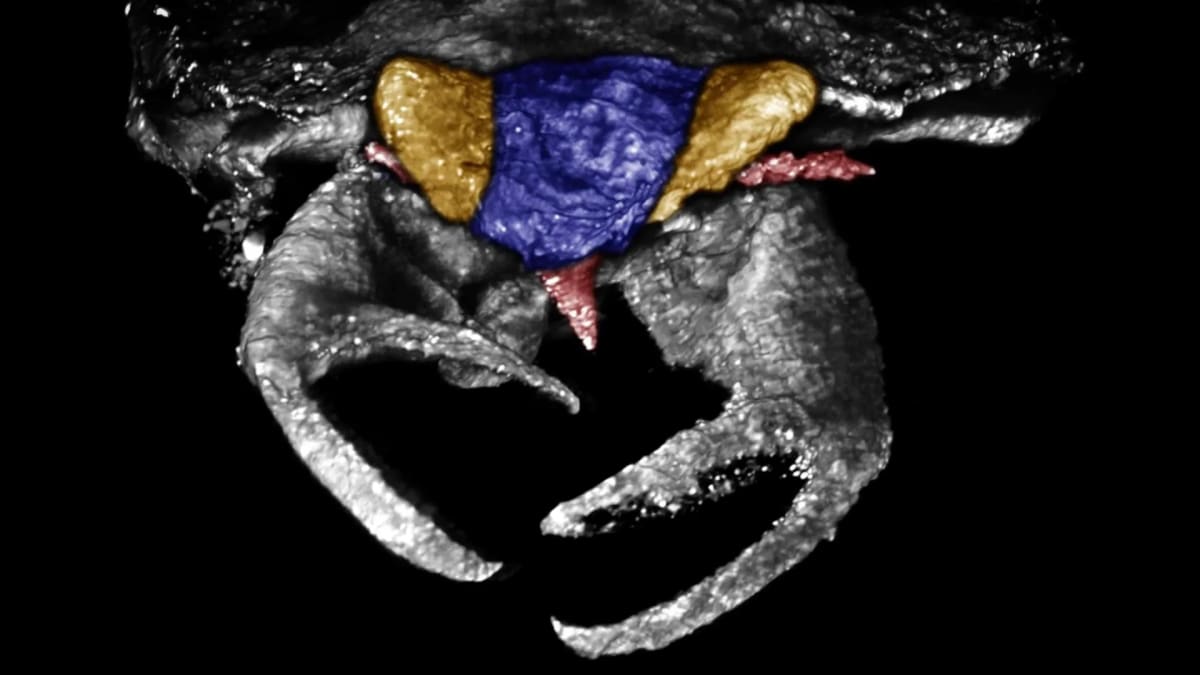
The 100-million-year-old fossil reveals a creature unlike anything alive today. Its front legs ended in large pincer-like structures called chelae, the same type of claws you'd find on a crab or lobster, but this time on an insect no bigger than your fingernail.
Researchers at Ludwig Maximilian University of Munich used advanced CT scanning to create detailed 3D images of the tiny predator. What they found amazed them: these crab-like claws had evolved completely independently from the other three known insect groups with similar structures.
"This fossil therefore represents the fourth known case of these structures evolving independently in insects," explains zoologist Carolin Haug. To understand just how special this was, her team compared the claws to over 2,000 similar structures from living and extinct species.
The scientists named the new species Carcinonepa libererrantes. The first part means "crab water bug" in Latin, while the species name honors the K-pop group Stray Kids because the fossil's claw position resembles their signature pose.
This tiny hunter likely stalked prey through a Cretaceous forest near the coast. Based on its body structure, which resembles modern toad bugs, it probably used those oversized claws to grab and hold small insects as it hunted through the ancient landscape.
Why This Inspires
This discovery reminds us that nature's creativity knows no bounds. Evolution can arrive at the same solution through completely different paths, creating tools like these remarkable claws four separate times across hundreds of millions of years.
The fact that we're still finding creatures this extraordinary, perfectly preserved in amber, shows how much wonder still waits to be uncovered. Every fossil tells a story, and this tiny predator's tale spans 100 million years.
Each new discovery like this one rewrites our understanding of life's incredible diversity and resilience across deep time.
Based on reporting by Science Daily
This story was written by BrightWire based on verified news reports.
Spread the positivity!
Share this good news with someone who needs it