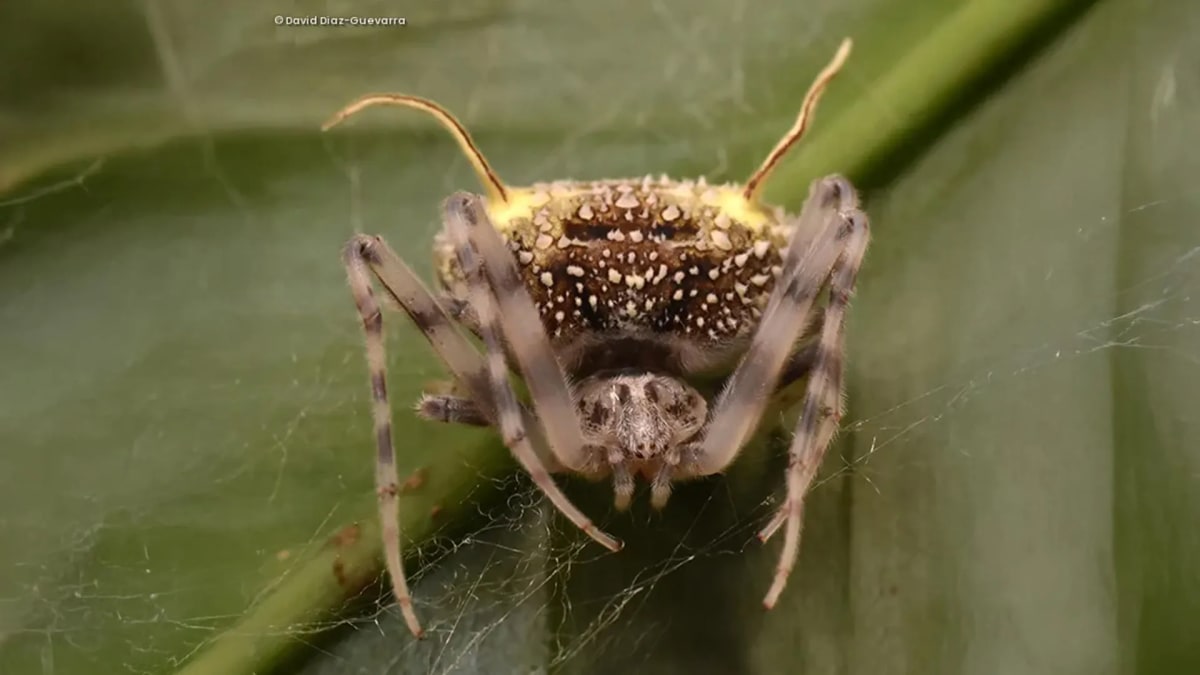
Amazon Spider Disguises Itself as Parasitic Fungus
Scientists in Ecuador discovered a spider that perfectly mimics a parasitic fungus, fooling even researchers at first glance. This first-of-its-kind discovery shows nature's creativity and highlights how citizen scientists are helping unlock rainforest secrets.
When researchers spotted what looked like a small mushroom on a leaf in Ecuador's Amazon rainforest, they nearly walked past it. Then the "mushroom" moved.
Scientists have discovered Taczanowskia waska, a spider so skilled at disguise that it looks exactly like the parasitic fungi that normally grow on dead spiders. With pale, elongated structures extending from its body and a tendency to freeze motionless on leaf undersides, this tiny master of deception convinced trained scientists it was a fungus during their nighttime survey.
This marks the first time researchers have found a spider mimicking the very fungus that infects its own kind. The spider was found in the Llanganates-Sangay Corridor, a biodiversity hotspot in the Ecuadorian Amazon where new discoveries still happen regularly.
The disguise serves double duty for survival. By looking like something predators ignore, the spider avoids becoming lunch itself. The camouflage may also help it catch prey by allowing it to remain unnoticed until insects wander too close.
Why This Inspires
What makes this discovery extra special is how it started. Someone posted a photo on iNaturalist, a citizen science platform where everyday nature lovers share observations. Other users looked closer and realized the "mushroom" had too many legs.
That online conversation sparked a full scientific investigation involving researchers from multiple countries. The team at the Leibniz Institute for the Analysis of Biodiversity Change examined historical specimens to confirm this was indeed a new species, showing how modern technology and old-fashioned museum collections work together.
Nadine Dupérré, who helped classify the species, emphasizes that finds like these demonstrate the power of combining citizen science with international collaboration. Regular people armed with smartphones are now contributing to major scientific breakthroughs.
The discovery also reminds us how much we still don't know about our planet. The Taczanowskia genus remains rare and poorly understood, with scientists seldom encountering these spiders in the wild. Every expedition into tropical ecosystems reveals new wonders hiding in plain sight.
The research appears in the journal Zootaxa, adding one more fascinating chapter to our understanding of evolution and adaptation. Nature's creativity continues to surprise us in the best possible ways.
Based on reporting by Google News - Scientists Discover
This story was written by BrightWire based on verified news reports.
Spread the positivity!
Share this good news with someone who needs it