Ancient 'Animal Trails' Were Actually Giant Bacteria
Scientists in Brazil discovered that 540-million-year-old fossils once thought to be traces of early animals were actually preserved communities of bacteria and algae. The finding reshapes our understanding of when complex life first emerged on Earth.
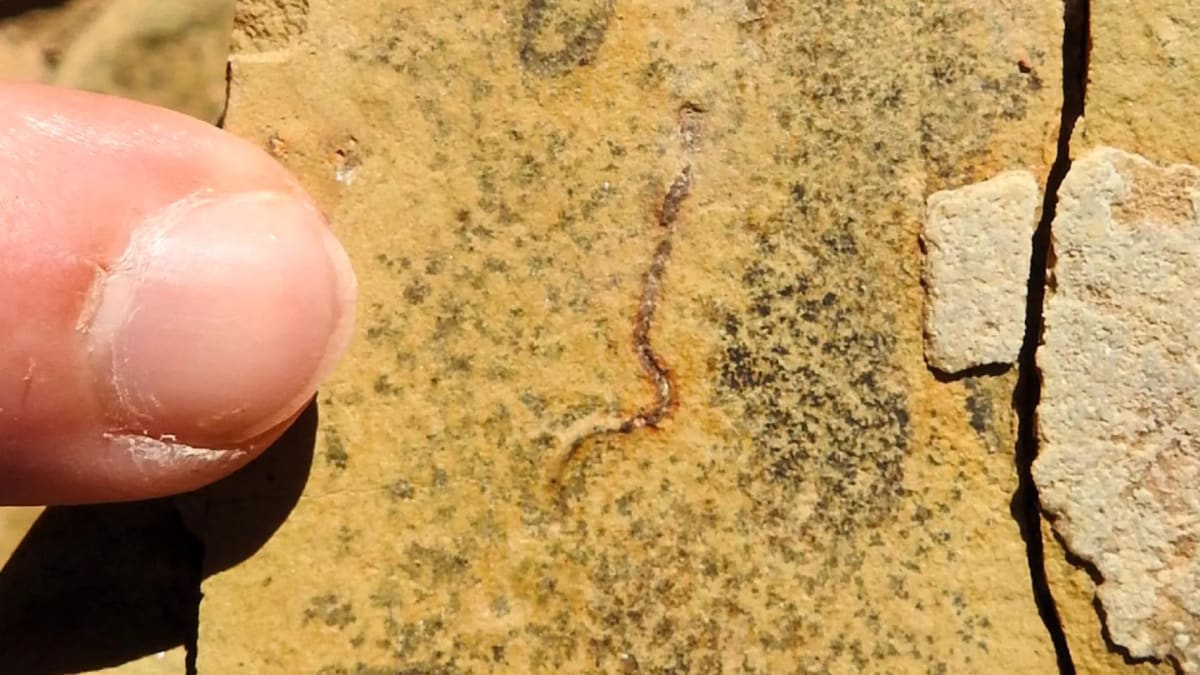
Fossils that scientists believed showed evidence of Earth's earliest animals have turned out to be something completely different: ancient bacteria and algae that lived half a billion years ago.
Researchers studying rocks in Brazil's Mato Grosso do Sul state reexamined mysterious marks that earlier scientists had interpreted as trails left by tiny wormlike creatures. Using powerful new imaging technology, they discovered the marks were actually fossilized microbes with their cellular structures still intact.
Bruno Becker-Kerber, who led the study while working at the University of São Paulo, used cutting-edge techniques at Brazil's Sirius particle accelerator facility to peer inside the fossils. The technology revealed something previous researchers couldn't see: preserved cell walls and organic material consistent with bacteria and algae, not animal tracks.
The discovery changes what we know about the Ediacaran period, which occurred just before the Cambrian explosion when complex life rapidly diversified across Earth's oceans. Scientists had thought these fossils proved that meiofauna (tiny invertebrates less than one millimeter long) existed earlier than previously known.
Instead, the fossils suggest that oxygen levels in ancient oceans may still have been too low to support certain forms of animal life 540 million years ago. This pushes back the timeline for when these creatures first appeared.
Some of the preserved bacteria were giants by microbial standards. Certain sulfur-eating bacteria found in the fossils can grow larger than a human hair and remain visible to the naked eye, defying our usual image of microscopic organisms.
The research team also analyzed rocks from Bonito in the Serra da Bodoquena region. These formations originally sat on a shallow continental shelf during Gondwana's final stages, before the supercontinent split to form what became South America and Africa.
Why This Inspires
This discovery shows how new technology keeps revealing surprises hidden in plain sight. Fossils that sat in collections for years suddenly tell a different story when examined with fresh tools and perspectives.
The same research group previously identified what may be the oldest known lichen fossil, also from Mato Grosso do Sul. Their work demonstrates how reexamining old assumptions with new methods can rewrite scientific understanding.
Scientists now have a clearer picture of Earth's ancient oceans and the microbial communities that thrived there before animals dominated the seas.
Based on reporting by Google: fossil discovery
This story was written by BrightWire based on verified news reports.
Spread the positivity!
Share this good news with someone who needs it