Ancient Comet Older Than Our Sun Visited Solar System
Scientists just studied the third interstellar visitor ever detected passing through our solar system, and this comet might be 10 billion years old. The James Webb Space Telescope captured stunning details before it disappeared forever.
A comet older than our own Sun just swung through our solar system for the first and only time, giving scientists a once-in-forever glimpse at something from the ancient universe.
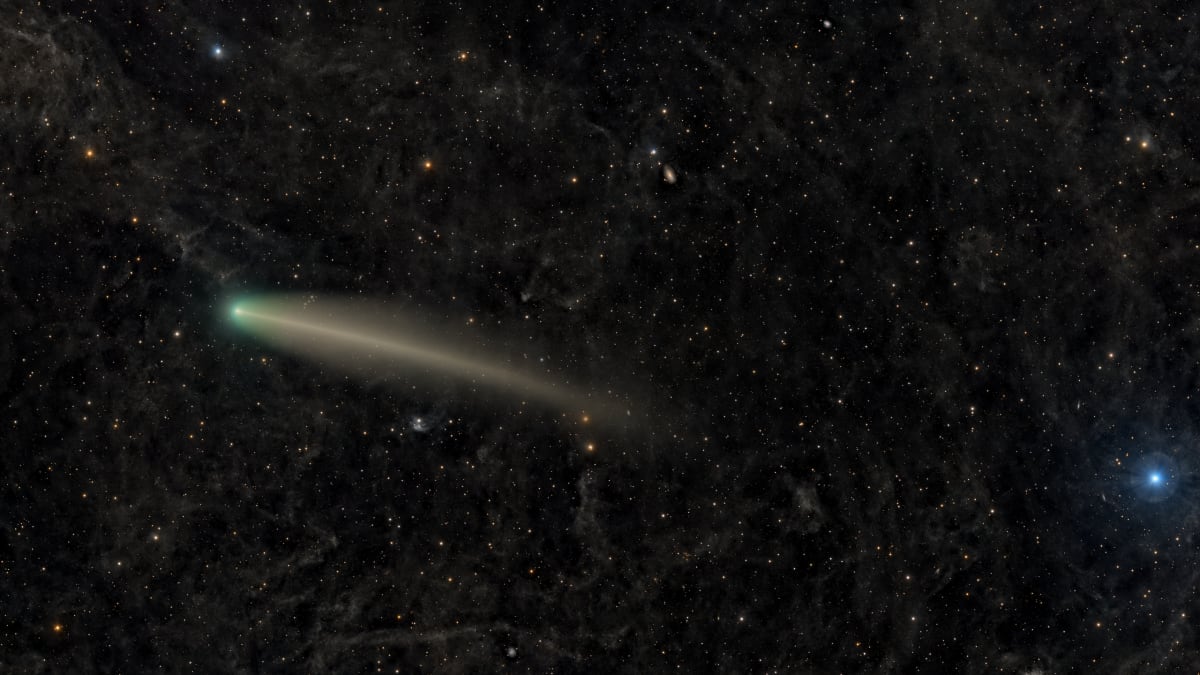
Discovered by the ATLAS survey in Chile on July 1, 2025, the comet named 3I/ATLAS became only the third confirmed interstellar object ever detected visiting our cosmic neighborhood. Unlike the mysterious 'Oumuamua that puzzled scientists in 2017, this visitor behaved like a classic comet, streaming gas and dust as it traveled.
The James Webb Space Telescope caught it in August 2025, revealing something extraordinary. The comet's tail contained eight times more carbon dioxide than water, one of the highest ratios ever measured in a comet.
Scientists believe this chemical signature tells a remarkable story. The comet likely formed somewhere between 10 and 12 billion years ago, making it potentially twice as old as our 4.6 billion year old Sun.
The visitor reached its closest approach to our Sun in October 2025, passing just inside Mars's orbit before beginning its journey back to interstellar space. It came within 270 million kilometers of Earth in December, close enough to study but far enough to pose zero danger.
The Ripple Effect
This discovery represents more than just spotting a space rock. Every measurement scientists gathered during the comet's brief visit offers clues about what planetary systems looked like in the early universe, billions of years before Earth existed.
Webb's observations detected water, carbon monoxide, methane, methanol, and organic molecules streaming off the ancient visitor. The comet's unusual deuterium levels and low heavy carbon suggest it formed before certain stars had enriched the galaxy with those elements.
The SETI Institute spent seven hours scanning for any artificial signals, finding nothing but natural comet behavior. What makes 3I/ATLAS special isn't alien technology but its genuine age and origin story.
Because the comet follows an open orbit traveling at 58 kilometers per second, it will never return. Scientists are now analyzing all the data collected during this single pass, knowing these measurements represent humanity's only chance to study this particular messenger from the ancient cosmos.
The universe just sent us a postcard from 10 billion years ago, and we were ready to read it.
More Images




Based on reporting by Google News - Science
This story was written by BrightWire based on verified news reports.
Spread the positivity!
Share this good news with someone who needs it