Artemis II Crew Spots Mystery Features on Moon's Far Side
NASA astronauts just returned stunning images and puzzling discoveries from the farthest humans have ever traveled from Earth. Their observations of unusual colors, "snowy" craters, and mysterious surface patterns could reshape what we know about the Moon.
The crew of NASA's Artemis II mission has given humanity a gift we haven't received in over 50 years: fresh eyes on the Moon's mysterious far side, along with discoveries that have scientists buzzing with excitement.
Astronauts Reid Wiseman, Victor Glover, Christina Koch, and Canadian astronaut Jeremy Hansen just completed a record-breaking journey around the Moon, traveling farther from Earth than any humans in history. Along the way, they captured thousands of images and made observations that left ground control scratching their heads in the best possible way.
"At first, their descriptions didn't quite match what we were seeing on our screens," admitted Jacob Bleacher, NASA's Chief Exploration Scientist. The astronauts reported seeing things no one expected.
Victor Glover described craters and ridges that looked dusted with snow, standing out against the barren lunar landscape. Whether it's lunar ice or something else entirely remains a mystery scientists are eager to solve.
The crew also spotted unusual winding features they called "squiggles" on the surface, along with unexpected splashes of green, brown, and gray coloration. Joel Kerns, NASA's Deputy Associate Administrator for Exploration, suggested these colors could indicate previously unknown minerals or changes in the Moon's surface structure.
Christina Koch compared the Moon's countless tiny bright craters to "a lampshade with tiny pinprick holes" with light shining through. Commander Wiseman observed the Orientale Basin, which under unique lighting conditions resembles a kiss on the Moon's far side.
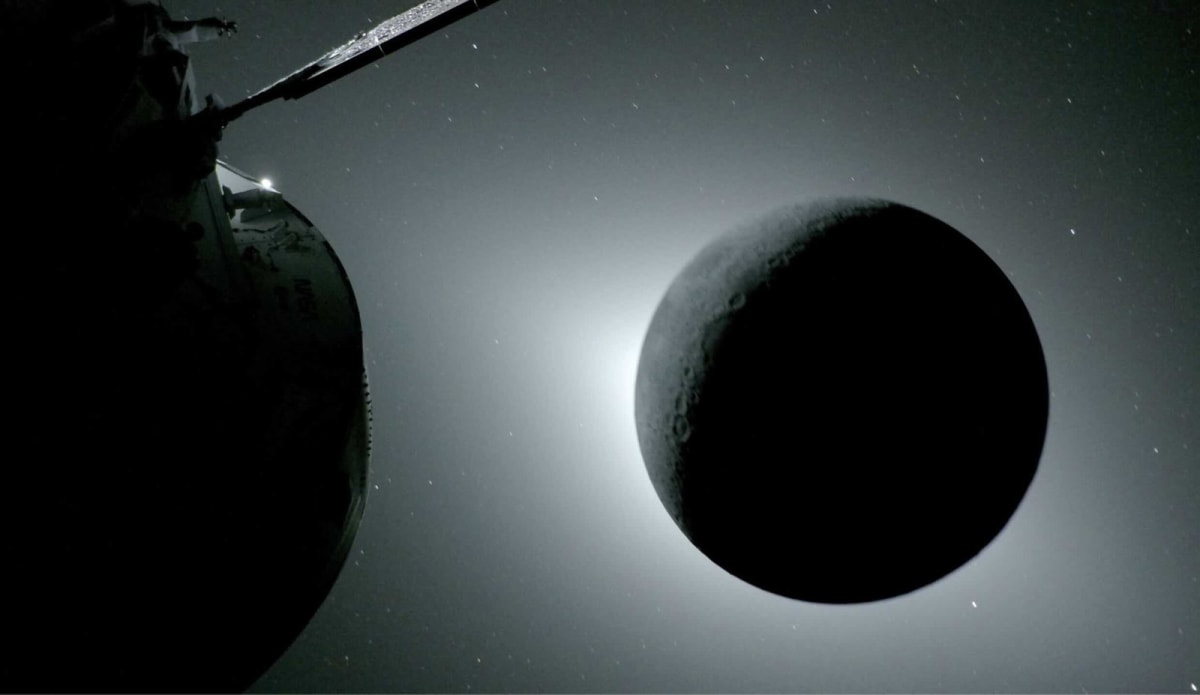
The crew even witnessed meteoroids striking the lunar surface in real time during a solar eclipse viewed from orbit. These bright impact flashes offered a rare glimpse of the Moon as the dynamic, ever-changing world it truly is.
Why This Inspires
These discoveries remind us that even our closest celestial neighbor still holds secrets waiting to be uncovered. The Artemis program isn't just revisiting old territory. It's opening entirely new chapters in lunar science with fresh technology and diverse perspectives.
Dr. Nicky Fox from NASA's Science Mission Directorate says the images are "so exquisite and brimming with science, they will inspire generations to come." The thousands of new photographs are already being analyzed by scientists worldwide, promising insights that could inform future lunar bases and deeper space exploration.
This mission proves that human curiosity and courage can still take us to places no camera or robot can fully replace. We're not just looking back at the Moon. We're seeing it with completely new eyes.
Based on reporting by Google: NASA discovery
This story was written by BrightWire based on verified news reports.
Spread the positivity!
Share this good news with someone who needs it