NASA's Twin Control Rooms Guide Artemis II Crew Home
Two specialized control rooms in Huntsville, Alabama are working around the clock to safely guide four astronauts back from their historic lunar mission this Friday. The twin rooms represent NASA's most advanced mission support technology, monitoring everything from deep space experiments to future Moon landing preparations.
Four astronauts are preparing to return home Friday after orbiting the Moon, guided by twin control rooms that mark a new era in space exploration.
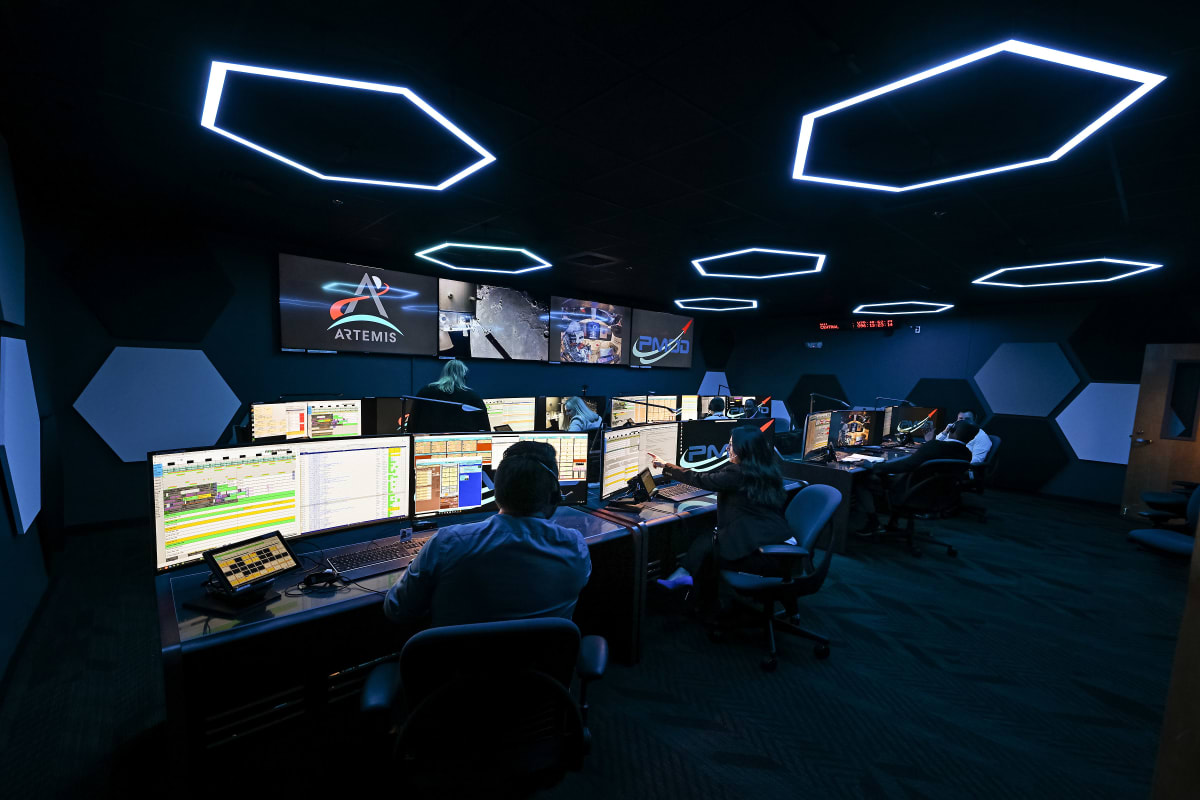
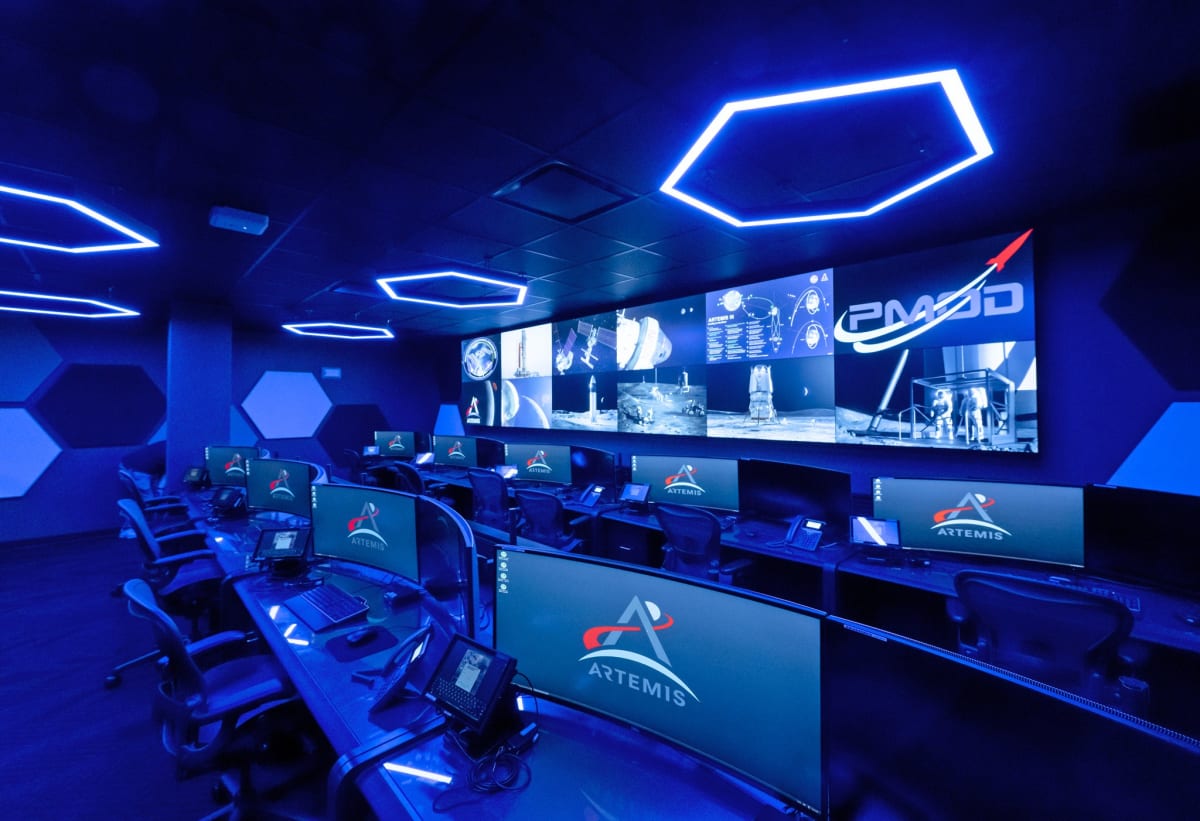
The LUCA and LESA control rooms at NASA's Marshall Space Flight Center in Huntsville, Alabama look almost identical. But like fraternal twins, each serves a unique purpose in keeping the Artemis II crew safe 240,000 miles from home.
LUCA (Lunar Utilization Control Area) focuses on science operations, monitoring groundbreaking experiments that measure how deep space affects the human body. Teams there are tracking crew immune response, physical performance, and how microgravity impacts astronaut health. This data will shape every future Moon mission.
Meanwhile, LESA (Lander Engineering Support Area) is watching and learning. Engineers are observing this mission in real time to prepare for the next big milestone: landing humans on the lunar surface. Every procedure, every decision, every challenge becomes a lesson for future Moon landings.
Both rooms connect to a powerful network that NASA Marshall has been building for years. The Huntsville Operations Support Center already supports the International Space Station, the Space Launch System rocket, and Commercial Crew missions. Now it's proving it can handle the complexity of deep space exploration.
The technology powering these rooms goes beyond simple communication. Special software ensures computers thousands of miles apart can share critical information instantly without human intervention. Video feeds, voice connections to international partners, and real-time spacecraft data all flow through systems designed for zero tolerance of error.
"The Huntsville Operations Support Center can be adapted to the needs of the agency's missions," said Harish Chandranath, who leads the Human Landing Systems project at Marshall. The rooms proved themselves in 2024 when LUCA successfully monitored an autonomous navigation experiment on a commercial lunar lander.
Why This Inspires
This mission represents more than bringing four astronauts home safely. It's the foundation for returning humans to the Moon after more than 50 years and eventually sending crews to Mars.
The twin control rooms show how NASA has learned to work smarter. Instead of building single-purpose facilities, they've created adaptable spaces that grow with each mission. The same teams supporting Artemis II will guide future astronauts as they take humanity's next giant leap.
These aren't just control rooms watching a mission unfold. They're classrooms where engineers are learning to keep humans safe in the harshest environment imaginable, preparing us for the day when walking on the Moon becomes routine and Mars missions become possible.
Friday's splashdown will mark the end of Artemis II, but for the teams in Huntsville, it's just the beginning of humanity's return to deep space.
More Images
Based on reporting by Google: space mission success
This story was written by BrightWire based on verified news reports.
Spread the positivity!
Share this good news with someone who needs it