Australian Battery Lasts 60,000 Charges in Lab Breakthrough
Scientists in Australia just created a battery that can charge in three minutes and still work after 60,000 cycles, potentially solving major energy storage challenges. The secret ingredient? A molecule commonly found in food and cosmetics.
Researchers at Flinders University have developed a zinc-iodine battery prototype that charges in three minutes and lasts through more than 60,000 charge cycles, a breakthrough that could reshape how we store clean energy.
The aqueous zinc-iodine battery uses an unexpected hero: cyclodextrin, an organic polymer found in everyday products like food, pharmaceuticals, and cosmetics. This molecule acts like a microscopic cage, trapping iodine compounds in place and preventing them from wandering to parts of the battery where they'd cause damage.
Associate Professor Zhongfan Jia and his team solved one of the biggest headaches in battery technology. Iodine is fantastic at storing energy, packing about 211 mAh per gram, but it tends to move around inside batteries and wreck their performance. The cyclodextrin polymer keeps everything locked in place while the battery charges and discharges thousands of times.
The numbers are impressive. When charged in seven minutes, the battery operates at 1.3 to 1.4 volts with a capacity of 200 mAh per gram over 8,000 cycles. Speed it up to a three-minute charge, and it still delivers 150 mAh per gram for more than 60,000 cycles.
The Ripple Effect
This technology arrives at a perfect moment. Australia holds between 20% and 28% of the world's zinc reserves, making it a top global producer and exporter. As demand for lithium-ion batteries skyrockets and supply chains struggle to keep up, having an alternative made from abundant, locally available materials could transform energy manufacturing.
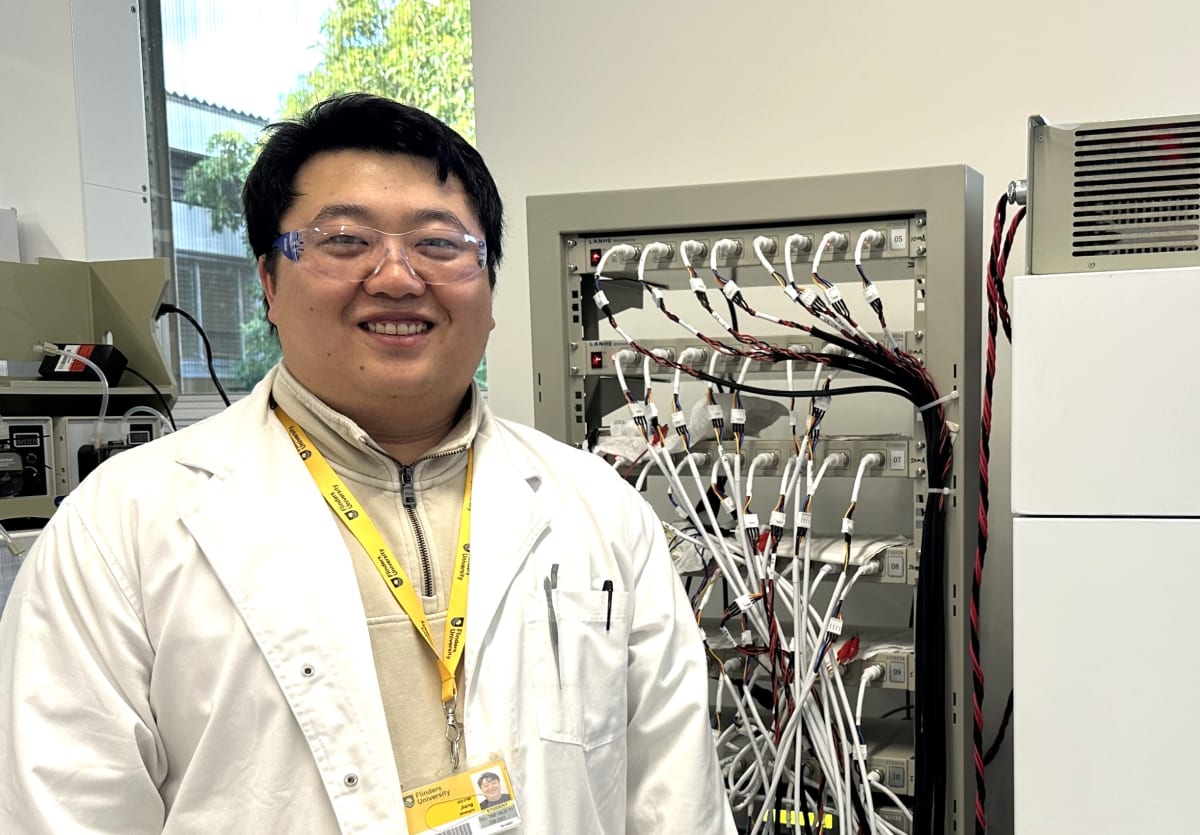
PhD student Shangxu Jiang points out the strategic advantage. "As a top global producer and exporter, we can use these zinc resources for safer energy storage, which is important for energy manufacturing in Australia," he said.
Unlike lithium-ion batteries, which require scarce materials and complex supply chains, zinc-iodine batteries use low-cost, widely available components. The cyclodextrin polymer comes from biodegradable materials, making the entire system more sustainable from start to finish.
The research team is now working with industry partners to develop the technology into a large-scale storage system that could compete with the massive lithium-ion battery installations currently dominating the market.
The future of clean energy storage might just be hiding in molecules we've been using in our food and face cream all along.
More Images


Based on reporting by PV Magazine
This story was written by BrightWire based on verified news reports.
Spread the positivity!
Share this good news with someone who needs it