Australian Lizards Evolved Armor Twice Over 320 Million Years
Scientists just solved a mystery that's puzzled researchers for over a century: reptile armor didn't evolve just once, and Australian goannas pulled off evolution's ultimate comeback by regrowing their armor millions of years after losing it.
For the first time in 320 million years, scientists have cracked the code on how reptiles evolved their armor, and the answer is more incredible than anyone imagined.
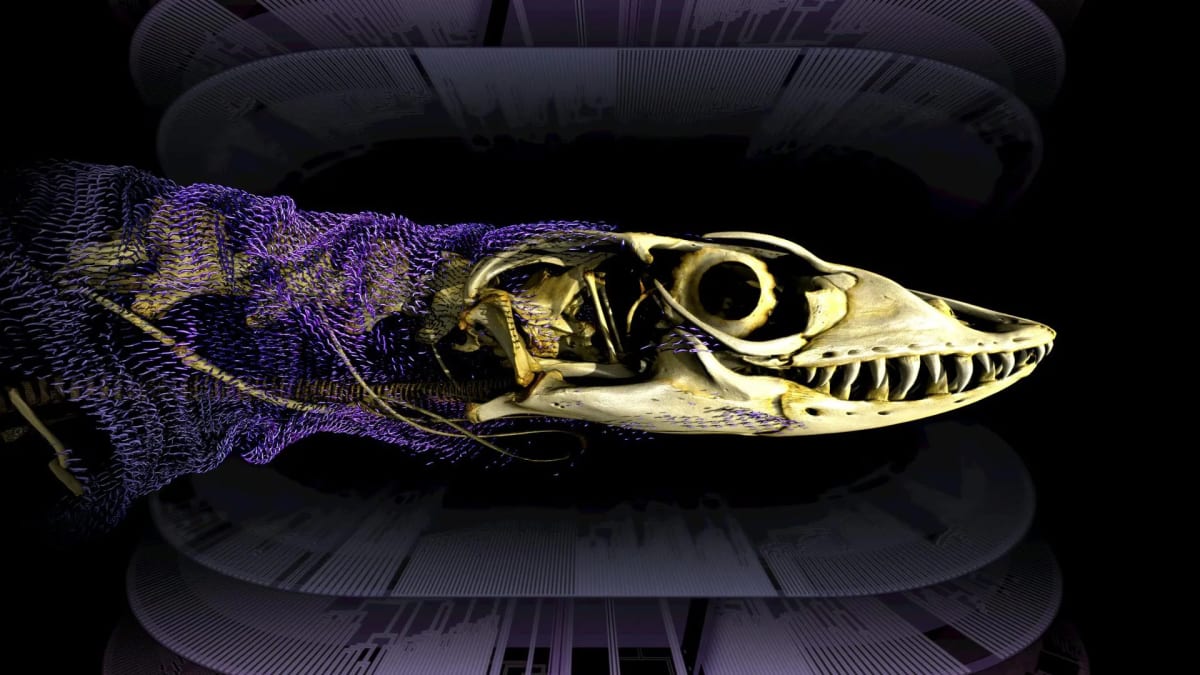
A groundbreaking study published in the Biological Journal of the Linnean Society traced the evolution of osteoderms (skin bones) across 643 living and extinct reptile species. The researchers discovered that armor evolved independently in multiple lizard groups rather than passing down from a single armored ancestor.
The team combined fossil evidence with modern computing power to reconstruct hundreds of millions of years of evolutionary history. They found that most lizards first developed osteoderms during the Late Jurassic and Early Cretaceous periods, more than 100 million years ago, when dinosaurs like Brachiosaurus and Stegosaurus roamed the Earth.
Australian goannas, also known as monitor lizards, made the most remarkable discovery. These creatures lost their armor completely as their active lifestyle worked better without the extra weight. But when their descendants reached Australia about 20 million years ago, something extraordinary happened.
The goannas evolved their armor back. As Australia's climate became drier during the Miocene period, the skin bones likely helped reduce water loss and provided protection in open, arid landscapes.
This comeback challenges a famous principle called Dollo's law, which states that once a complex trait disappears in evolution, it cannot re-evolve. Goannas are now the only known lizard lineage to reacquire osteoderms after losing them.
Why This Inspires
This discovery settles a debate that began in the early 20th century about whether lizards inherited their armor or evolved it independently. The research team published their findings in the same journal where Charles Darwin first shared his groundbreaking ideas on evolution.
What makes this story particularly exciting is how it became possible. Fossil evidence provided the clues, but only modern computing could analyze thousands of evolutionary scenarios across hundreds of species to reveal the truth.
Now that scientists understand how osteoderms evolved, they can investigate the genetic and developmental mechanisms behind them. The research opens doors to understanding how complex traits can disappear and reappear over millions of years, showing that evolution is more flexible and creative than we ever imagined.
Sometimes nature proves that the impossible is just the next great discovery waiting to happen.
More Images

Based on reporting by Science Daily
This story was written by BrightWire based on verified news reports.
Spread the positivity!
Share this good news with someone who needs it