Bacteria Survives Mars Impact Forces in Lab Test
Scientists blasted a super-tough microbe with pressures 30,000 times stronger than Earth's atmosphere, and 60% survived. The discovery suggests life could hitchhike between planets on asteroid debris.
A tiny bacterium just proved it might be tough enough to travel between planets on a chunk of flying rock.
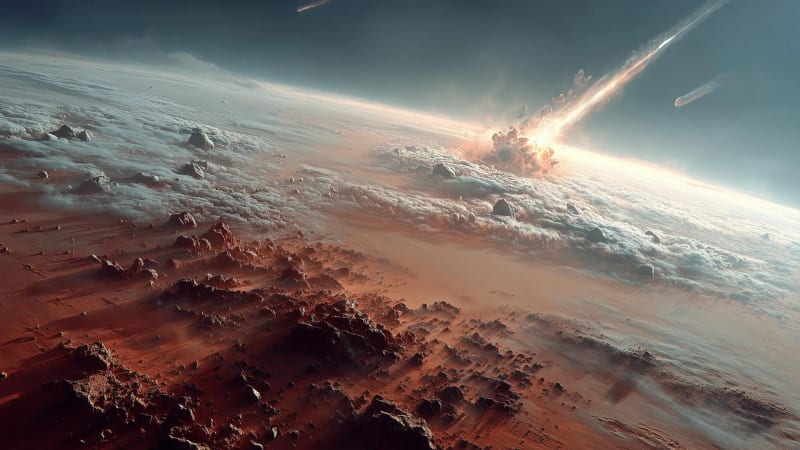
Scientists at Johns Hopkins University put Deinococcus radiodurans through a brutal test. They sandwiched the microscopic organisms between steel plates and smashed them with forces that mimic a massive asteroid impact on Mars. The pressure reached 3 gigapascals, which is 30,000 times stronger than the air pressure we experience on Earth.
The results surprised even the researchers. After simulating the violent launch that would blast microbes off the Martian surface and into space, 60% of the bacteria survived.
Deinococcus radiodurans already has a reputation as one of nature's toughest customers. Scientists nicknamed it "Conan the Bacterium" because it can withstand radiation doses that would kill humans 28,000 times over. It also survives extreme dryness and other harsh conditions that would destroy most living things.
The team, led by researcher Lily Zhao, watched what happened to the bacteria at different pressure levels. At 2.4 gigapascals, the microbes' outer membranes started to rupture. But their unique cell structure acted like a protective shell, keeping many alive even as others broke apart.
The surviving bacteria immediately got to work fixing themselves. By tracking which genes turned on after impact, the scientists discovered the microbes prioritized repairing cellular damage. It's like they have an emergency response system built into their DNA.
Why This Inspires
Look up at Mars on a clear night and you might be seeing a distant cousin's home. This research strengthens a fascinating theory called panspermia, which suggests life doesn't stay put on one planet. When giant asteroids slam into worlds like Mars, they can launch rocks into space carrying tiny passengers. Those rocks drift through the solar system for millions of years before landing somewhere new.
The Moon and Mars are covered with impact craters, proof that our solar system has been playing cosmic billiards for billions of years. Each collision creates a chance for microscopic life to catch a ride. If bacteria this tough exist on Mars or other worlds, they could survive not just the violent launch, but also the freezing, airless journey through space and the fiery return through another planet's atmosphere.
We've always wondered if we're alone in the universe. This experiment shows that life might be more resilient and adventurous than we imagined. The building blocks of biology could be traveling between worlds right now, hidden inside ordinary-looking space rocks. What seems like empty, hostile space might actually be full of potential.
The universe just got a little more connected, and a lot more hopeful.
Based on reporting by Science Daily
This story was written by BrightWire based on verified news reports.
Spread the positivity!
Share this good news with someone who needs it