Birds Bring Life Back to Scorched Florida Forests
Scientists discovered that wild birds act as nature's gardeners, carrying seeds into freshly burned areas and helping forests regrow faster. This unexpected partnership between fire, birds, and plants could change how we protect fire-dependent ecosystems.
When flames sweep through a forest, birds rush in to sow the seeds of recovery.
New research from Florida's Tall Timbers Research Station reveals that birds are attracted to freshly burned ground like magnets. Once there, they deposit seeds from previous meals, potentially shaping what grows back and how the ecosystem rebuilds itself.
David Mason, an assistant scientist at The Jones Center at Ichauway in Georgia, led the groundbreaking study published in Current Biology. His team wanted to understand the mysterious cycle that connects fire, plants, and wildlife in fire-dependent landscapes.
Mason built 36 artificial perches across Tall Timbers, a patchwork of burned and unburned areas arranged like a checkerboard. Underneath each perch, screens caught bird droppings while trail cameras recorded every feathered visitor.
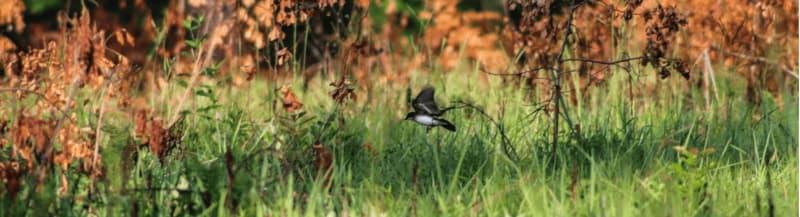
The results surprised the research team. Recently burned areas attracted significantly more birds than ground that had burned one or two years earlier. Sparrows, thrushes, and warblers were among the seed carriers, delivering nature's cargo exactly where it had the best chance to thrive.
The researchers also discovered that some common bird-dispersed plants actually produce more fruit when fire regularly sweeps through their habitat. This creates a beautiful circle where fire helps plants, plants feed birds, and birds replant the forest after the next burn.
The Ripple Effect
This discovery extends beyond just understanding nature. Conservation managers can now use these insights to plan better controlled burns that work with wildlife instead of against it.
The timing and size of prescribed fires might influence not just which plants survive, but which birds visit and what seeds they bring along. This knowledge helps land managers restore degraded habitats more effectively by considering the whole ecosystem, not just individual pieces.
Mason's artificial perch method also demonstrates how fire initially described for grazing animals applies to birds too. Food resources and changes in vegetation structure likely draw birds to recent burns, creating opportunities they can't resist.
For fire-dependent landscapes like those across the Southeast, this research reinforces something essential: these ecosystems need fire to survive. Mason puts it simply: "Fire is the thing that keeps this ecosystem the way it is. Without fire, it would be something else."
Nature has been perfecting this partnership for thousands of years, and now scientists can help protect it.
More Images


Based on reporting by Google News - Wildlife Recovery
This story was written by BrightWire based on verified news reports.
Spread the positivity!
Share this good news with someone who needs it