Black Bears Reclaim Southern US After Near Extinction
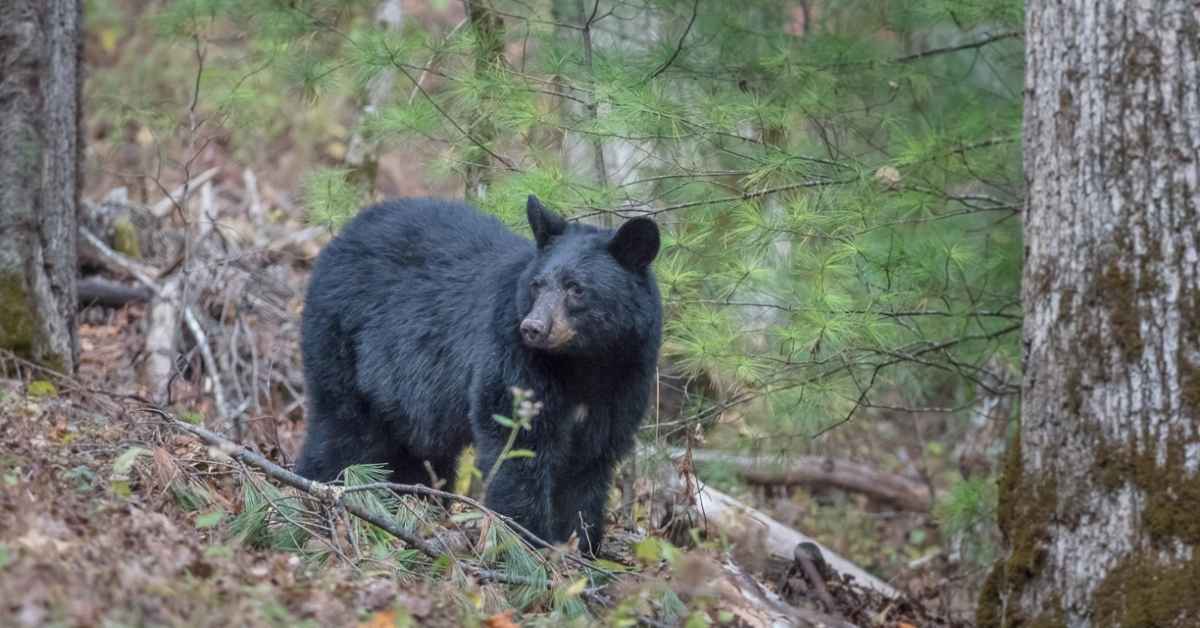
Black bears are making a stunning comeback across the American South after nearly disappearing in the 1800s and 1900s. West Tennessee residents are spotting bears for the first time in generations as populations expand into their historic range.
When a black bear appeared in a West Tennessee cornfield this Fourth of July, local residents couldn't believe their eyes. Bears hadn't been seen in these flatlands for over a century.
But Dan Gibbs, Tennessee's black bear coordinator, wasn't surprised at all. He's been watching reports steadily increase across Middle and West Tennessee for years, signaling something remarkable: bears are coming home.
Black bears once thrived across most of the United States, including the lower Mississippi River basin. Decades of habitat destruction and overhunting in the 1800s and 1900s nearly wiped them out completely.
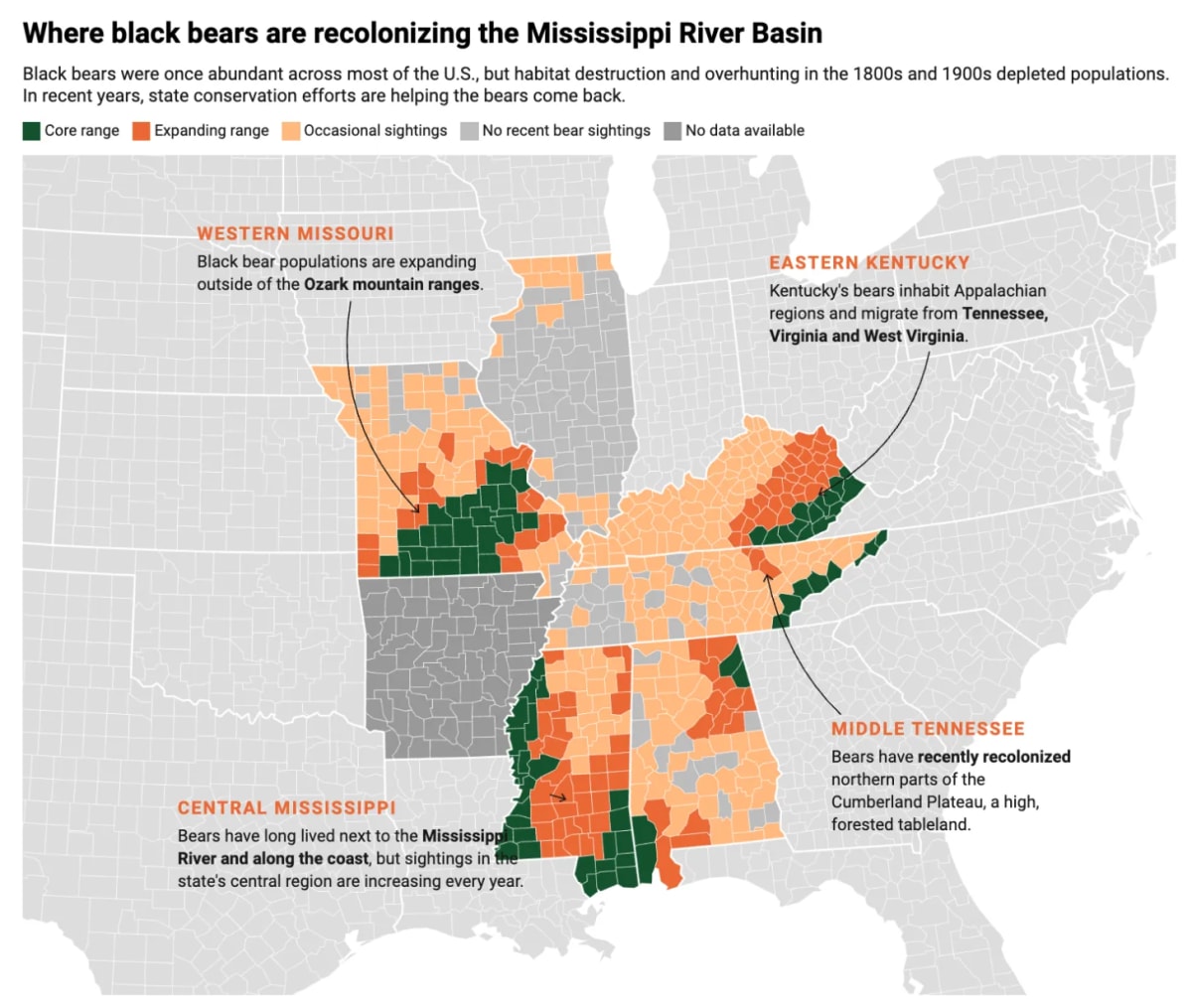
By the early 1970s, Tennessee's bears had retreated to just 10 mountainous counties along the eastern border. Mississippi's situation was even more dire, with only 12 bears estimated when the state's wildlife agency was founded in 1932.
Now those numbers are climbing. Bears are reclaiming territories in Kentucky, Mississippi, Arkansas, Missouri, and Western Tennessee.
"It will be a slow process, but bears are going to recolonize Middle and West Tennessee," Gibbs said. "That's just their historical range, and they're going to reclaim it."
The recovery reveals a common misconception about black bears. Most people think they're mountain animals, but they're actually adaptable generalists that thrive in wetlands, swamps, and bottomland forests.
"The whole Mississippi Alluvial Valley was kind of the breadbasket of the black bears in this part of the southeast," said Anthony Ballard, Mississippi's black bear program leader. The rich floodplains that once spread for miles provided incredible food sources.
Today, Mississippi's core population lives along the Mississippi River in bottomland hardwood systems. Increasingly, bears are colonizing the southeast corner of the state in pine forests with thick underbrush.
The Ripple Effect
Black bear recovery takes patience. Female bears don't have cubs until age three, and they only produce a couple of cubs every other year when eating natural foods.
Young males venture out at about 18 months old, sometimes traveling hundreds of miles to establish their own territory. This natural dispersal prevents inbreeding and slowly expands populations.
Tennessee has already received reports of cubs in counties near Nashville. Within 10 to 15 years, Middle and West Tennessee should have populations large enough to survey properly.
The comeback represents one of conservation's quiet victories. From just a dozen bears in Mississippi and a handful of mountain counties in Tennessee, populations are steadily growing and spreading across their ancestral lands.
Residents may need time to adjust to their returning neighbors, but wildlife experts see the expansion as inevitable and encouraging. After more than a century away, black bears are finally reclaiming the diverse Southern landscapes where they've always belonged.
More Images

Based on reporting by Good Good Good
This story was written by BrightWire based on verified news reports.
Spread the positivity!
Share this good news with someone who needs it