Black Hole 1.8 Billion Light-Years Away Unlocks Cosmic Secrets
A supermassive black hole in a nearby galaxy is feasting on matter just like black holes did right after the Big Bang, giving scientists an unprecedented window into the early universe. The discovery could help solve long-standing mysteries about how galaxies and black holes formed billions of years ago.
Scientists have discovered a cosmic time machine hiding in plain sight, and it's shining brighter than anyone expected.
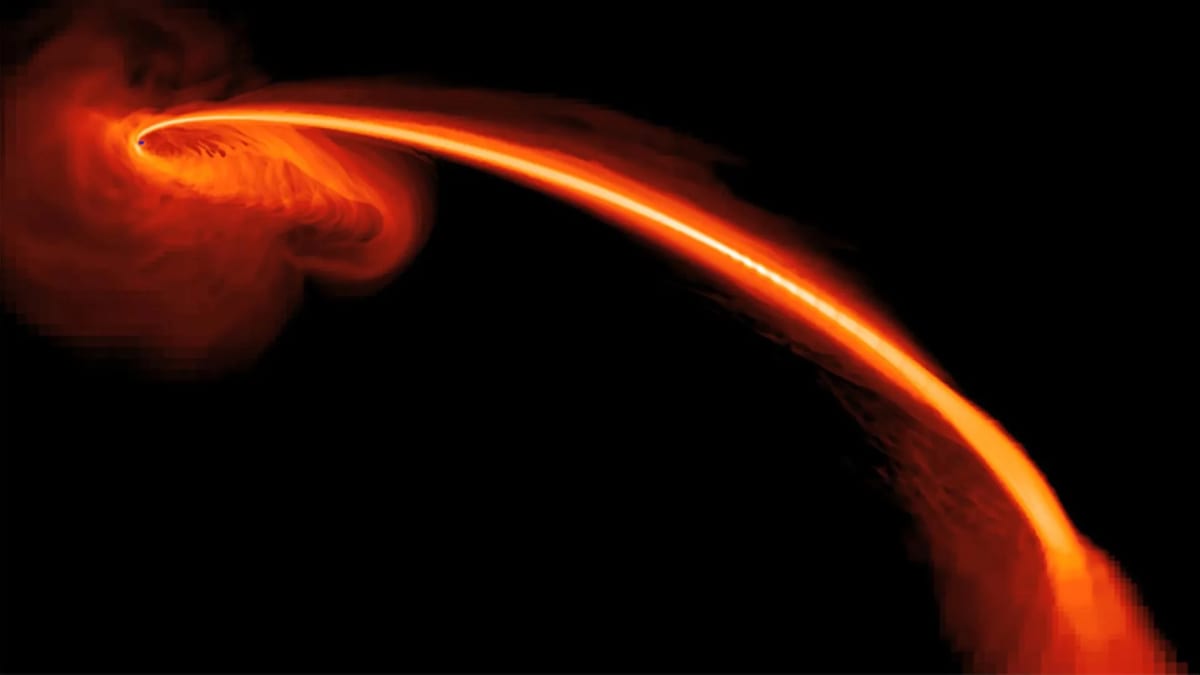
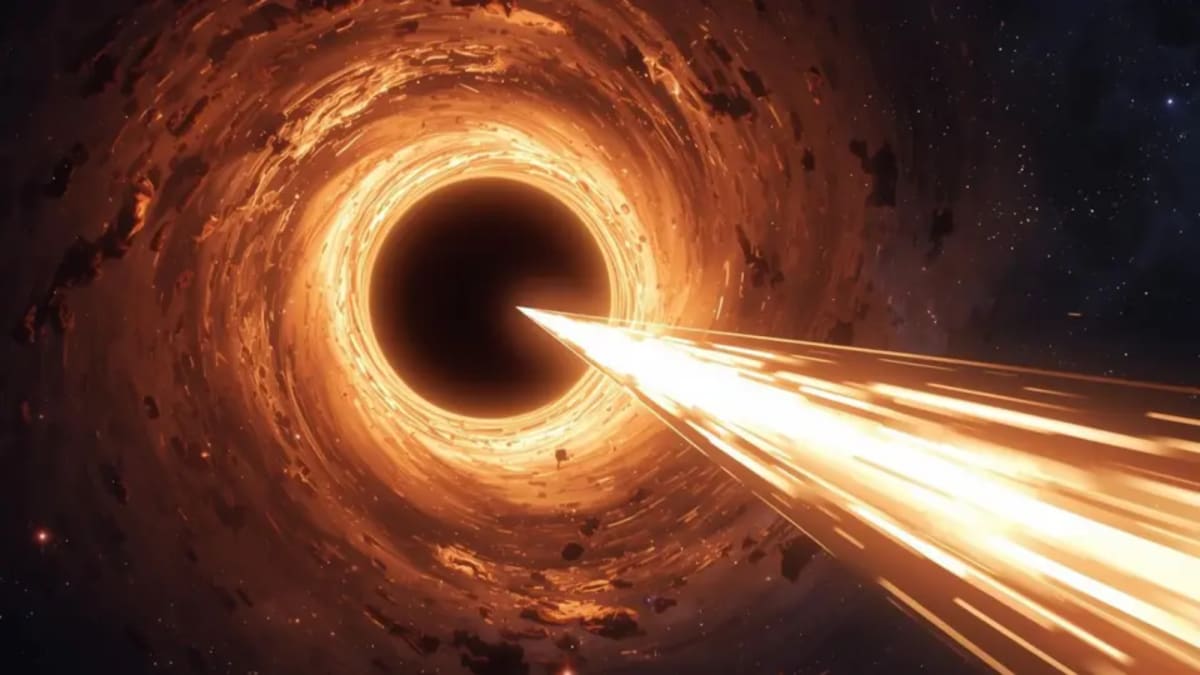
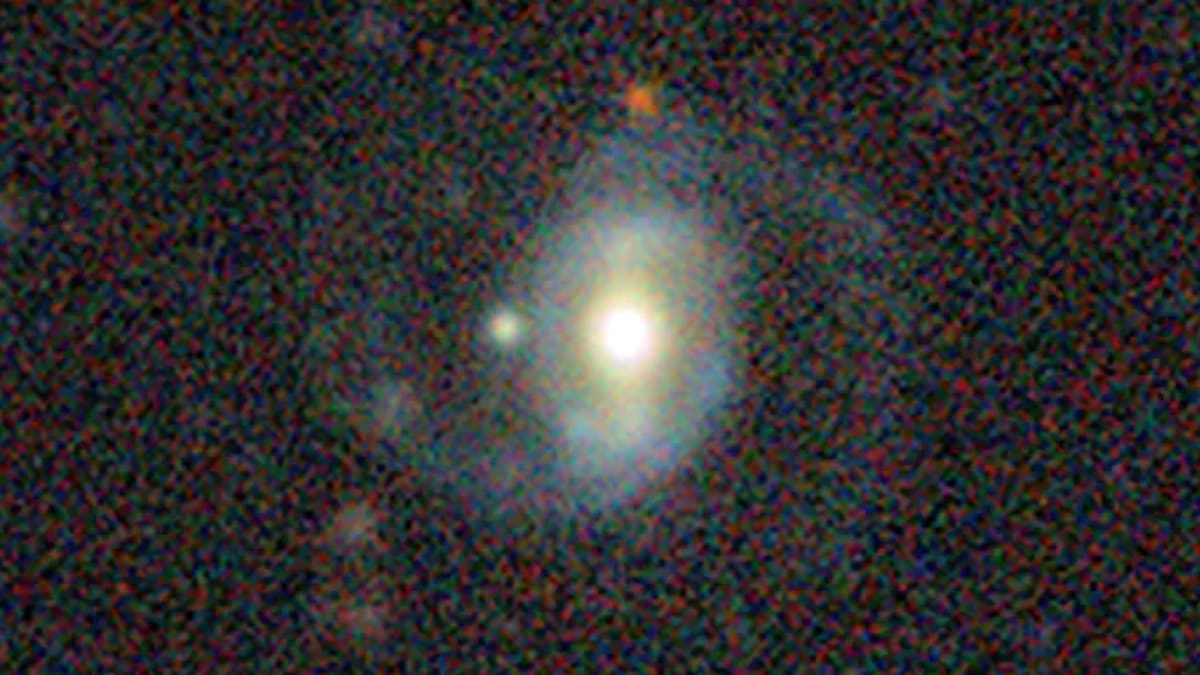
A supermassive black hole at the center of galaxy SDSS J110546.07+145202.4, located 1.8 billion light-years from Earth, is behaving exactly like black holes from the universe's infancy. This hungry giant is devouring enormous amounts of matter and growing at a rate scientists have only observed in the earliest supermassive black holes, those formed shortly after the Big Bang.
The breakthrough came when researchers noticed something extraordinary. Radio signals from this spiral galaxy suddenly increased by 20 times over a short period, reaching 10 quadrillion times the intensity of our sun's radio brightness. Eight years later, it's still shining just as brightly.
"We are dealing with the prototype of a new class of galaxies that undergo rapid changes in radio emission," said team member Phil Edwards from CSIRO, Australia's national science agency. The dramatic brightening happened because matter started falling into the black hole at an accelerated rate, triggering powerful jets of plasma that shoot out at nearly the speed of light.
Most supermassive black holes don't eat much at all. Our own Milky Way's black hole, Sagittarius A*, consumes so little that if it were human, it would survive on one grain of rice every million years. But this newly observed black hole is gorging itself, creating jets and emissions that light up the universe.
What makes this discovery truly special is proximity. At 1.8 billion light-years away, this galaxy is close enough that scientists can study it in detail, observing behaviors that normally existed only in the unreachable early universe.
Why This Inspires
This discovery represents something rare in astronomy: a chance to study ancient cosmic processes happening right in our cosmic neighborhood. Instead of peering at faint, distant objects from billions of years ago, scientists can now observe similar rapid growth patterns in sharp detail.
Team leader Stefanie Komossa from the Max Planck Institute for Extraterrestrial Physics explained the significance. "Luminous radio radiation from rapidly growing, lightweight black holes is rare to begin with. Their transition into a long-lasting, radio-bright state has never been observed before."
The galaxy is so close that telescopes can clearly see its beautiful spiral arms. This level of detail means researchers can study not just the black hole itself, but how its intense feeding affects the surrounding galaxy and star formation.
Kovi Rose from the University of Sydney's Sydney Institute for Astronomy noted that these high-energy events provide astronomers with a wealth of insights. "By observing these jets and outbursts, we can study the physical processes in some of the most extreme environments in the universe."
The upcoming SKA telescopes will allow scientists to identify similar radio transients in future sky surveys, filling critical gaps in our understanding of how the universe evolved. Each new observation brings us closer to answering fundamental questions about how galaxies and their supermassive black holes grew together in cosmic history.
This cosmic laboratory is just getting started, and scientists are ready to watch and learn.
More Images

Based on reporting by Space.com
This story was written by BrightWire based on verified news reports.
Spread the positivity!
Share this good news with someone who needs it