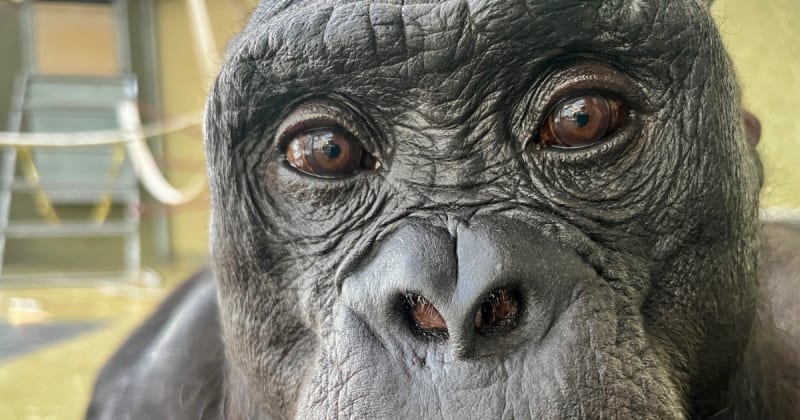
Bonobo Plays Pretend Tea Party in Groundbreaking Study
Scientists discovered that a bonobo named Kanzi could track imaginary juice being poured between containers, proving humans aren't the only species capable of pretend play. This finding rewrites what we thought we knew about animal imagination and opens new doors for understanding how minds work.
A bonobo named Kanzi just changed what scientists thought was uniquely human: the ability to pretend.
In a series of experiments at Johns Hopkins University, researchers played an imaginary tea party game with Kanzi, pouring pretend juice between transparent pitchers and bottles. Kanzi followed along perfectly, tracking which container held the invisible juice 68% of the time. When researchers offered him a choice between real and pretend juice, he picked the real stuff 14 out of 18 times.
"He's able to follow along and track the location of a pretend object, but at the same time, he appreciates that it's not actually there," said Chris Krupenye, assistant professor of psychological and brain sciences at Johns Hopkins. The team repeated the experiment with imaginary grapes and got similar results.
Scientists had long assumed that imagining multiple realities at once was a superpower belonging only to humans. But observations of young chimps playing with log dolls and moving invisible blocks suggested otherwise. This new study, published in the journal Science, provides the first controlled evidence of an animal genuinely pretending.
The experiments mirrored classic child development tests. Young kids naturally engage in pretend play with imaginary friends and stuffed animal tea parties. The researchers wanted to see if bonobos shared the same cognitive building blocks.
Why This Inspires
This discovery means apes might share the foundational mental machinery that allows imagination. That ability brings real evolutionary advantages. Animals who can test scenarios in their minds before acting can plan better, reason through problems, and figure out cause and effect without risking real-world consequences.
"You can then test things out in imagination before doing it in real life," said Kristin Andrews, a philosophy professor at the CUNY Graduate Center who studies animal minds. "You can figure out whether you should do it or not."
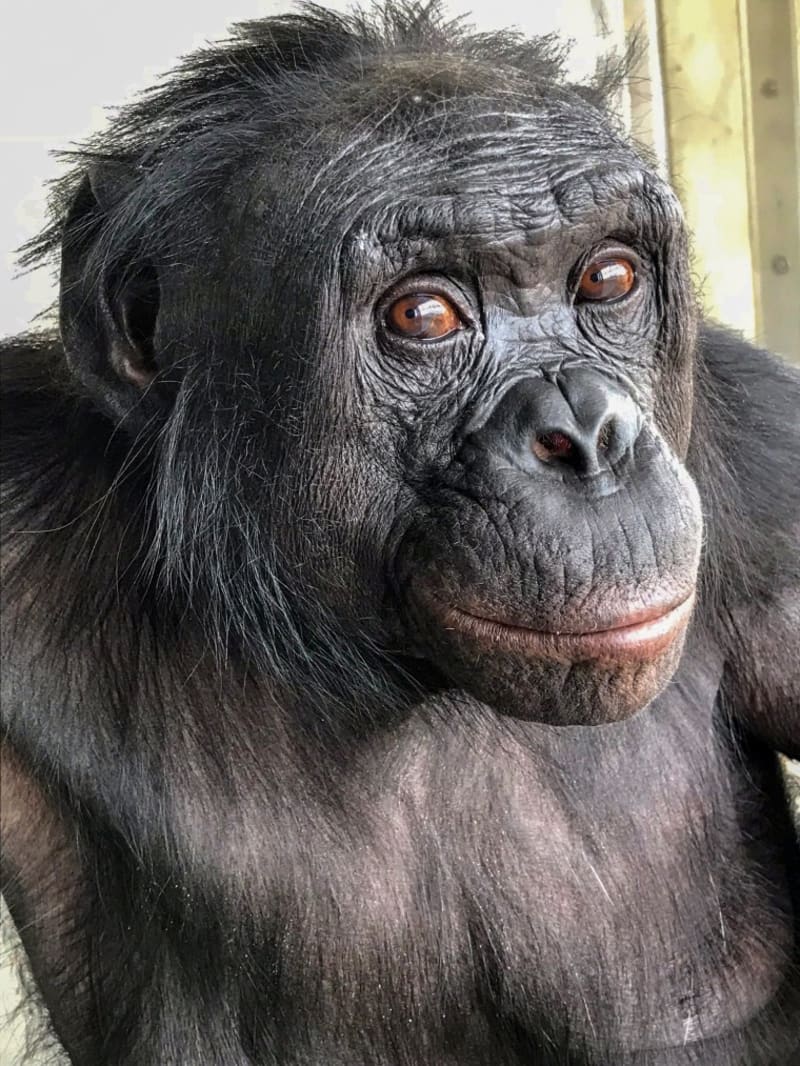
Kanzi was an exceptional bonobo. Born in captivity, he became the first bonobo to understand elements of spoken English by learning lexigram symbols as an infant while clinging to his mother during her language training. He eventually mastered several hundred symbols representing objects and activities.
Because bonobos are humanity's closest living genetic relatives, this finding suggests pretend play likely existed 6 million to 9 million years ago when our evolutionary paths split. That's millions of years of imaginative thinking in the animal kingdom.
Kanzi died last year at age 44, but his legacy lives on in reshaping our understanding of animal minds. Whether other bonobos share his abilities remains an open question, though his unique language training may have given him an edge.
The research opens exciting new doors for studying how different species think and imagine their worlds.
More Images

Based on reporting by Google News - Science
This story was written by BrightWire based on verified news reports.
Spread the positivity!
Share this good news with someone who needs it