Botanist Grows 14 Crops in Simulated Martian Soil
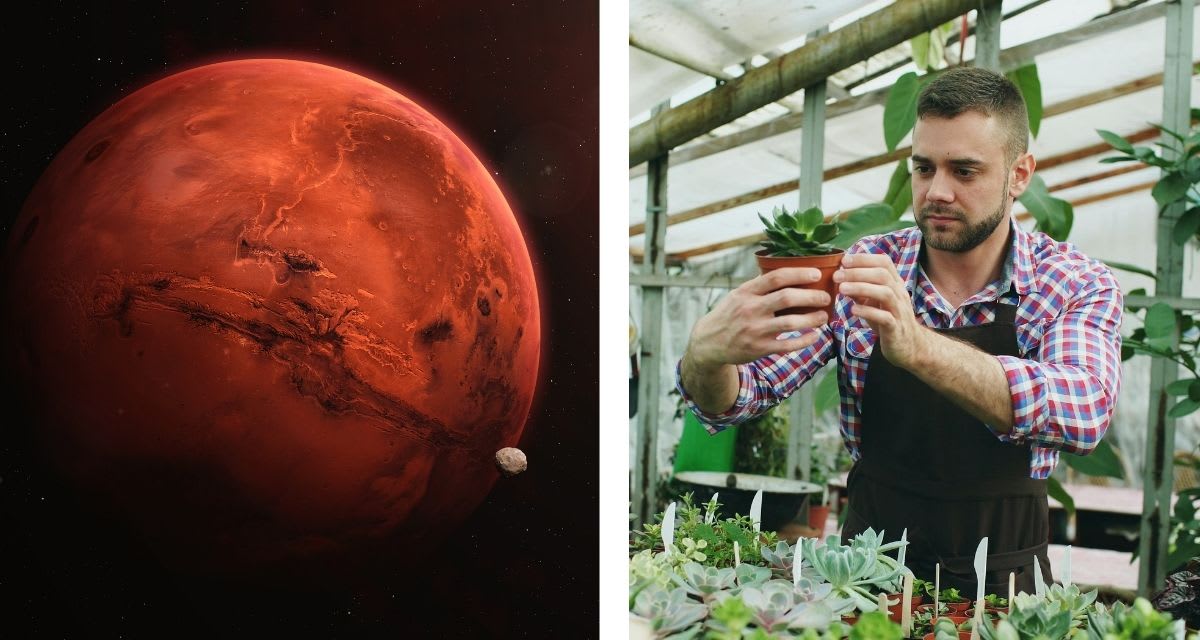
A Dutch scientist successfully grew tomatoes, kale, and other vegetables in recreated Martian soil, bringing humanity closer to growing food on the Red Planet. His team added manure, bacteria, and earthworms to transform the toxic soil into farmable ground.
Growing food on Mars just shifted from science fiction to scientific reality, thanks to a botanist who refused to give up on barren alien soil.
In 2013, Wieger Wamelink started wondering if Martian dirt could support life. Instead of just theorizing, he recreated the rocky Martian regolith in his lab using crushed volcanic rocks that matched NASA rover analyses.
His team planted 4,200 seeds from 14 different plant species. Almost all of them germinated, with some sprouting in just 24 hours.
But germination proved easier than actual growth. The plants initially stretched only a few centimeters and produced nothing edible, even with added nutrients.
Martian soil lacks the organic material found in healthy Earth dirt. Worse, it contains heavy metals and perchlorates that poison both plants and humans, plus it repels water.
Wamelink refused to accept defeat. His team started adding pig manure, then human waste, followed by bacteria that eat toxic perchlorates and earthworms that digest organic materials while burrowing through the soil.
The additions worked. Over time, they successfully grew tomatoes, garlic, spinach, basil, kale, lettuce, rocket, onions, and radishes.
Kale became the star performer, growing better in simulated Martian soil than in local Earth dirt. Potatoes remain trickier but not impossible.
In 2016, Wamelink hosted a dinner party featuring his Martian-grown vegetables. Guests confirmed they tasted just as good as Earth-grown crops and contained equal nutrition.
Why This Inspires: Wamelink dreamed of becoming an astronomer as a child but chose to study botany instead. Decades later, those two seemingly separate passions merged into one groundbreaking question: can we sustain life beyond Earth? His persistence turned a childhood dream into research that could feed future Mars colonists. Sometimes the skills we develop take us exactly where we were always meant to go, just by an unexpected path.
Today, Wamelink continues refining techniques to make space farming viable for future missions.
More Images



Based on reporting by Upworthy
This story was written by BrightWire based on verified news reports.
Spread the positivity!
Share this good news with someone who needs it