Cemetery in New York Hides 8 Million Wild Bees Underground
A quiet cemetery in Ithaca, New York shelters up to 8 million solitary bees in one of the largest underground colonies ever discovered. These hardworking pollinators are secretly helping nearby farms thrive while teaching scientists how ordinary spaces can become vital wildlife havens.
Beneath the peaceful grass of an Ithaca cemetery, millions of tiny architects are building an underground city that rivals 200 honeybee hives combined.
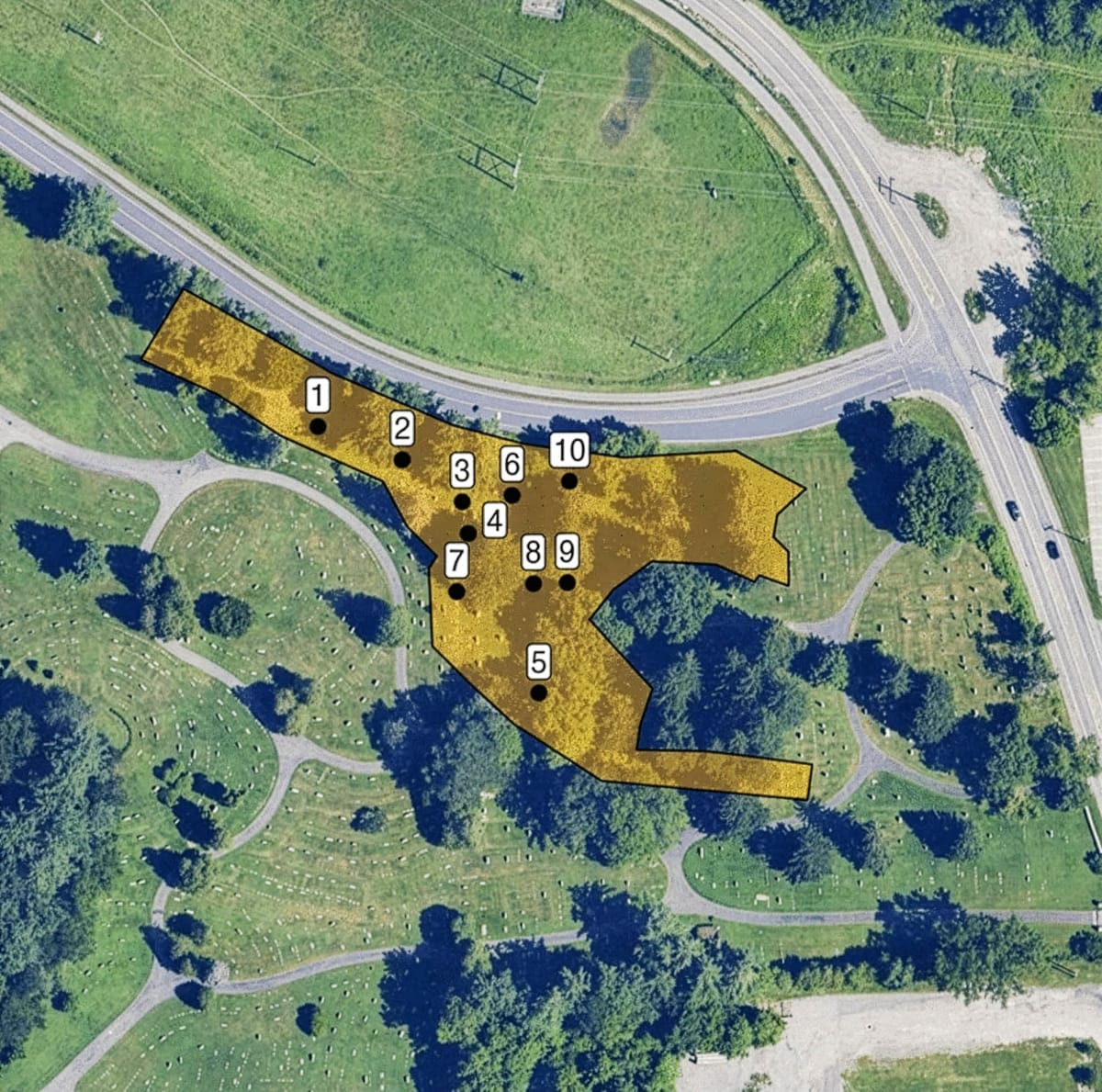
Cornell University researchers discovered that East Lawn Cemetery hosts between 3.1 and 8 million solitary ground-nesting bees. The find began when researcher Rachel Fordyce walked into the lab with a jar full of bees, telling Professor Bryan Danforth they were "all over the cemetery."
What she stumbled upon became one of the largest documented bee aggregations in scientific literature. Unlike honeybees that live together in hives, these Andrena regularis bees live independently, with each female digging her own underground chambers to raise her young.
The discovery matters far beyond the cemetery gates. These solitary bees are powerhouse pollinators for crops like apples, cherries, strawberries, and blueberries, often spreading more pollen in a single visit than a honeybee can manage.
The cemetery sits right next to Cornell's apple orchards, meaning millions of wild pollinators are quietly supporting local farms without anyone realizing it. Steve Hoge, the study's lead author, collected over 3,000 insects from 16 species in just a few weeks to document the thriving ecosystem.
The research revealed fascinating survival patterns too. Male bees emerge first each spring to wait for females, giving them the best chance to mate. The colony showed healthy gender ratios with enough resources to support energy-intensive female development.
Even parasites couldn't dampen the good news. While some insects like Nomada imbricata try to hijack the nests, only 1.4 percent of bees faced this threat, showing the population remains strong and stable.
The Ripple Effect
This cemetery proves that ordinary green spaces can become extraordinary wildlife sanctuaries. The stable soil, minimal pesticides, and lack of disturbance create perfect conditions for biodiversity to flourish in ways busy farms and developed areas cannot match.
Even the cemetery staff noticed the abundance. One worker admitted feeling bad about mowing certain areas because so many bees lived there, unknowingly protecting a scientific treasure.
The researchers now hope their work inspires protection for similar hidden habitats. "If someone paves over these sites, we could lose 5.5 million important pollinators in an instant," Danforth warned.
The study, published in Apidologie, opens eyes to what lives beneath our feet. Ground-nesting is the most common lifestyle for bee species worldwide, yet research has largely overlooked these essential pollinators until now.
Simple actions like preserving green spaces and reducing pesticide use can protect millions of helpers we never knew we had.
Based on reporting by Google News - Science
This story was written by BrightWire based on verified news reports.
Spread the positivity!
Share this good news with someone who needs it